What to Pack for Florence: A Practical List
Florence is not a complicated city to pack for, but it rewards specific choices. The streets are cobblestone, the temperature swings widely across seasons, and some of the most important monuments require dress code compliance.
This guide covers what actually matters, in order of importance.
What to pack for Florence
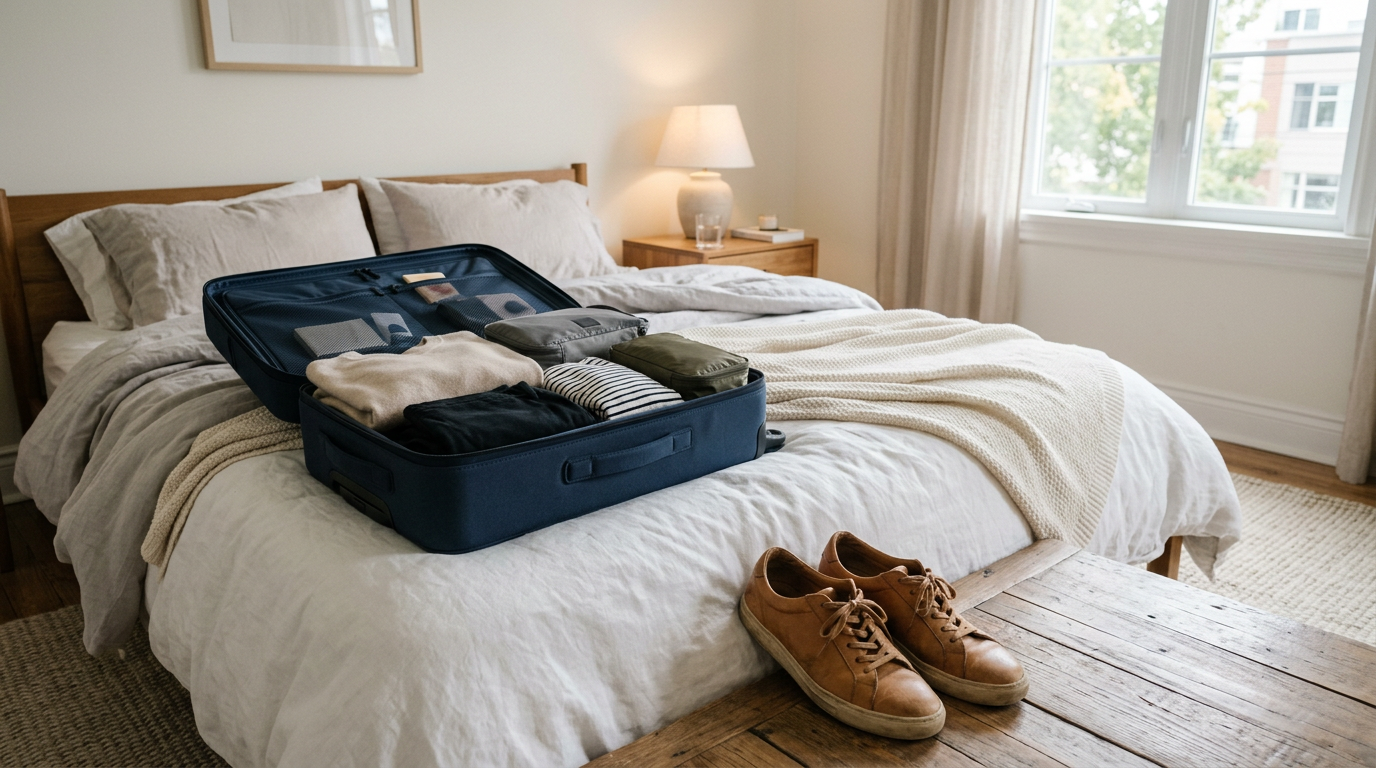
Before getting to the specific list, one structural point: pack light. Florence’s historic centre is walkable and compact. You will move through it on foot and carry everything yourself. A heavy suitcase is a disadvantage from the moment you step off the train.
If you are flying, a carry-on bag (55x40x20 cm for most airlines) is sufficient for a stay of up to a week in any season if you pack intelligently.
Luggage storage is available at Santa Maria Novella station (KiPoint, located inside the station, open approximately 6:00-23:00, prices around 6 euros for the first 5 hours) if you arrive before your accommodation check-in or need to leave bags on your departure day.
Shoes: the most important choice
Shoes are the single most critical item for a Florence visit and the area where most visitors underpack or make the wrong choice.
The historic centre streets are paved with pietra serena (a smooth grey stone) and irregular cobblestones. Both are hard on feet and become slippery when wet. You will walk 8-14 km per day, every day.
What works:
- Well-worn running or walking shoes with adequate cushioning
- Leather sneakers or trainers (they look appropriate for dinner as well as walking)
- Low-heeled leather shoes that you have already broken in
- Light hiking shoes for any outdoor or hill walks
What does not work:
- New shoes of any kind (blisters before day 2)
- High heels (impractical on cobblestones and stone stairs)
- Flat sandals without arch support (fine for short distances, painful for a full day)
- Heavy boots in summer (you will overheat)
Pack one smart-casual pair of shoes for evenings if your walking shoes are not appropriate for restaurants. In summer, this might be a light leather sneaker or a low-heeled sandal with a strap.
Two pairs of shoes is usually sufficient for most trips.
Clothes: season by season
Spring (March, April, May): Temperatures range from 8 to 24 degrees. Layers are essential. A typical spring packing list:
- 3-4 lightweight tops or shirts
- 1-2 pairs of trousers or jeans
- 1 light cardigan or pullover
- 1 medium-weight jacket (not a heavy winter coat)
- 1 light waterproof layer (for rain showers)
- 1-2 dresses or lighter options for warmer days
- 1 scarf (useful for temperature regulation and church entry)
Summer (June, July, August): Temperatures 20-38 degrees. Pack for heat with evening variation:
- 4-5 lightweight tops
- 2-3 lightweight trousers, shorts, or skirts
- 1 light cardigan or thin long-sleeve layer (for air-conditioned museums)
- 1 smart-casual outfit for nicer evenings
- Sunhat with a brim
- Sunscreen (buy locally if you do not want to pack it, but Italian pharmacies stock a good range)
Autumn (September, October, November): September resembles summer. October transitions. November is cold.
- For September: same as summer with added light jacket
- For October: medium-weight layers, waterproof outer layer
- For November: proper coat, warm layers, waterproof shoes
Winter (December, January, February): Average 2-12 degrees with damp cold and occasional frost.
- Warm coat (wool or down)
- Warm mid-layers (fleece or knit)
- Waterproof outer layer or coat
- Scarf and gloves
- Waterproof boots or shoes
What not to bring (it weighs too much and you will not use it)
A full-size travel umbrella: Pack a small, lightweight folding umbrella instead. You will use it briefly during showers. A full-size umbrella is heavy and awkward to carry through museums.
More than 2 pairs of shoes: Tempting to pack, almost never justified. Shoes are the heaviest item in most bags.
Heavy guidebooks: The main Florence guidebooks (Eyewitness, Rough Guide) are comprehensive but heavy. Download the digital version or use a free wiki travel app instead.
Multiple formal outfits: Florentine restaurants are generally not jacket-required. Smart-casual is the norm. One nicer outfit for a special evening is sufficient.
A large daypack: A small crossbody bag or a 10-15 litre drawstring bag is all you need for a day in the city. Large daypacks are difficult to carry in crowds and may need to be checked at museum entrances.
Towels: Every accommodation provides towels. You do not need travel towels unless you are staying at a campsite.
The accessories that are actually useful
A portable phone charger (powerbank): You will use your phone for maps, museum tickets, and photos constantly. A battery pack of 10,000 mAh keeps you going through a full day. Compact models weigh around 200g.
A reusable water bottle: Florence has free drinking fountains (nasoni) throughout the city. A lightweight bottle means you stay hydrated without buying plastic. Particularly important in summer.
A lightweight day wallet or money belt: Pickpocketing is a known issue in crowded tourist areas (Piazza del Duomo, Ponte Vecchio, the Uffizi area). An inside-pocket wallet or a slim travel wallet that sits against your body is a practical precaution.
A packable tote bag: Useful for light shopping, for carrying museum purchases, and for days when you do not want a full bag. Takes up no space in luggage.
An adapter plug (Type L): Italy uses Type L plugs (three round pins in a line). If you are from the UK, US, or Australia, bring an adapter. Many hotels now have universal charging points but not all.
A small first aid kit: Blister plasters are the most useful item. Add any prescription medication you need plus standard items (ibuprofen, antihistamine, antiseptic wipes).
Where to stay
Whatever you pack, arriving at a central location matters. The Key is at Via Cittadella 22, a 5-minute walk from Santa Maria Novella station. The station has luggage storage if you arrive before check-in or need to leave bags before your departure.