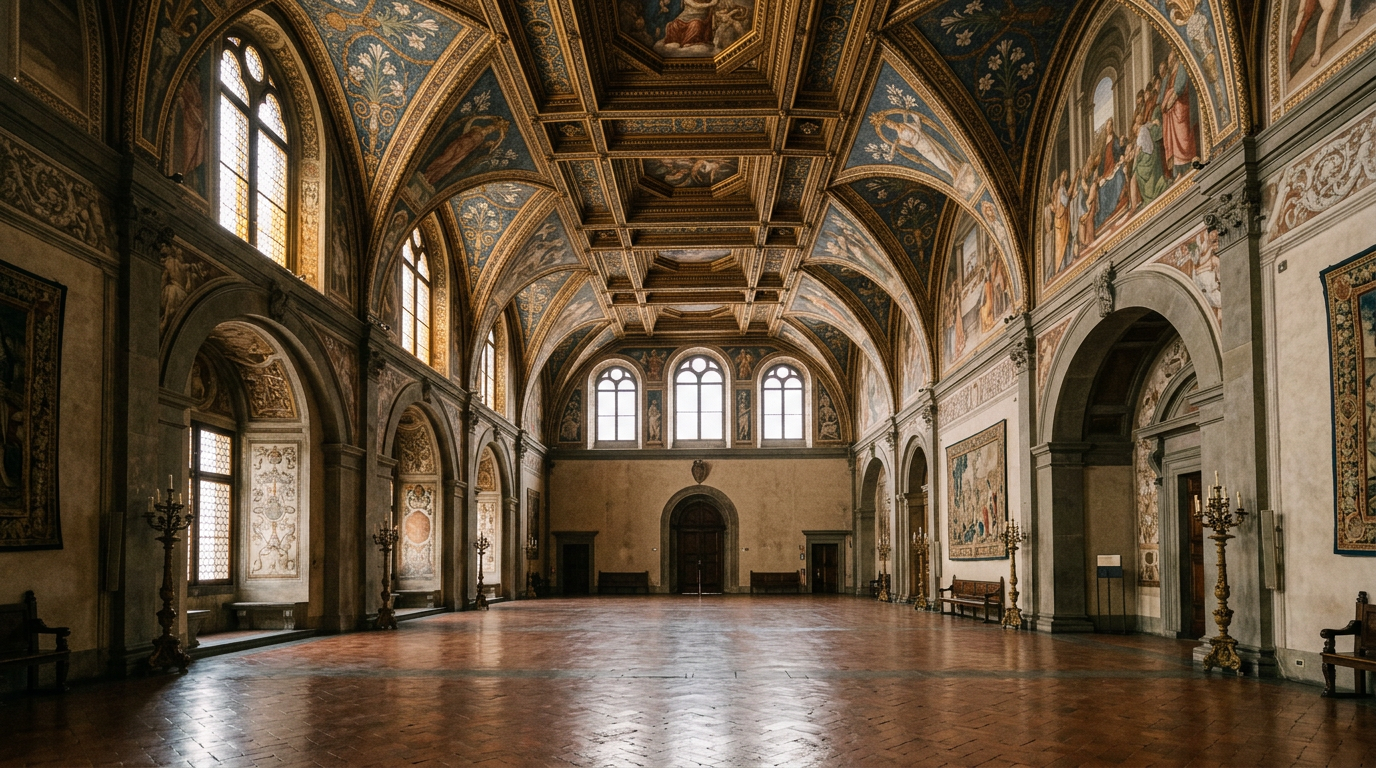
The Medici as Bankers: How Florence Changed Finance
The Medici as bankers: how it began
The Medici bank was founded in 1397 by Giovanni di Bicci de’ Medici. At that point, the family was already prosperous; they had been involved in wool trading and money changing for at least a century. But it was Giovanni who transformed a local money-changing operation into an international banking enterprise.
The key innovation was the use of branches. By 1420, the Medici bank had offices in Rome, Venice, Geneva, and later London, Bruges, Avignon, and Milan. Each branch operated as a semi-independent entity, with a local manager who held a stake in the profits. This structure limited liability: if a branch failed, it did not necessarily bring down the whole operation.
The bank’s primary activity was not what we would today call retail banking. It did not take deposits from ordinary citizens and make loans. Its main business was currency exchange, letters of credit, and the management of large commercial transactions between merchants in different cities. These services were essential for long-distance trade in an era when physical money was heavy, risky to transport, and subject to varying local currencies.
The bank’s most important account was the papacy. Managing the collection and transfer of papal revenues from across Europe gave the Medici a financial relationship with the most powerful institution on the continent. It also gave them leverage and information that no purely commercial bank could match.
From merchants to rulers of Florence
The transition from bankers to political rulers was gradual, deliberate, and never formally acknowledged. Florence was a republic, at least nominally, with elected councils and a rotating executive called the Signoria. The Medici never held absolute formal power in the way that a king or duke would.
What they held instead was influence. Cosimo de’ Medici, who took control of the bank after his father’s death in 1429, was exiled in 1433 by a rival faction that correctly identified him as a threat to the republican balance of power. He returned in 1434 after a single year, backed by enough allies to overwhelm his opponents.
From that point, Cosimo controlled Florence through a combination of financial patronage, carefully maintained personal networks, and a visible commitment to civic culture. He did not occupy an obvious office for most of this period. But the decisions of the Florentine state reflected his preferences, and those who crossed him found themselves in financial or political difficulties.
This system required constant maintenance. Cosimo spent heavily on maintaining allies, funding public works, and making strategic charitable donations. The line between political investment and genuine patronage was never clearly drawn. A donation to a monastery simultaneously expressed piety, cemented an alliance with the monks, and demonstrated public virtue.
The palaces they built
The most visible legacy of Medici wealth in Florence is architectural. The family built and commissioned several buildings that remain central to the city’s character.
Palazzo Medici Riccardi at Via Cavour 3 was built by Michelozzo from 1444 and was the family’s main Florence residence until 1540, when Cosimo I moved to Palazzo Vecchio. The building pioneered the rusticated stone exterior that became the template for Florentine palace architecture over the following century. The ground floor blocks are rough and heavily textured; the upper floors are progressively smoother. This gradation communicates stability and power without ostentation.
The palace was sold to the Riccardi family in 1659, who enlarged it by adding bays to the north. It is now owned by the Province of Florence and is open to visitors. The Cappella dei Magi on the first floor, with Benozzo Gozzoli’s frescoes, is the main attraction. Entry is 7 euros.
Palazzo Pitti was not built by the Medici but was acquired by them in 1549 when Eleonora of Toledo purchased it from the Pitti family. The Medici expanded it massively over the following 200 years. It eventually became the main grand-ducal residence in Florence and one of the largest palaces in Europe. It now houses three museums and the Boboli Garden.
The villas: the Medici built several villas in the countryside around Florence, including Villa Medici at Fiesole (now privately owned), Villa La Petraia near Sesto Fiorentino (open to visitors, free entry to the garden), and the complex at Poggio a Caiano. These were not just leisure retreats; they were agricultural estates, political meeting places, and expressions of humanist ideals about the relationship between architecture, landscape, and culture.
The patrons who changed art
The Medici funded more significant art than almost any other family in history. But understanding what they were doing requires separating genuine aesthetic appreciation from strategic investment.
Cosimo the Elder funded the reconstruction of the monastery of San Marco, designed by Michelozzo, which Fra Angelico then decorated with his frescoes. This single project produced approximately 50 individual works in the cells and corridors of the monastery, each designed for the contemplative use of individual monks. The funding was generous, public, and visible: everyone in Florence knew who had paid for it.
Lorenzo the Magnificent created a sculpture garden near San Marco where young Florentine artists could study ancient sculpture from the Medici collection. Michelangelo was sent there as a teenager and effectively became a member of the Medici household. Lorenzo recognised his talent and had him live in the Medici palace, eat at the family table, and receive a stipend.
The patronage produced results that remain in Florence today: the Uffizi collection, the Medici Chapels, the monastery of San Marco, the library of San Lorenzo (the Biblioteca Medicea Laurenziana, designed by Michelangelo and still operating at Piazza San Lorenzo 9). These are genuine cultural institutions, not just historical artefacts.
The end of the dynasty
The Medici banking empire was already in decline before the family’s political power ended. The later Medici grand dukes were less commercially minded than their ancestors and the bank contracted steadily from the late 15th century onward. By the time Florence became a Medici principality in 1530, the family’s financial base had narrowed considerably.
The grand-ducal period (1530 to 1737) was maintained not by banking but by taxation, trade control, and the management of Tuscan agricultural wealth. The later Medici became more like conventional European princes and less like the innovative merchant-financiers who had founded their power.
The dynasty ended without drama in the male line with the death of Gian Gastone in 1737. He had spent most of his reign in bed and produced no heirs. Tuscany passed to the House of Lorraine.
His sister, Anna Maria Luisa de’ Medici, outlived him by two years. Before her death in 1743, she signed the Family Pact with the new Lorraine rulers of Tuscany. The terms were specific: all Medici art, furniture, libraries, and collections were to remain in Florence permanently. They could not be sold, moved, or lent to other courts. This single document is the reason Florence’s museums contain what they contain today.
Where to stay
The Key is at Via Cittadella 22, five minutes on foot from Santa Maria Novella station. Palazzo Medici Riccardi is about 15 minutes on foot from the guesthouse, heading east along Via dei Cerretani toward the Duomo and then north to Via Cavour.