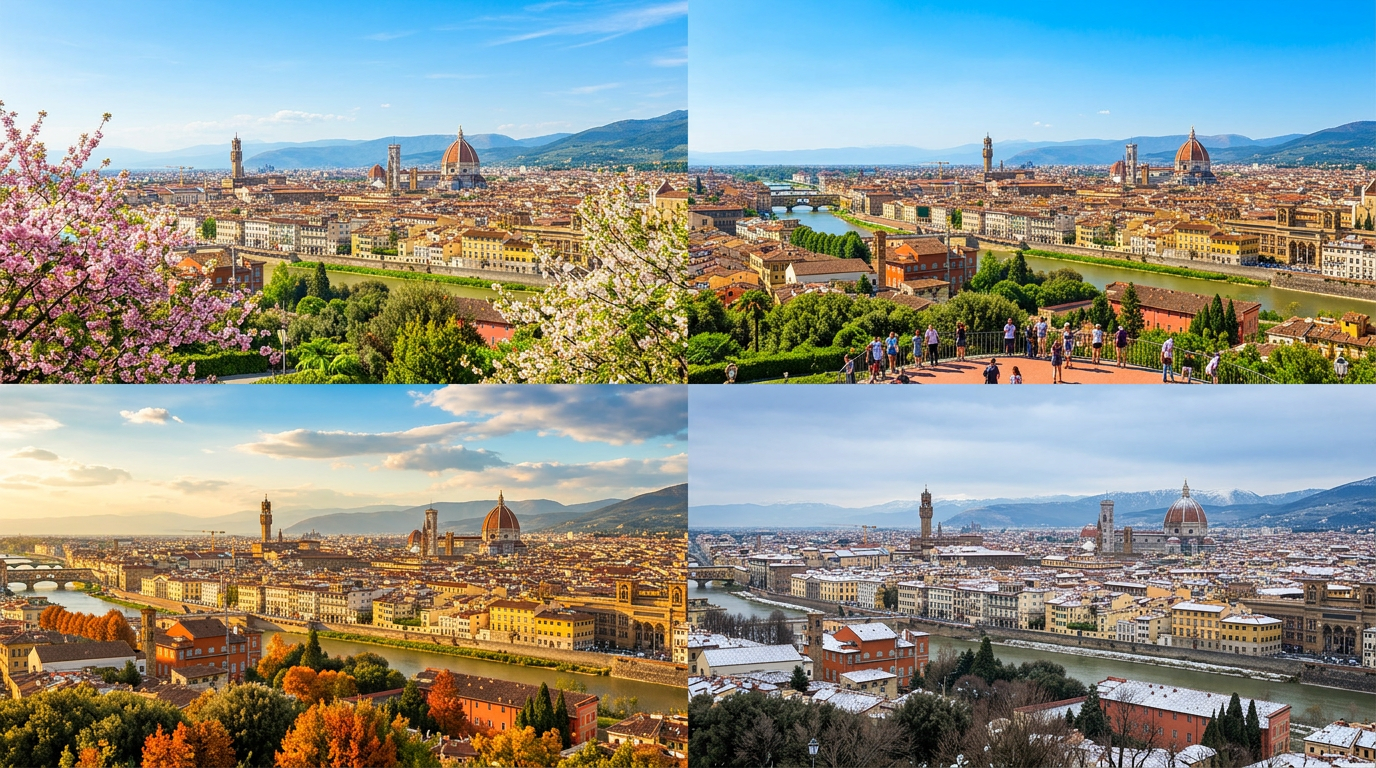
Florence Weather: Best Time to Visit
Florence has a Mediterranean climate with continental influences, which means hot summers, cold winters, and the best conditions in spring and autumn. The temperature range across the year is significant: from an average high of 10 degrees in January to 35 degrees or above in July.
Choosing when to visit involves a balance between weather, crowd levels, and price. This guide gives you the honest data for each month so you can make an informed decision.
Florence climate month by month
January: Average 2-10 degrees. The coldest month. Rain is possible. The city is very quiet. Museums are accessible without queuing. Accommodation is at its cheapest (outside Christmas-New Year). Occasional fog in the Arno valley.
February: Average 3-12 degrees. Similar to January. Slightly more light as the days lengthen. Carnival (Carnevale) falls in February and brings some local events, though Florence’s Carnevale is modest compared to Venice.
March: Average 6-16 degrees. Spring begins. The light improves noticeably. Still uncrowded relative to peak season. Unpredictable weather: some days reach 18-20 degrees, others remain grey and cold.
April: Average 9-20 degrees. Full spring. The gardens bloom. Easter typically falls in April (or late March) and brings a significant but manageable increase in visitors. Good conditions for outdoor walking.
May: Average 12-24 degrees. Consistently pleasant. Warm enough for outdoor dining without being hot. One of the best months overall. Tourist numbers begin to increase significantly from mid-May.
June: Average 16-30 degrees. Early summer. Warm to hot afternoons. The Calcio Storico Fiorentino and San Giovanni festivities (24 June) are highlights. Long days. Museums are fully booked and crowded.
July: Average 18-34 degrees. Peak heat and peak crowds. The afternoon temperature regularly exceeds 35 degrees. Outdoor sightseeing is uncomfortable from 12:00-17:00. Museum queues at their longest.
August: Average 18-34 degrees. Similar to July with the added complication of Ferragosto (15 August). Many local businesses close for one to two weeks. The city is simultaneously busy with tourists and quieter without its own residents.
September: Average 14-28 degrees. The best balance of warm weather and declining crowds. The second half of September is often excellent: 22-26 degrees, comfortable evenings, noticeably fewer tourists.
October: Average 10-20 degrees. Full autumn. Comfortable temperatures, autumn colour in the surrounding hills. Rain increases from mid-October. A strong overall choice.
November: Average 6-14 degrees. Quiet, cool, and sometimes rainy. The lowest crowd levels of the year (outside the 1 November long weekend). Museums at their most accessible.
December: Average 4-12 degrees. Christmas lights from 8 December. The Weihnachtsmarkt at Piazza Santa Croce runs until 24 December. Christmas-New Year period (20 Dec-6 Jan) brings a return of significant crowds and prices.
The best period overall
If you want to visit Florence once and experience it at its best balance of conditions, the following periods are the most consistently recommended:
Late April to mid-May: Warm, long days, spring flowers, manageable crowds. The main downside is that Easter (if it falls in April) brings a peak within this window. Outside the Easter weekend, late April is excellent.
September (especially the second half): Temperature eases from summer peaks, crowds drop significantly from mid-September, the light is good, and Tuscan autumn food and wine are at their best. This is the pick for many repeat visitors.
October (first three weeks): Autumn colour in the hills, comfortable walking temperatures, lower crowds, good restaurant availability. Rain risk increases from mid-October.
These three windows are the clearest recommendations based on weather, crowd levels, and overall experience.
The months to avoid and why
There is no month that is so bad you should not visit. Every month has advantages. The following notes are about conditions rather than absolute exclusions.
July and August are the months that combine maximum heat with maximum crowds. If you have no flexibility on timing, you can still visit and have a good time with the right preparation (see the summer guide). But if you have a choice, avoid these months for your first Florence visit.
Mid-December to early January is manageable but involves high prices, crowded museums, and the need to book everything (accommodation, restaurants, tickets) well in advance. The Christmas atmosphere is genuine and has its own appeal, but it requires planning.
November is not a month to avoid at all. It is quiet, cheap, and excellent for museums. The main limitation is that outdoor activities are less pleasant and some gardens have reduced access.
What changes between high and low season
Museum access: In July and August, the Uffizi and Accademia require booking at least 1-2 weeks in advance. In January or February, you can often walk in with a 15-20 minute wait or book the same day.
Accommodation prices: Summer (June-August) and Christmas-New Year prices can be 50-100% higher than the equivalent dates in November or January. The difference is significant if budget is a factor.
Restaurant availability: In summer, the best restaurants need booking 3-5 days ahead on weekends. In winter, same-day bookings are generally possible.
Opening hours: Some gardens (Boboli, Bardini) have reduced winter hours. Most museums maintain consistent hours year-round with minor variations.
Crowds at outdoor sites: Piazza del Duomo, Ponte Vecchio, and Piazzale Michelangelo are measurably less crowded in November, January, and February than at any other time of year.
Average temperatures and rainfall
Month-by-month averages (Celsius, approximate):
| Month | Min | Max | Rain days |
|---|---|---|---|
| January | 2 | 10 | 8 |
| February | 3 | 12 | 8 |
| March | 6 | 16 | 9 |
| April | 9 | 20 | 10 |
| May | 12 | 24 | 9 |
| June | 16 | 30 | 6 |
| July | 18 | 34 | 4 |
| August | 18 | 34 | 5 |
| September | 14 | 28 | 7 |
| October | 10 | 20 | 10 |
| November | 6 | 14 | 11 |
| December | 4 | 12 | 9 |
These are averages. Individual years vary. An October visit can be warm and sunny or cool and rainy. A January visit can include a day at 16 degrees or a morning frost.
The useful takeaway is that the temperature range from May through October gives you reliable warm weather for outdoor activities, while the lower-crowd months of November through March offer better museum access and lower prices at the cost of some weather reliability.
Where to stay
Whatever month you choose, a central location keeps your options open and your travel time short. The Key is at Via Cittadella 22, a 5-minute walk from Santa Maria Novella station, positioned in the heart of Florence for any season.