Florence Contemporary Art Galleries: Beyond the Renaissance
Florence is not only the Renaissance
The dominant narrative about Florence is Renaissance. The city built its international identity on the 15th and 16th centuries, and most of what is marketed, visited, and discussed confirms that frame.
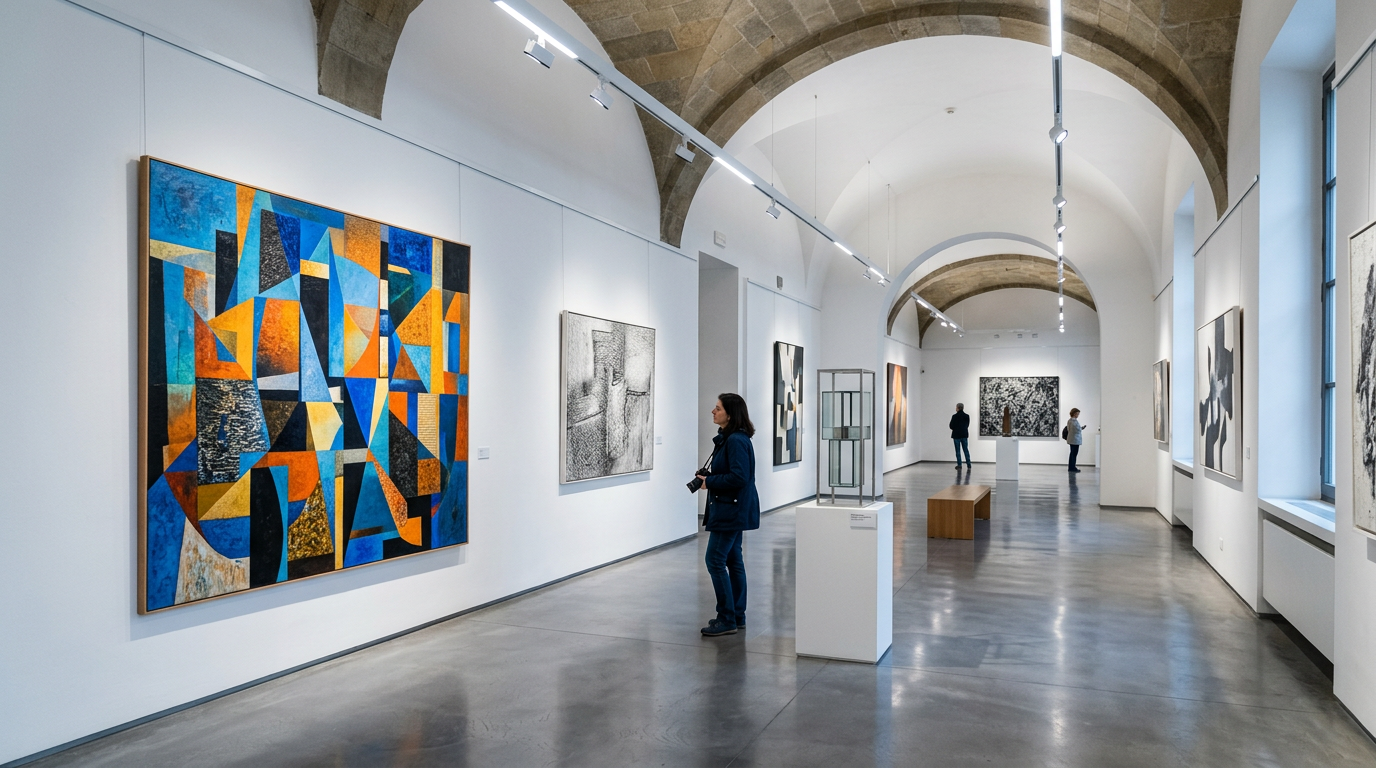
But Florence has a functioning contemporary art scene. It has institutions dedicated to 20th-century and 21st-century work. It hosts major international exhibitions. And it has a network of independent galleries that operate without the weight of Botticelli looking over their shoulder.
This article covers the contemporary side of Florence’s art world. It is not comprehensive, because the scene shifts. It is a starting framework for visiting the city as something other than an open-air Renaissance museum.
Contemporary art galleries in the centre
The independent gallery scene in Florence is smaller than in Milan or Rome, but it is active. Several galleries in the historic centre focus on contemporary and 20th-century Italian and international art.
Galleria Frittelli Arte Contemporanea at Via dei Pilastri 9, near Sant’Ambrogio, has operated since 2001. It focuses on mid-career and established Italian and European artists, with a program of around 6 to 8 exhibitions per year. Entry is free. Open Tuesday to Saturday, 10:00 to 13:00 and 15:30 to 19:30.
Eduardo Secci Gallery at Piazza Goldoni 2 is one of the more commercially significant contemporary galleries in the city, with an international program. It opened in Florence in 2010 and handles both painting and sculpture. The space is in a late 19th-century building with high ceilings that works well for large-scale work. Open Monday to Friday 10:00 to 19:00, Saturday by appointment.
Galleria Giovanni Bonelli operates between Milan and Florence. The Florence space focuses on younger Italian artists and has a slightly more experimental program than some of the more established galleries. Check the current program on their website before visiting.
Spazio Pontaccio and several project spaces in the Oltrarno neighbourhood operate on event schedules rather than regular gallery hours. The neighbourhood around San Frediano and Via dei Serragli has the highest concentration of these informal spaces.
For a current list of what is on during your visit, the website firenzegallerie.it and the cultural listings in the local editions of La Nazione are useful references.
The Museo Novecento
The Museo Novecento is the city’s public museum dedicated to Italian art of the 20th century. It opened in 2014 in the former Istituto degli Innocenti annex at Piazza Santa Maria Novella 10, adapted for the purpose by the architect Adolfo Natalini.
The permanent collection covers Italian art from the Futurist period of the early 1900s through the 1980s. The work includes painting, sculpture, installation, and works on paper. Key figures represented include Giorgio Morandi, whose contribution to the development of still life as a serious genre is significant; Carlo Carrà, one of the founders of Futurism who later moved to Metaphysical painting; and Marino Marini, whose figures on horseback are among the most recognisable Italian sculptures of the mid-20th century.
The museum also organises a strong temporary exhibition programme. In recent years it has mounted retrospectives on figures who are well-known in Italy but less visible internationally, providing a useful corrective to the Rome-Milan-Venice axis that dominates narratives about Italian modern art.
Entry costs 9.50 euros for adults. Open daily 11:00 to 20:00, Friday and Saturday until 23:00. The extended Friday evening hours make it a viable option for a post-dinner visit. The building is 5 minutes on foot from Santa Maria Novella station.
Palazzo Strozzi: the big temporary exhibitions
Palazzo Strozzi is the primary venue in Florence for large international temporary exhibitions. Since 2006, the building has operated as a dedicated exhibition space managed by the Fondazione Palazzo Strozzi. It hosts approximately 3 to 4 major exhibitions per year, each running for 2 to 4 months.
The programme has covered major retrospectives on artists including Ai Weiwei, Cindy Sherman, Marina Abramovic, and Jeff Koons, as well as historical exhibitions on topics such as American art, German Expressionism, and the Florentine Renaissance. The mix of contemporary and historical reflects the building’s position as a meeting point between the city’s Renaissance identity and contemporary art practice.
Entry costs vary depending on the exhibition, typically 13 to 16 euros for adults. The building’s courtyard, which is also used for installations and events, is accessible during opening hours even without an exhibition ticket. The shop and the cafe on the piano nobile are also accessible.
Open daily 10:00 to 20:00, Thursday until 23:00. Book tickets online at palazzostrozzi.org to avoid queues for major exhibitions, which can be significant. The building is on Piazza degli Strozzi, a 10-minute walk from Santa Maria Novella station.
How to keep up with events
Florence’s cultural calendar is active but requires some effort to navigate. The city has no single comprehensive English-language listings platform, and events are spread across institutional and independent channels.
The most reliable sources for current exhibitions and gallery openings:
palazzostrozzi.org: for the main institutional programme at Palazzo Strozzi and any associated events.
musefirenze.it: the official site for all Florence civic museums including the Museo Novecento, Palazzo Vecchio, Museo Stefano Bardini, and several others. Check the current programme for all venues on one platform.
The Florentine (theflorentine.net): an English-language magazine and website that covers Florence’s cultural life for the international community. Weekly listings of exhibitions, events, and openings. Reliable for up-to-date information in English.
Arte.it: the national Italian art platform with Florence-specific filtering. Useful for tracking openings at independent galleries across the city.
For openings and events at smaller galleries: follow individual gallery Instagram accounts. Most Florentine galleries are active on Instagram with current programme information and opening times, which sometimes differ from the times listed on official websites.
One practical note on timing: Florence’s major cultural institutions tend to launch new exhibitions in autumn (September to November) and spring (March to May). The summer months, particularly July and August, can have fewer openings at independent galleries, though the major institutions maintain their schedules year-round.
Where to stay
The Key is at Via Cittadella 22, five minutes on foot from Santa Maria Novella station in Florence. The Museo Novecento is directly on Piazza Santa Maria Novella, a 5-minute walk from the guesthouse. Palazzo Strozzi is about 10 minutes on foot heading southeast toward the centre.