Best Aperitivo in Florence: Where to Go and What to Drink
The aperitivo in Florence: what to expect
Aperitivo in Florence is not the same thing as aperitivo in Milan. In Milan, you pay for a drink and get access to a full buffet of food. In Florence, the tradition is older and simpler: you drink something before dinner, you eat a little something alongside it, and the whole point is to slow down before the evening meal.
That said, Florence has evolved. Some bars now offer buffets, others serve small plates with every drink, and some have no food at all. Knowing the difference before you walk in saves you disappointment.
The standard aperitivo window in Florence runs from 18:00 to 20:00. Some bars start at 17:30, a few extend to 20:30. Most restaurants begin dinner service at 19:30, so aperitivo fits neatly before the meal.
A standard aperitivo drink, whether Negroni, Aperol Spritz, or a glass of local wine, costs between 7 and 12 euros in most bars. That price usually includes a small snack. Olives, crisps, bruschetta, or a crostino with chicken liver pate are common.
The best neighbourhoods for aperitivo
Florence is compact enough that good aperitivo spots are spread across several neighbourhoods. Each one has a different character.
Oltrarno is the neighbourhood south of the Arno river. It is generally less touristy than the historic centre and has a higher concentration of bars serving locals. The streets around Piazza Santo Spirito and Piazza della Passera are the best starting point. Piazza Santo Spirito itself has several bars with outdoor seating where the crowd is mostly Florentine, especially on weekday evenings.
San Frediano, which sits just west of Oltrarno proper, has become one of the more interesting areas for drinking in the city. Via dei Serragli and the surrounding streets have wine bars and cocktail bars that are less crowded than the centre and charge fair prices.
The historic centre around Via dei Benci and Borgo dei Greci, near Santa Croce, has a mix of tourist bars and genuinely good local spots. You need to look more carefully here, but the quality is there if you walk away from the main piazzas.
The Sant’Ambrogio area, east of the centre near the market, has a handful of unpretentious wine bars that fill up with residents after 19:00. Prices are typically 1 to 2 euros lower than the tourist-facing bars.
Wine bars with the right Negroni
The Negroni was invented in Florence in 1919. The story goes that Count Camillo Negroni walked into Caffe Casoni, near the current Caffe Giacosa on Via della Vigna Nuova, and asked the bartender to strengthen his Americano cocktail by replacing the soda water with gin. The result became one of the most replicated cocktails in the world.
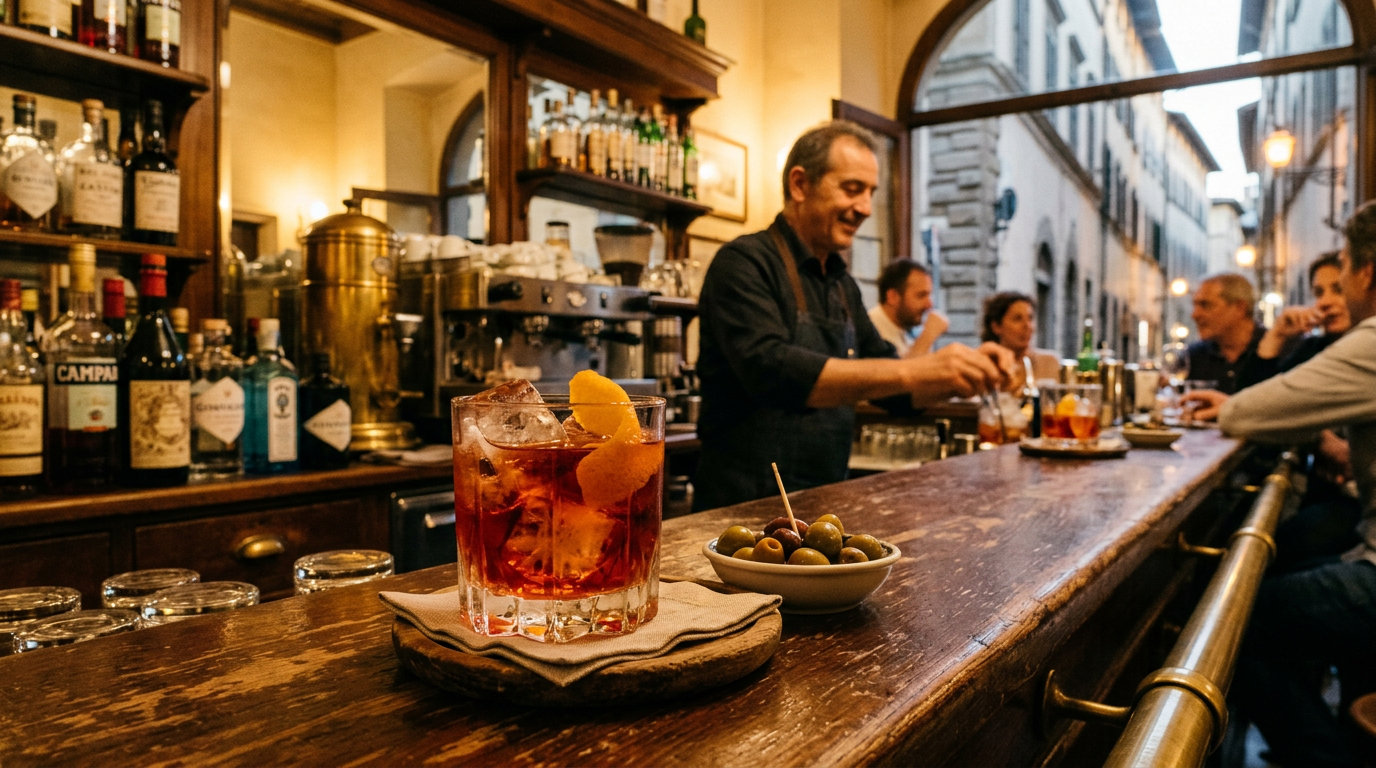
A proper Negroni is equal parts gin, sweet vermouth, and Campari, stirred, not shaken, served over ice with an orange peel. If a bar gives you a slice of orange, they are doing it for aesthetics. The oil from the peel matters, not the fruit.
In Florence, the Negroni is so embedded in local identity that you can use it as a quality test. If the bar makes a good Negroni, they probably take their other drinks seriously too.
Some reliable spots for a serious Negroni: look for bars in Oltrarno that stock a selection of Italian gins or vermouths by the bottle. A bar displaying bottles from Berto or Cocchi vermouth is a good sign. Expect to pay 8 to 11 euros for a well-made version.
The worst Negronis tend to come from tourist bars near the Uffizi or Piazza della Signoria. The ingredients are often cheap, the proportions are off, and you will pay 12 to 14 euros for something that tastes like it was mixed by someone who had never drunk one.
Aperitivo with buffet: where to find it
The Milanese-style aperitivo with a full buffet does exist in Florence, but it is less common than people expect. A few bars offer it reliably, and they tend to be slightly further from the main tourist zones.
The bars around Piazza della Repubblica and Via Tornabuoni occasionally run buffet aperitivo evenings, but these tend to be more expensive, with drinks starting at 12 euros, and the food quality is inconsistent.
A better approach is to look for wine bars that serve cicchetti or stuzzichini: small individual plates served with each drink order. Crostini with various toppings, small portions of pecorino or cured meat, marinated vegetables. This model is common in Oltrarno and the Sant’Ambrogio area.
If you want a proper feeding aperitivo, some enoteca restaurants offer a generous plate of charcuterie and cheese as a shared snack when you order wine. This is not a buffet, but it is substantial. Expect 10 to 15 euros per person for the food, plus the cost of wine.
One practical tip: bars that advertise “aperitivo” in large signs in their windows are usually targeting tourists. Bars where the aperitivo offer is simply written on a small chalkboard, or only communicated verbally, tend to be more local in character.
Average prices and opening hours
Here is a clear breakdown of what to expect in terms of prices and timing across the city.
Standard aperitivo drink with small snack: 7 to 10 euros. This is the base price in most wine bars and neighbourhood spots in Oltrarno and Sant’Ambrogio.
Cocktail aperitivo in the historic centre: 9 to 13 euros. Prices rise the closer you get to Piazza della Signoria or the Duomo.
Wine by the glass at aperitivo: 5 to 8 euros. Chianti Classico by the glass is typically 5 to 7 euros. Vermentino or Vernaccia around 5 euros. Brunello or Bolgheri wines will cost more, 8 to 14 euros per glass.
Aperitivo with a generous plate of food: 12 to 18 euros per person at enoteca-style places.
Most bars open for aperitivo at 18:00. The best time to arrive is 18:15 to 18:30 if you want a seat outside. By 19:00, Piazza Santo Spirito and the Via dei Benci area become crowded on Friday and Saturday evenings.
Aperitivo winds down by 20:00 in most places. Some bars continue serving drinks but stop the food service. A few spots on Piazza Santo Spirito keep going until 21:30 or later.
A few words on Chianti and local wines
Florence sits inside the Chianti wine region. Buying a glass of Chianti Classico at aperitivo in Florence is one of those simple, correct things to do. The wine is made from Sangiovese grapes grown in the hills between Florence and Siena. It is dry, moderately tannic, and pairs well with the salty snacks typically served at aperitivo.
Look for bars that keep a short list of Tuscan wines by the glass rather than offering only Aperol Spritz and beer. A bar that stocks Vernaccia di San Gimignano, Morellino di Scansano, or Vino Nobile di Montepulciano by the glass is worth your time.
Avoid places where all the wine by the glass is simply labelled “red” or “white” with no further detail. This usually means the wine comes from an anonymous source and may not represent the region.
Where to stay
The Key is located on Via Cittadella 22, about 5 minutes on foot from Santa Maria Novella station. Oltrarno, one of the best neighbourhoods for aperitivo, is a 15-minute walk across the river. The Sant’Ambrogio area is roughly 20 minutes on foot through the historic centre.
Both neighbourhoods are easily accessible without public transport if you are based near the station.