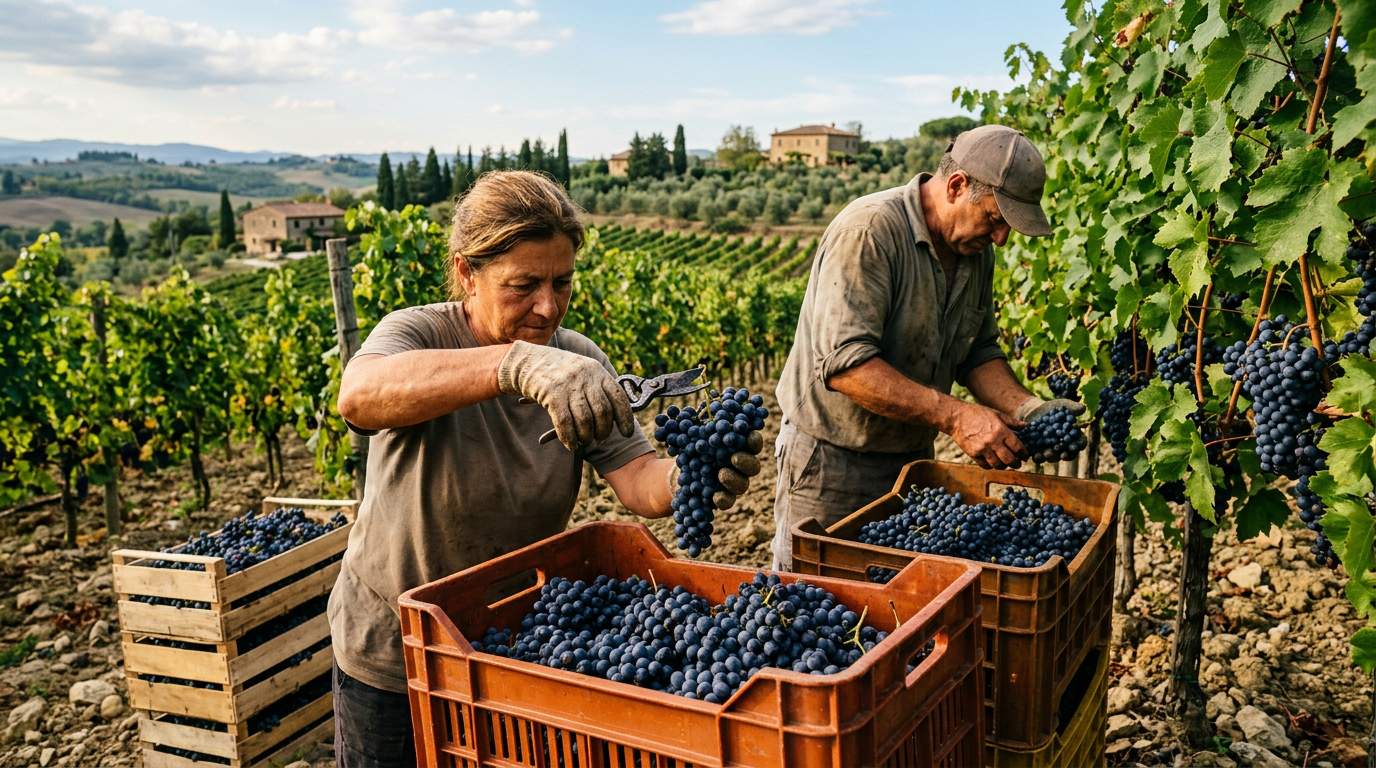
Chianti harvest: how to take part and live it
The Chianti harvest is one of those experiences that stays with you long after you leave. It is not about watching. It is about getting your hands dirty, being in the rows, feeling the weight of a full basket, and sitting down for a shared lunch in the farmyard at midday.
If you are staying near Barberino Val d’Elsa, you are right in the middle of Chianti Classico territory. The harvest here is not a spectacle for tourists. It is a working moment, and that is exactly what makes it special.
Taking part in the Chianti harvest
You do not need experience to join a harvest day. Most small wineries that accept volunteers are happy to show you what to do. You cut bunches with a small curved knife, place them gently in crates, and pass them down the row.
The work is physical. You spend hours bent over, walking on uneven ground, lifting crates weighing up to 15 kilograms. Wear old clothes, bring a hat, and use sunscreen. Mornings can be cool in September but temperatures rise quickly by ten o’clock.
The reward is lunch. Every winery that invites you to pick grapes will feed you well. Expect ribollita, pappardelle with wild boar, roast meat, and a generous flow of local wine. This meal is often the heart of the whole experience.
When the harvest happens
The Chianti Classico harvest typically runs from mid-September to mid-October. The exact timing depends on the year, the variety, and the altitude of each vineyard.
Sangiovese, the backbone of Chianti Classico, is usually the last to be picked. Earlier varieties like Merlot or Colorino may be harvested already in the first week of September. Winemakers monitor sugar levels and acidity daily before deciding when to cut.
In years with a hot, dry summer the harvest can start a week or two earlier. In cooler years it shifts toward October. Contacting a winery directly in August will give you the most reliable estimate for that season.
The best window if you want to be present for Sangiovese is the last ten days of September. You can plan your stay around that period with a good degree of certainty.
How to find a winery that accepts you
The simplest approach is to contact wineries directly. Small and medium estates near Barberino Val d’Elsa are the best candidates. Large commercial producers have mechanised harvests and do not need extra hands.
Look for wineries that describe themselves as family-run or that mention agriturismo accommodation. These are the ones most likely to welcome you for a day or a full week during harvest. Some ask for a small contribution to cover lunch and wine. Others simply expect your work in exchange.
The Strada del Vino Chianti Classico website lists producers in the area. You can write directly to estates in Barberino Val d’Elsa, Tavarnelle Val di Pesa, or Greve in Chianti. Mention that you are interested in a vendemmia experience and ask about dates.
Agriturismo platforms sometimes offer harvest packages that include accommodation, meals, and a morning of picking. These are more structured and cost more, but they come with no uncertainty.
What to do during the harvest
A harvest morning usually starts at seven or eight. The rows are assigned and picking begins immediately. The pace is set by the more experienced workers. You follow their lead, cutting low, avoiding damaged fruit, and keeping the row clean.
At around twelve-thirty work stops. Everyone moves to the farmyard or a covered area outside. The lunch is long and unhurried. Wine is poured freely. Conversation moves between Italian, English, and sometimes other languages depending on who is there that day.
In the afternoon, if the estate allows it, you can watch the grapes being sorted on the selection table and tipped into the fermentation tanks. Some winemakers explain the process as they go. Others prefer silence and concentration. Either way, you are watching the first stage of wine being made.
If you spend more than one day, you might help with the cleaning of equipment or the daily checks on fermentation temperature. The less glamorous tasks are just as instructive.
The grape festivals of September
Several villages in the Val d’Elsa and Chianti area hold harvest festivals in September and October. These are not wine fairs. They are local events where the focus is on the grape itself, the act of picking, and the communal dimension of the harvest.
Greve in Chianti is about 20 km from Barberino Val d’Elsa and hosts Chianti Classico Expo in September. This is a major tasting event where dozens of producers open bottles from current and older vintages.
Impruneta, about 30 km away, holds the Festa dell’Uva in October. The village is divided into four districts that compete with decorated floats carrying enormous bunches of grapes. It is festive, crowded, and deeply local.
Barberino Val d’Elsa itself and nearby Tavarnelle often organise smaller sagre in September. Look at local bulletin boards and the comune website for the updated programme. These events rarely appear in tourist guides, which is part of what makes them worth attending.
Bring cash to the festivals. Not all producers accept card payment for bottles or samples.
How to prepare for the experience
A few practical points make the difference between a comfortable day and a tiring one.
Wear closed shoes with good grip. Vineyard soil can be slippery and the rows are not flat. Ankle support helps if you are not used to walking on slopes.
Bring a small backpack with water, sunscreen, and a light snack for mid-morning. Lunch will be substantial but the morning shift can be three to four hours without a break.
If you are joining through a winery contact rather than an organised package, confirm the start time, the address, and whether lunch is included. A short message the day before is good practice.
Consider spending at least two nights in the area. One morning of picking is rewarding, but two or three days lets you follow a slightly longer arc of the process.
Where to stay
Sogno d’Oro in Barberino Val d’Elsa places you at the centre of Chianti Classico territory. You are within a few kilometres of vineyards that produce some of the most respected wines in the denomination.
It is a good base for harvest experiences: close enough to reach estates on foot or by short drive, and quiet enough to rest well after a physical day in the rows.