Truffle in Tuscany: where to find it and how to hunt it
Tuscany is one of Italy’s most important truffle regions. Black truffles grow here through most of the year. White truffles, the most prized and expensive, are found from October to December in specific zones. The landscape around Barberino Val d’Elsa gives you good access to several truffle areas without a long drive.
Understanding where the truffles are, when to go, and how to take part in a hunt turns a general curiosity into a genuine experience.
Truffles in Tuscany
Tuscany produces several truffle varieties across different seasons.
The scorzone, or summer truffle, grows from May to September. It has a rougher exterior than the winter black truffle and a milder flavour. It is affordable and widely available in summer months at local markets and restaurants.
The marzuolo, or spring truffle, grows from January to April. It resembles the white truffle in appearance but has a less intense and more earthy flavour.
The pregiato nero, or Norcia-type black truffle, is the most valued of the black varieties. It grows from November to March and has a distinctive musky, chocolatey aroma when fresh. San Giovanni d’Asso in the Crete Senesi, about 50 km from Barberino, is the heart of Tuscan black truffle production.
The tartufo bianco, or white truffle, is the king of the category. Found from October to December in the Crete Senesi and around San Miniato, about 45 km from Barberino, it commands prices of 2,000 to 5,000 euros per kilogram. A small shaving over pasta or egg is all you need.
The richest truffle areas
The Crete Senesi, southeast of Siena, is the most productive truffle area in Tuscany. The landscape of pale clay hills, erosion gullies, and sparse woodland creates ideal conditions. Towns like Asciano and Trequanda sit at the centre of this zone.
San Giovanni d’Asso, about 50 km southeast of Barberino, holds a dedicated truffle market in November and December. The town’s truffle museum explains the ecology and history of local production in a surprisingly engaging way.
San Miniato, in the Arno valley about 45 km north-northwest of Barberino, is famous for white truffle and hosts a major fair in November. The rolling hills around the town produce specimens that compete with those from Alba in Piedmont.
The Val d’Elsa itself has truffle grounds, particularly in the wooded areas between Barberino and Certaldo. These are not publicly marked zones. Trifolai, the truffle hunters, guard their spots closely and rarely share exact locations.
Truffle markets near Val d’Elsa
The San Miniato truffle fair runs across three weekends in November. The streets of the historic centre fill with truffle sellers, food stalls, and visitors from across Italy and Europe. You can buy fresh white truffle directly from hunters, compare prices, and watch chefs demonstrate recipes.
San Giovanni d’Asso holds its mostra mercato del tartufo in November. It is smaller and less crowded than San Miniato, which means you get more time with the sellers and a less rushed atmosphere.
Volterra, about 35 km from Barberino, hosts autumn truffle events in October and November. The medieval setting adds atmosphere.
Even outside dedicated fairs, local alimentari and delicatessens in the area carry truffle products year-round: truffle oil, truffle salt, truffle paste in jars. These are not substitutes for fresh truffle but they are practical souvenirs and reasonable condiments.
Be cautious with truffle oil. Most commercial truffle oil is made with synthetic aromatic compounds rather than actual truffle. Look for oils that list real truffle among the ingredients and are priced accordingly.
How to join a truffle hunt
Organised truffle hunts for visitors are offered by several agriturismo and specialist tour operators in the Chianti and Crete Senesi areas.
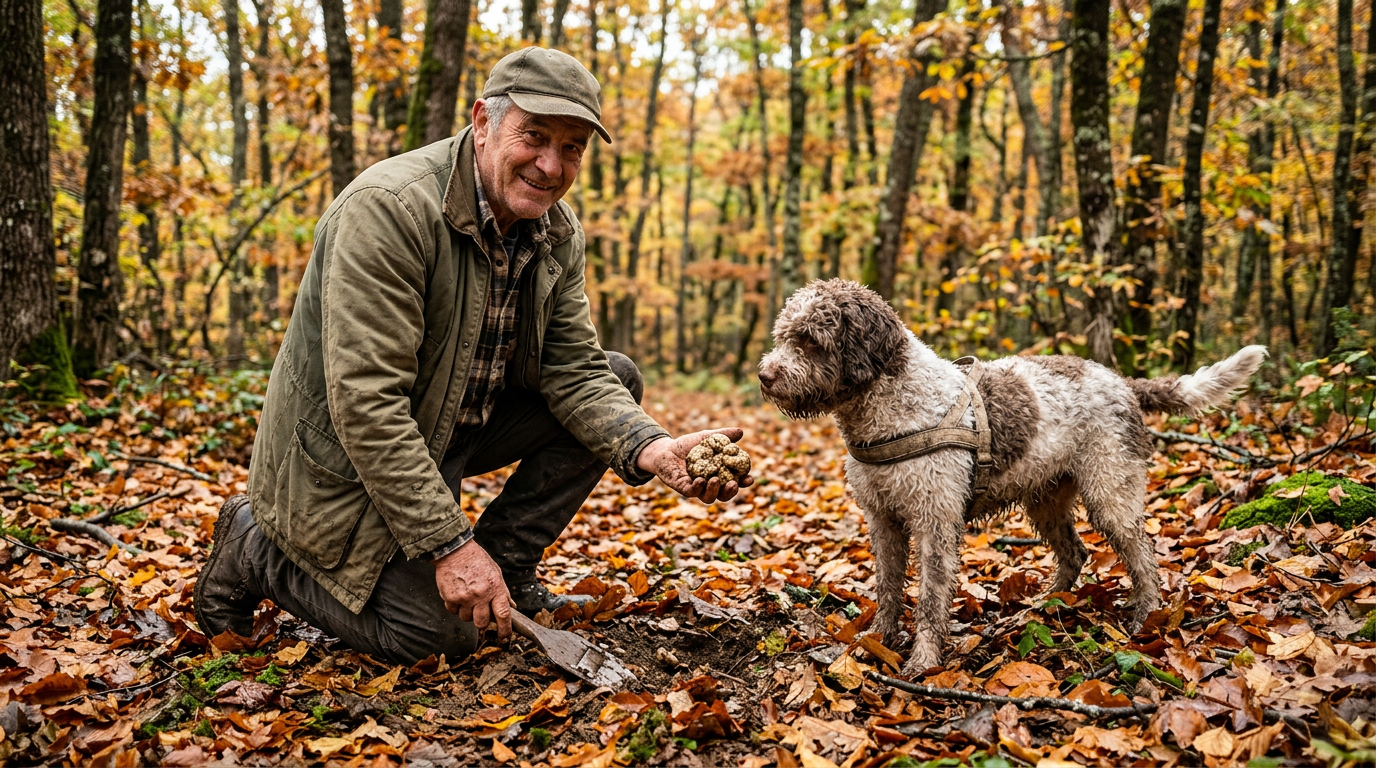
A typical hunt lasts two to three hours and is led by a trained trifolao with at least one dog. The dog does the actual work. Its nose identifies the truffle underground. The hunter uses a small tool called a vanghetto to carefully dig it up.
You walk through woodland, on uneven ground, for the duration of the hunt. Wear sturdy shoes and weather-appropriate clothing. The experience can be wet and muddy in autumn.
Most hunts include a tasting lunch or aperitivo at the end. You eat simple dishes featuring the truffle found that morning: bruschetta, scrambled eggs, or fresh pasta. This is the most direct way to understand what a fresh truffle actually tastes like.
Prices for an organised hunt with a small group typically range from 60 to 120 euros per person including the meal. Book in advance, especially for November visits when demand is highest.
Some agriturismo near Barberino Val d’Elsa can arrange a local hunt. Ask your hosts at Sogno d’Oro, as they will know which operators work in the immediate area.
Restaurants where to eat it
Fresh truffle dishes appear on restaurant menus throughout Tuscany during the autumn season. Quality varies significantly. The key is to eat truffle in places that source it fresh from local hunters rather than from frozen or jarred products.
In San Miniato, restaurants near the fair offer truffle menus throughout November. The pici al tartufo, hand-rolled pasta with fresh truffle shaved over it, is the most straightforward and satisfying way to eat the product.
In the Val d’Elsa area, several trattorias and ristoranti in Barberino, Tavarnelle, and San Donato in Poggio serve seasonal truffle dishes in autumn. Ask whether the truffle is fresh and local. A good restaurant will answer this question without hesitation.
Uova al tartufo, soft scrambled eggs with white truffle, is considered the most honest preparation. Butter and eggs are neutral enough to let the truffle speak without competition.
Where to stay
Sogno d’Oro in Barberino Val d’Elsa puts you within easy reach of both the Crete Senesi truffle grounds and the San Miniato fair. You are also close enough to the Val d’Elsa woodland truffle areas to arrange a local hunt during your stay.
The guesthouse is a calm base from which to explore one of Tuscany’s most compelling seasonal experiences.