Radda in Chianti: what to do
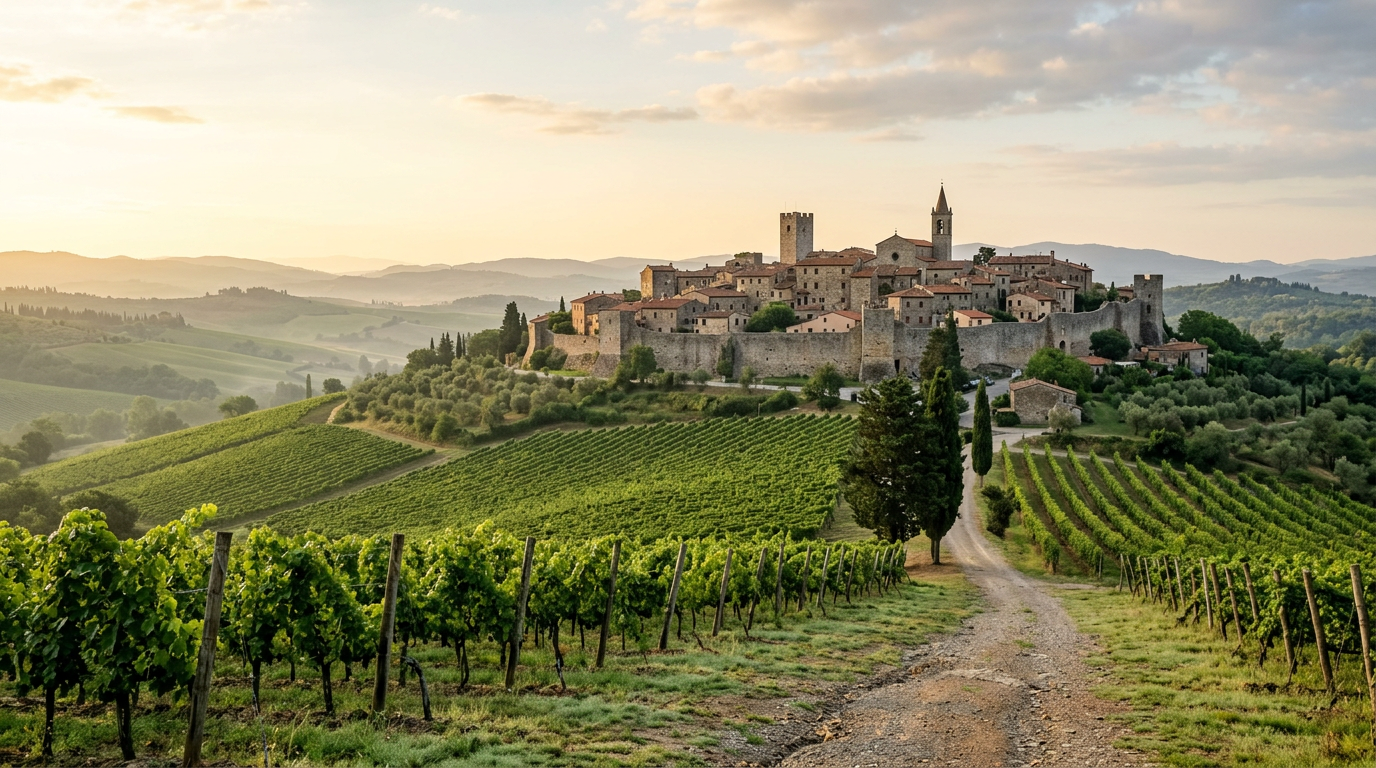
Radda in Chianti is a small hilltop town of about 1,600 people at the geographical heart of the Chianti Classico zone. It sits at 530 metres above sea level, between the Pesa and Arbia valleys, and has been a centre of wine production and trade for centuries.
It is 28 km from Barberino Val d’Elsa and about 30 minutes by car. Small enough to walk completely in an hour, rich enough in wine, food, and landscape to fill a full day.
Radda in Chianti: what to do
Radda is less visited than Greve in Chianti and has a quieter, more residential character. The main street and the central square are the focus of daily life. Shops and restaurants are modest in number but generally good in quality.
The territory of Radda in Chianti covers a large area of hills and woodland, making it ideal for hiking and cycling. The village is a starting point for trails that wind through vineyards, oak forests, and to nearby hamlets and estates.
For wine, Radda is surrounded by some of the finest estates in the Chianti Classico zone. The altitude and the mix of soils in this part of the zone produce wines known for elegance and complexity rather than power.
The town hosts a small weekly market on Thursdays. The main piazza, Piazza Ferrucci, has cafes and a wine bar where you can taste local Chianti before deciding what to take home.
Intact medieval centre
The historic centre of Radda in Chianti is one of the best preserved in the entire Chianti zone. The Palazzo del Podesta, the main civic building, dominates the central square and has a facade covered with ceramic coats of arms, similar to the Palazzo Pretorio in Certaldo.
The covered passageway running through the centre of the Palazzo del Podesta connects the main square to the alley behind. This unusual architectural feature allows pedestrian movement through the building at ground level.
The town walls are largely intact. The original circuit has two main gates: the Porta Fiorentina to the north and the Porta Senese to the south. Walking the circuit outside the walls takes about 20 minutes and gives continuous views over the vineyard-covered hills.
The Church of Santa Maria in Prato, just outside the walls to the south, has a 15th-century tabernacle with a fresco attributed to the Florentine school. The small building is often unlocked during daylight hours.
The streets inside the walls are narrow, slightly cobbled, and almost entirely residential in character. A few wine shops and small restaurants operate here, but the atmosphere is far from touristy. Radda still feels like a place where people live rather than a destination manufactured for visitors.
Chianti Classico wineries
The territory of Radda in Chianti contains some of the most respected Chianti Classico producers. The altitude and the predominance of Galestro and Alberese soils produce wines with notable structure and aging potential.
Castello di Volpaia is one of the most celebrated estates in the zone. It is located in the village of Volpaia, about 6 km north of Radda. The winery occupies medieval buildings in the centre of the village. Their Chianti Classico Riserva is consistently excellent. Visits by appointment, around 25 euros.
Vignavecchia is a smaller estate close to Radda producing high-quality Chianti Classico and Super Tuscan wines. Family-run and welcoming to visitors. Visits by appointment.
Monteraponi is another small estate in the Radda area known for wines of great finesse and mineral character. The estate farms biodynamically. Visits by appointment.
For a more accessible entry point, the Enoteca la Botte on Via XX Luglio in Radda stocks wines from many local estates. You can taste before buying and the selection is well curated.
Walking and cycling routes around the village
Radda is an excellent base for walking and cycling in the Chianti hills. The combination of white gravel roads (strade bianche), forest paths, and vineyard tracks gives a range of options for different fitness levels.
The trail to Volpaia is one of the most popular walks from Radda. It covers about 6 km and takes around 90 minutes at a comfortable pace. The path passes through oak forest and opens onto vineyard views before arriving at the village.
A longer circuit of about 18 km links Radda to Montevertine, the estate producing one of the most famous Super Tuscan wines, and back through the countryside north of the village. This route is suitable for fit walkers or mountain bikes. Allow four to five hours.
For cycling, the SR429 from Radda towards Gaiole passes through genuinely beautiful Chianti countryside. The road is hilly but not extreme. A gravel bike is ideal, but a road bike handles the surface well outside wet season.
Several estates along these routes rent bicycles or electric bikes. The tourist office in Radda can provide current information on rental options and trail maps.
How to get there from Barberino Val d’Elsa
Radda in Chianti is about 28 km from Barberino Val d’Elsa. By car the drive takes around 30 minutes.
The most direct route goes south-east from Barberino on the SP1 towards San Donato in Poggio, then east through Panzano and Greve in Chianti, then south-east on the SR429 to Radda. This route passes through some of the finest Chianti Classico landscape.
An alternative route via Poggibonsi and the SR222 is slightly longer in distance but avoids the winding Chianti roads. It takes about the same time.
Public transport to Radda is extremely limited. A car is essential for this destination.
Parking in Radda is available outside the town walls in several free car parks. From the car parks, the town centre is a two-minute walk.
Where to stay
Sogno d’Oro is positioned near Barberino Val d’Elsa, at the western edge of the Chianti Classico zone. Radda is 28 km to the east, deep in the wine country.
The drive between the two takes 30 minutes through some of the most beautiful countryside in Tuscany. You can plan a full wine-focused day in the Radda area and return to the Val d’Elsa landscape in the evening.