Pienza pecorino: where to buy it and how to pair it
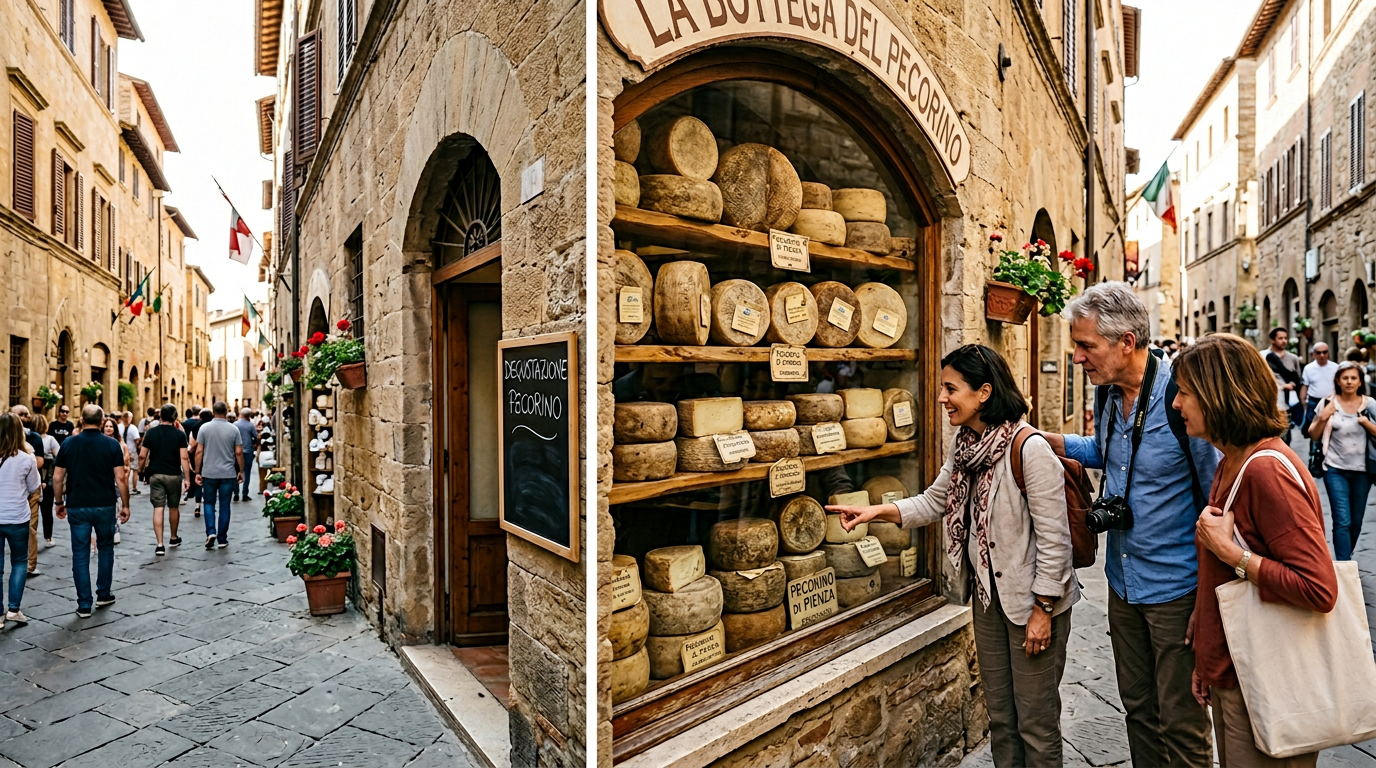
Pienza and pecorino are inseparable. The town’s main street, Corso il Rossellino, has more cheese shops per metre than almost any other street in Italy. Wheels of fresh, semi-aged, and fully aged pecorino fill the windows and counters of a dozen specialist shops. The smell of aged sheep’s milk cheese drifts into the piazza.
From Barberino Val d’Elsa the drive is about 65 km and takes roughly 55 minutes on the SR2 south through Siena and then east toward Pienza. It is one of the most rewarding food-focused day trips in the region.
Pienza pecorino where to buy it
Pienza pecorino is not a protected designation of origin in the same strict sense as pecorino toscano DOP. It refers to a broader category of sheep’s milk cheese made in the Val d’Orcia area, particularly around Pienza, using traditional methods and local sheep breeds.
The best place to buy it is directly from the cheese shops on Corso il Rossellino. Most of these shops work directly with local producers and can tell you the farm, the ageing time, and the variety of milk used.
Avoid shops that sell only pre-packaged, vacuum-sealed portions without any description of origin. The best shops cut directly from the wheel when you ask. This guarantees freshness and lets you taste before you buy.
Some shops near the main gate of the town are more oriented toward tourist throughput. Moving 30 to 50 metres down the main street toward the cathedral tends to bring you to shops with a more focused selection.
Shops and delicatessens in the centre
Several family-run shops in Pienza have been operating for decades. These are not souvenir shops. They are specialist cheese dealers who age their own stock and maintain direct relationships with producers.
A good Pienza cheese shop will have wheels at different stages of ageing, some coated in tomato paste (in crusca di pomodoro), some in ash (sotto cenere), some in fresh herbs, and some plain. Each treatment affects the development of the rind and the character of the cheese.
The staff in the better shops speak enough English to explain the differences. Do not hesitate to ask for a small taste of two or three varieties before deciding. This is standard practice and expected.
Budget approximately 15 to 25 euros per kilogram for mid-range aged pecorino. A small wheel of about 500 grams is enough for a couple to carry home and enjoy for several weeks.
Different ageing types
Fresco: aged 20 to 30 days. Pale rind, soft white interior, mild flavour with notes of fresh milk and grass. This is the least complex and most perishable type. Good eaten with honey or fresh fruit. Buy this only if you plan to eat it within two days.
Semi-stagionato: aged 60 to 90 days. Firmer paste, slightly yellowish rind. The flavour has developed more complexity, with a light sharpness and a cleaner sheep character. This is the most versatile type, good as a table cheese and in cooking.
Stagionato: aged four months or more. Dark rind, dry and crumbly paste, intense flavour with strong savoury and nutty notes. Best eaten in thin slices with a drizzle of local honey or in small pieces alongside a full-bodied red wine.
Sotto cenere: aged in wood ash. The ash creates a distinctive grey exterior and moderates the development of the rind during ageing. The cheese inside tends to be drier and more mineral than the plain stagionato. This is a specific local variant worth trying if you have not encountered it before.
How to pair pecorino
Fresh pecorino pairs naturally with local honey, fresh pears or figs, and light white wine. The mild flavour of the fresco needs contrast rather than competition.
Semi-aged pecorino is excellent with Chianti Classico, served alongside a mixed antipasto of salumi. It also melts well and can be used in pasta or baked dishes.
Fully aged pecorino is at its best with a drizzle of chestnut honey, which has enough bitterness to balance the sharpness of the cheese. A piece of aged pecorino with strong honey and a glass of Brunello di Montalcino is a classic Val d’Orcia combination.
Avoid pairing aged pecorino with delicate or mild foods. Its intensity overrides subtle flavours. It needs companions of equivalent strength.
How to get there from Barberino Val d’Elsa
Take the SR2 Cassia south from Barberino toward Siena. Follow the Siena ring road south and continue toward Buonconvento. At Torrenieri, turn east on the road toward Montepulciano. Pienza is signposted from this road and is about 65 km from Barberino in total.
Drive time is approximately 55 minutes without traffic.
Parking in Pienza is available in car parks outside the historic walls, particularly on the south and east sides. Entry into the historic centre is restricted to residents and authorised vehicles. Park and walk from the nearest gate.
Arriving before ten in the morning means you have the morning free before the main tourist flux arrives. The food shops open by nine and are significantly less crowded in the first hour.
Where to stay
Sogno d’Oro in Barberino Val d’Elsa is a 55-minute drive from Pienza, placing the Val d’Orcia cheese town well within range for a morning or half-day excursion.
The guesthouse is a good base for combining a Pienza cheese shop visit with the wider Val d’Orcia landscape, Montalcino, or San Quirico d’Orcia on the same day.