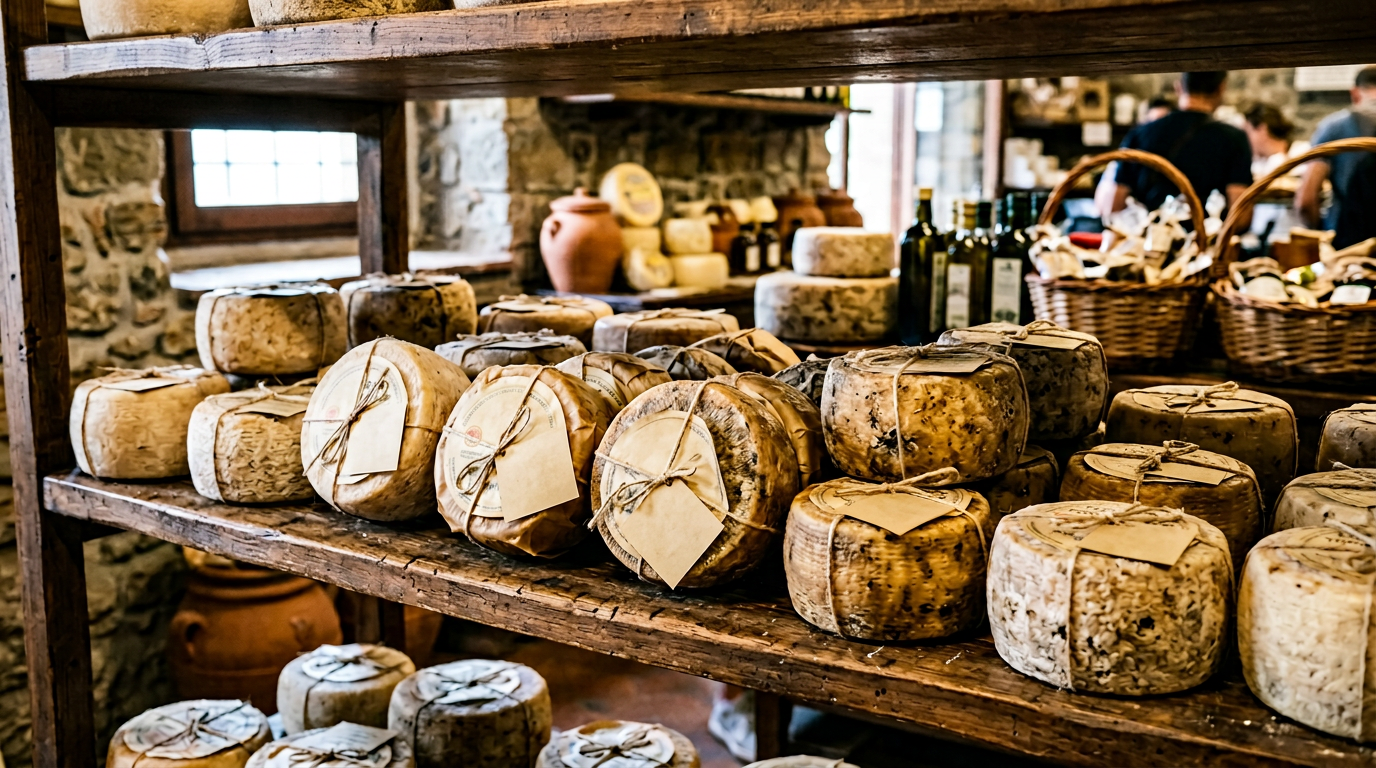
Tuscan pecorino: where to buy it and what to look for
Pecorino toscano is one of the oldest cheeses in central Italy. It is made from whole sheep’s milk and produced across a large territory that includes most of Tuscany and parts of Lazio and Umbria. The flavour ranges from delicate and milky in young forms to sharp, crumbly, and intensely savoury in longer-aged versions.
If you are staying near Barberino Val d’Elsa, you have direct access to some of the best sources: small farms, local markets, and specialist cheese shops that carry wheels you will not find in supermarkets.
Tuscan pecorino: where to buy it
The best places to buy pecorino toscano are farms that produce it on site, local alimentari with a direct relationship with dairy producers, and weekly markets where farmers sell directly.
In Barberino Val d’Elsa and the surrounding Val d’Elsa, small grocery stores and delis often carry wheels of pecorino from nearby producers. Ask the person behind the counter about the origin. A good shop will know exactly which farm supplied the cheese.
San Gimignano, about 15 km to the west, has several alimentari in the historic centre selling quality local pecorino alongside other cheeses. The town attracts many visitors but the food shops remain genuinely good. Arrive early in the morning before the day-trippers fill the streets.
Siena’s central market at Piazza del Mercato and the covered market near Piazza del Campo are reliable options for a wider selection. Siena is about 35 km from Barberino Val d’Elsa and worth a half-day visit for food shopping alone.
Differences between types of pecorino
Pecorino toscano DOP comes in two main categories based on ageing time.
Fresco, the fresh type, is aged for a minimum of 20 days. The rind is pale yellow or light straw in colour. Inside, the paste is white, soft, and mildly flavoured. It melts easily and pairs well with honey, fresh fruit, or a light white wine.
Stagionato, the aged type, is matured for at least four months. The rind is darker and harder. The paste becomes firmer, drier, and develops a pronounced, savoury flavour with a slightly nutty and tangy character. A well-aged wheel can be grated over pasta or eaten in small pieces with a full-bodied red wine.
There are also intermediate forms aged for 60 to 90 days. These offer a middle ground between the freshness of the fresco and the intensity of the stagionato.
Beyond the DOP category, you will encounter pecorino di Pienza, which has its own distinct character and is produced in the Val d’Orcia. It tends to be creamier and sometimes comes coated in tomato paste, ash, or dried herbs. The Pienza pecorino is not interchangeable with pecorino toscano DOP though both are excellent.
Producers near Barberino
Several farms in the Val d’Elsa and surrounding area produce pecorino or sell it directly. Look for agriturismo establishments with a farm component, as these often sell their own cheese to guests and visitors.
The area around Colle di Val d’Elsa, about 15 km from Barberino, has farms that produce both fresh and aged pecorino. Some welcome visitors who want to see the dairy and buy directly. A short drive on secondary roads through the Val d’Elsa countryside leads you to farms that are not well signposted but repay the effort of finding them.
Fattorie and caseifici near Certaldo, about 12 km to the north, also supply local shops and occasionally sell directly to visitors. Certaldo’s weekly market on Saturday morning is one place to find these smaller producers.
Ask your hosts at Sogno d’Oro for specific recommendations. Local knowledge makes the difference between finding a generic product and going home with something genuinely special.
Farmers’ markets in the area
Weekly markets in the Val d’Elsa towns often include one or two cheese producers selling directly from refrigerated vans or stalls. These are not tourist markets. They are working food markets for local residents, which means the prices are fair and the turnover is high.
Barberino Val d’Elsa has a small weekly market. Poggibonsi, about 10 km away, has a larger Thursday market with a good food section. Certaldo holds a Saturday market that regularly features local food producers.
Colle di Val d’Elsa has one of the more substantial weekly markets in the area. It runs on Friday morning and attracts sellers from a wider radius.
If you are visiting in spring or autumn, look for sagre and local fairs in the area. These events sometimes include stands from artisan cheese producers who do not normally sell directly to the public.
How to take it home
Pecorino travels well if prepared correctly. The key is keeping it cool and dry during transport.
A whole small wheel of stagionato wrapped in its original parchment paper and then in a layer of aluminium foil will hold for several days at room temperature in cool weather. For longer journeys or warmer temperatures, carry it in a cool bag.
If you are flying home, aged pecorino in vacuum packs is the safest option. Most alimentari and farms can vacuum-seal a piece on request. This allows you to pack it in checked luggage without issues at customs for most European and some non-European destinations.
Check your country’s import rules for dairy products before buying a large quantity. Within the European Union there are no restrictions. For the United Kingdom, the United States, Canada, and Australia there are specific rules that limit or prohibit bringing certain food products from abroad.
Fresh pecorino, being more perishable, is harder to transport. Buy it toward the end of your stay and consume it within two or three days.
A small wheel of aged pecorino toscano costs between 12 and 20 euros per kilogram directly from a producer. In a specialist shop the price rises to 18 to 28 euros. Supermarket pecorino is cheaper but rarely comes from small farms.
Where to stay
Sogno d’Oro in Barberino Val d’Elsa is a natural starting point for exploring the food traditions of the Val d’Elsa. You are within easy reach of farms, markets, and food shops that carry some of the best pecorino in Tuscany.
A few days here gives you the time to explore at a proper pace, taste before you buy, and return with something worth carrying home.