Gaiole in Chianti: what to see
Gaiole in Chianti is a small town in the southern part of the Chianti Classico zone. Its territory is the largest of the three main Chianti towns (with Greve and Radda) and includes some of the most prestigious wine estates in all of Tuscany.
It is 40 km from Barberino Val d’Elsa and about 40 minutes by car. The distance makes it a slightly longer day trip than the other Chianti towns, but the concentration of exceptional wineries and the Castello di Brolio make it well worth the drive.
Gaiole in Chianti: what to see
Gaiole in Chianti is less attractive as a village than Greve or Radda. The town centre is modest and somewhat utilitarian, having been rebuilt after damage during World War II. The main square and the surrounding streets have a practical rather than picturesque character.
What makes Gaiole exceptional is its territory. The hills around the town contain some of the oldest and most respected wine estates in the Chianti Classico zone. Castello di Brolio, Badia a Coltibuono, and San Felice are all in the Gaiole territory.
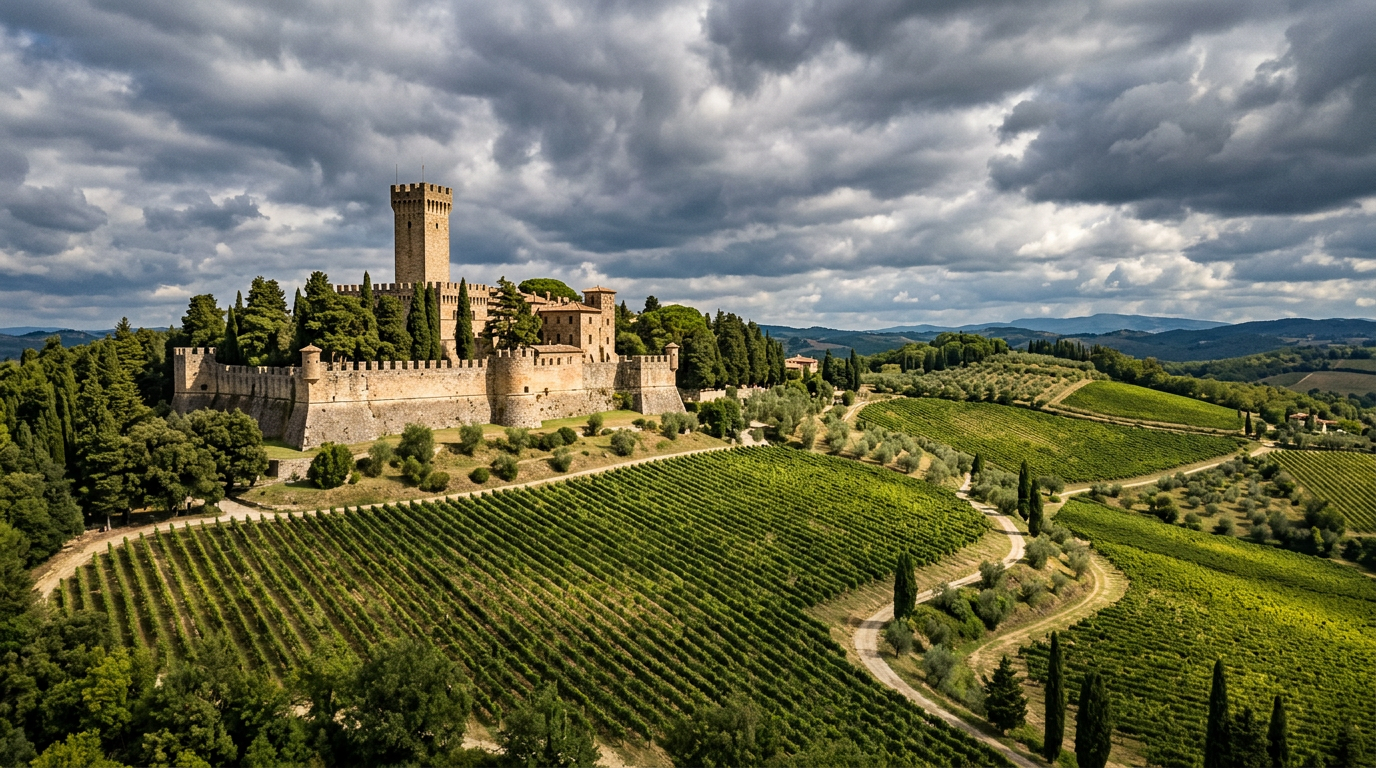
The landscape around Gaiole is also particularly beautiful. The hills here are steeper and more dramatic than in the northern Chianti. The combination of altitude, mixed soils, and orientation produces wines with notable concentration and aging potential.
The town has a weekly market on Thursdays and a small number of restaurants and wine bars. For the best food experience in the area, book a table at one of the estate restaurants rather than eating in the town centre.
The village and its territory
The village of Gaiole in Chianti has a population of about 2,800. It sits in a small valley between two ridges, at about 360 metres above sea level.
The Church of Santa Maria in Spaltenna, about 2 km east of Gaiole, is one of the oldest Romanesque churches in the area. It dates from the 11th century and is now part of a hotel and restaurant complex. The church interior is open to visitors.
The castle ruins of Vertine, about 5 km north of Gaiole, crown a small hilltop with intact medieval walls. The hamlet inside the walls is perfectly preserved and almost devoid of visitors. It is one of the most beautiful small villages in the Chianti and deserves at least an hour.
The road south from Gaiole towards San Polo in Rosso passes through forest and vineyard land that has changed little over the past century. This is the more remote and wild part of the Chianti Classico zone, with fewer estates and less tourist infrastructure.
Castello di Brolio and Baron Ricasoli
Castello di Brolio is the most historically significant estate in the Chianti Classico zone. The castle, visible from a great distance on its hilltop south of Gaiole, has been the property of the Ricasoli family since the 12th century.
Baron Bettino Ricasoli (1809 to 1880) was the estate’s most important owner. He was twice Prime Minister of Italy after Unification, but his lasting contribution was to Chianti wine. In the 1870s he developed the formula for modern Chianti, establishing the proportions of Sangiovese, Canaiolo, and other varieties that became the standard for the wine.
His formula, later modified by the official regulations, essentially created Chianti as a recognisable wine style. Castello di Brolio today still operates on the principle that Sangiovese is the basis of everything.
You can visit the castle and its gardens. The castle is open to visitors from April to October, Monday to Saturday 10:00 to 19:00 and Sundays 11:00 to 18:00. Entrance to the gardens costs around 5 euros. The interior of the castle is open for guided tours at set times.
Wine tastings at Castello di Brolio are available in the enoteca adjacent to the castle. A standard tasting of three wines costs around 20 euros. The Colledilà Gran Selezione, the top wine, is available in the tasting at an additional cost.
Wineries in the area
Beyond Castello di Brolio, the Gaiole territory has several other exceptional estates worth visiting.
Badia a Coltibuono is located in a former Benedictine abbey about 8 km north of Gaiole. The estate has been producing wine since the medieval period. The restaurant here, in the abbey refectory, is one of the best in the Chianti zone. Tastings and cellar tours are available by appointment, starting at around 20 euros.
San Felice is a large estate south of Gaiole with a wine museum, restaurant, and hotel. The estate is notable for its research into native Tuscan grape varieties. Tastings by appointment, around 25 euros.
Castello di Ama is about 10 km south of Gaiole. The estate is famous for its single-vineyard Chianti Classico wines and for its collection of contemporary art, installed in the winery buildings and grounds. It is one of the most interesting wine destinations in Tuscany. Visits by appointment, around 30 to 40 euros.
For a simpler option, the wine bar in the Gaiole town centre stocks bottles from local producers and offers tastings by the glass. Prices start at around 5 euros.
How to get there from Barberino Val d’Elsa
Gaiole in Chianti is about 40 km from Barberino Val d’Elsa. By car the drive takes around 40 minutes.
The most scenic route goes east from Barberino on the SP1 through San Donato in Poggio and Panzano in Chianti, then south on the SR222 to Greve and further south to Radda, and finally east to Gaiole. This takes longer but passes through the heart of the Chianti Classico zone.
A more direct route goes south on the SR2 to Poggibonsi, then east on the SR429 to Radda and on to Gaiole. This is faster but less scenic.
Public transport to Gaiole is minimal. A car is essential.
Parking in Gaiole is available near the town centre in free surface car parks.
Where to stay
Sogno d’Oro is located near Barberino Val d’Elsa, at the western edge of the Chianti Classico zone. Gaiole is 40 km to the south-east, requiring a drive through the best of the Chianti countryside.
The slightly longer distance means a visit to Gaiole benefits from a full day. Start early, visit Castello di Brolio in the morning, have lunch at Badia a Coltibuono, and return through the Chianti hills in the afternoon.