What to do in Val d'Elsa: a complete guide
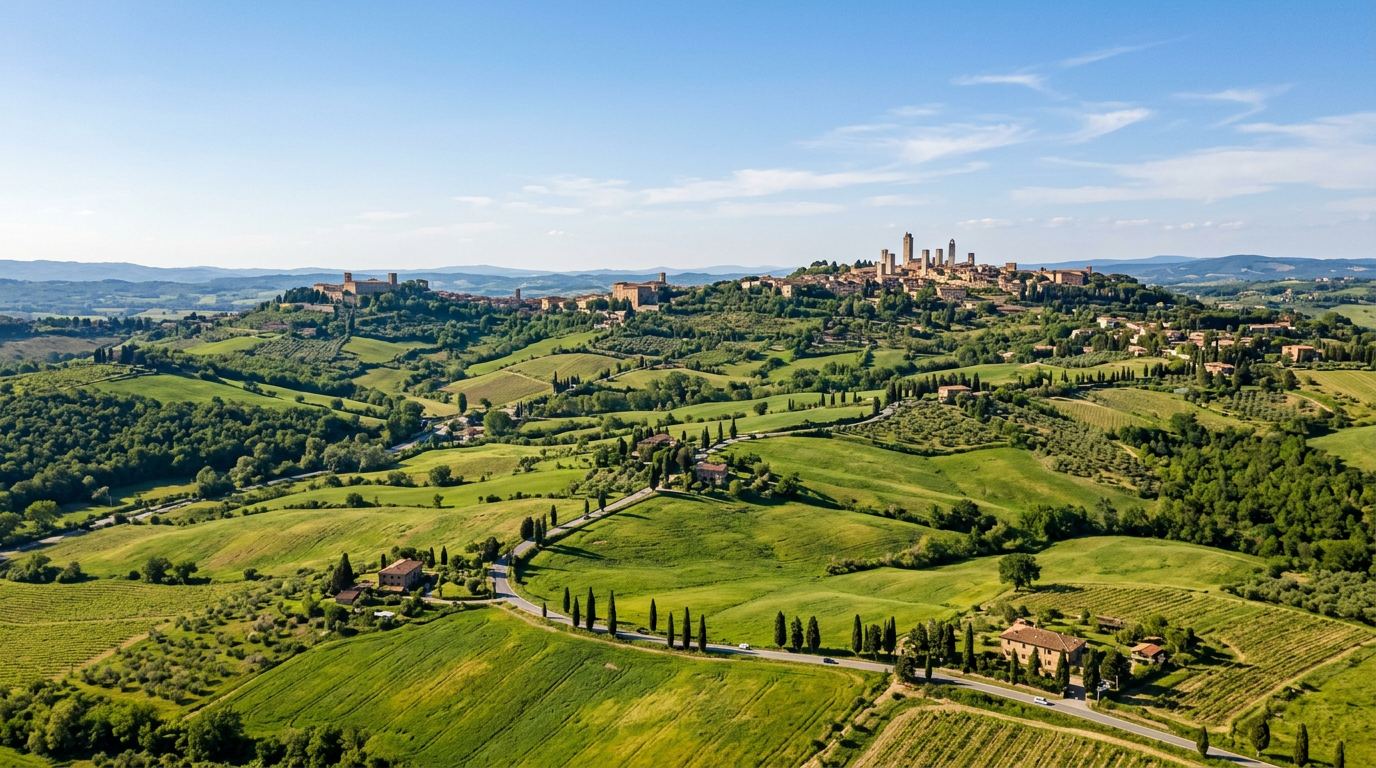
The Val d’Elsa is the valley of the Elsa river, running roughly north to south between Florence and Siena. It is one of the most genuinely Tuscan territories in the region: medieval villages on hilltops, vineyards and olive groves on the slopes below, and a pace of life that feels unhurried even in summer.
Fewer tourists come here than to the more famous Chianti or Val d’Orcia areas. That means emptier roads, quieter restaurants, and an experience that feels less staged. The Val d’Elsa rewards slow travel.
Val d’Elsa: what to do
The valley offers a wide range of activities, from art and architecture to wine tasting, walking, and cycling. You do not need to plan every day in detail. The best approach is to pick two or three priorities and leave room for the unexpected.
The main towns in the Val d’Elsa are Certaldo, Barberino Val d’Elsa, San Donato in Poggio, Castelfiorentino, Colle Val d’Elsa, and Casole d’Elsa. Each has its own character and at least one or two things genuinely worth visiting.
The valley also borders the Chianti Classico wine zone to the east. Some of the finest Chianti Classico estates are within 20 minutes of the valley floor. Wine tourism here is low-key but excellent.
A good way to structure a week in the Val d’Elsa is to spend three days exploring local villages, one day in Siena (40 km south), one day in San Gimignano (30 km to the west), and one day on a longer trip to Montalcino or the coast.
The territory between Florence and Siena
The Val d’Elsa lies roughly midway between Florence and Siena, which makes it one of the most strategically placed areas in Tuscany for exploring multiple destinations.
Florence is about 35 to 40 km from Barberino Val d’Elsa, around 35 to 45 minutes by car depending on traffic. Siena is 40 km, about 35 minutes. San Gimignano is 30 km, about 30 minutes. These are not commuter distances, but they are comfortable day trip distances for a holiday.
The Chianti Classico wine zone begins just east of Barberino Val d’Elsa. Panzano in Chianti, Greve in Chianti, and Radda in Chianti are all within 30 minutes. To the south, the Val d’Orcia is about 60 to 70 km away.
The road network in this area consists largely of provincial roads (SP) and state roads (SR). The main spine road is the SR2, also called the Via Cassia, which runs through the valley from Florence to Rome. It is busy but functional.
Villages to visit
Barberino Val d’Elsa has a small but well-preserved medieval centre with original walls, a 13th-century gate, and the Palazzo Pretorio. The view over the surrounding countryside from the walls is worth the brief walk.
Certaldo, 12 km north, is the hometown of Boccaccio. The upper medieval village of Certaldo Alto is connected to the lower town by funicular. The brick architecture is distinctive, and Boccaccio’s house museum is interesting.
Colle Val d’Elsa, 18 km south, is a larger town with a beautiful upper medieval district. It is also the birthplace of Arnolfo di Cambio, architect of Florence’s Cathedral and Palazzo della Signoria. The Crystal Museum here is the only one of its kind in Italy.
San Donato in Poggio, between Barberino and Tavarnelle, is a tiny medieval hamlet in excellent condition. The stone walls, the central square, and the views from the edge of the village make it one of the most atmospheric places in the Val d’Elsa.
Castelfiorentino, 18 km north-west of Barberino, has a museum dedicated entirely to Benozzo Gozzoli, the 15th-century fresco painter. The detached fresco cycles here are among the finest examples of his work.
Activities in nature
The Val d’Elsa is good cycling territory. The roads are hilly but not extreme. Most of the valley can be explored on a hybrid or gravel bike. Electric bikes are increasingly available for rental in the larger towns and some agriturismi.
Marked walking trails connect most of the major villages. The Cammino di Dante passes through this area, following a route connected to Dante Alighieri’s journey described in the Commedia. The trail is waymarked and passes through villages, vineyards, and open countryside.
The Via Francigena also passes through the Val d’Elsa. The section between San Casciano Val di Pesa, Barberino Val d’Elsa, and Colle Val d’Elsa follows a mix of white gravel roads and paths through agricultural land.
The Elsa river itself has a pleasant path along stretches of the valley floor. The river is small but clean, with clear water and occasional swimming holes. The stretch near Colle Val d’Elsa is particularly accessible.
Bird watching is good in the farmland areas, especially in spring. Hoopoes, red-backed shrikes, and various warblers are regular summer visitors. The Elsa valley bottom has herons, kingfishers, and wading birds.
Why choose Val d’Elsa for your holiday
The Val d’Elsa is not famous the way the Val d’Orcia or the Cinque Terre are famous. That is part of its appeal. You can visit Siena, San Gimignano, or Florence as day trips, and return each evening to a quieter world.
The accommodation in this area tends to be good value compared to the most famous Tuscan destinations. An agriturismo in the Val d’Elsa offers similar countryside and similar food to a property in central Chianti, but often at a lower price.
The food culture here is genuinely local. Restaurants serve Tuscan food made with local ingredients. Bistecca alla Fiorentina from Val di Chiana cattle, pappardelle with wild boar ragu, ribollita, and pici are all standard on local menus.
The wine culture is accessible and unpretentious. Many wineries in this area welcome visitors without a formal booking, especially outside the high season. You can stop at a roadside cantina, taste a few wines, and buy a case to take home.
Where to stay
Sogno d’Oro is located near Barberino Val d’Elsa, in the heart of the Val d’Elsa. The guesthouse sits in the typical Tuscan landscape of this valley, with vineyard and olive grove views, quiet surroundings, and easy access to everything the area has to offer.
Whether you want art, wine, walking, or simply a slow Italian holiday, the Val d’Elsa gives you the space and the setting to find it.