Castiglione della Pescaia beaches: a guide
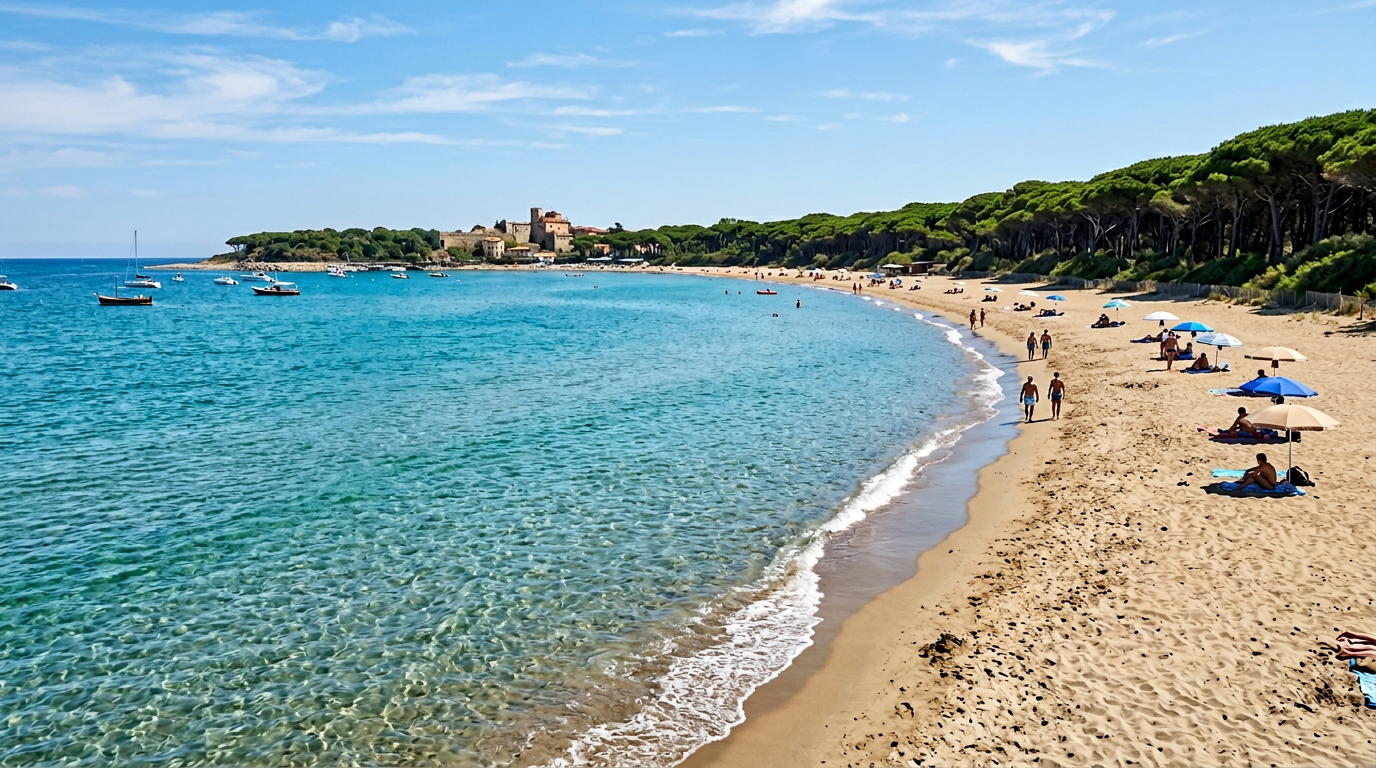
Castiglione della Pescaia is the most popular beach resort on the Tuscan coast. It combines well-maintained beaches, a well-preserved medieval village on a promontory, and a relaxed atmosphere that attracts both families and couples. The sea is clean, the sand is fine, and the food is good.
It is about 130 km from Barberino Val d’Elsa, roughly 90 minutes by car. That makes it a long but very doable day trip, especially in summer when you want a change of scenery from hills and vineyards.
Castiglione della Pescaia beaches
The coastal area around Castiglione della Pescaia stretches for several kilometres. The main beach in front of the town is directly accessible and partly organised with beach clubs, partly free access.
The sea in this stretch of the Maremma coast is typically clean and calm. The water is shallow for some distance from the shore, making it suitable for children and non-swimmers.
The beach season runs from mid-May through September. In July and August the beaches are crowded, especially at weekends. If you are planning a summer visit, try to go on a weekday and arrive before 9:00.
In June and September the beach is significantly less busy and the weather is still excellent. Water temperatures in June are around 22-23 degrees Celsius. In September they reach 24-26 degrees.
Free and paid beaches
Castiglione della Pescaia has both stabilimenti balneari (paid beach clubs) and free public beach areas. The distinction matters if you are planning your day.
Paid beach clubs rent sun loungers and umbrellas. A standard setup for two sun loungers and one umbrella costs between 25 and 45 euros per day depending on the club, the location, and the season. The advantage is shade, changing facilities, showers, and often a bar or restaurant on the beach.
Free beaches (spiagge libere) are available at several points along the coast. You will need to bring your own equipment: towel, umbrella, and anything else you want. The free sections tend to fill up early in July and August, so arrive by 9:00 to secure a good spot.
The beaches south of the town centre, towards Diaccia Botrona lagoon, are less developed and quieter. These are good choices if you prefer a more natural setting and do not mind fewer facilities.
Punta Ala, about 12 km north of Castiglione, has a more upscale atmosphere with private beaches and a marina. If you prefer that kind of environment and are willing to pay more, it is worth a visit.
The old town on the promontory
The medieval village of Castiglione della Pescaia stands on a small promontory above the modern resort below. Its walls, towers, and narrow streets have been well preserved. The view from the top over the bay and the coast is one of the best on the Tuscan coastline.
You can walk from the lower resort area to the village gate in about 15 minutes on foot, or drive up and park near the walls. The streets inside are steep and narrow. The village is small enough to explore completely in about 45 minutes.
The Torre Aragonese near the entrance gate is a 15th-century fortification. Several small churches and medieval houses line the main street. There are a few shops and restaurants inside the walls.
The best time to visit the village is early morning, before the crowds arrive, or in the evening after the beach day is over. In high summer the village can be very busy in the middle of the day.
Looking south from the walls on a clear day, you can see the Argentario promontory and the island of Giglio.
How to organise a day at the sea
A practical day at Castiglione della Pescaia works best if you plan the beach in the morning and the village in the afternoon or evening.
Arrive at the beach by 9:00 or 9:30. Spend the morning swimming and relaxing. Have lunch at a beach club restaurant or pick up food from one of the takeaway stands near the beach. Local specialties include fried seafood, grilled fish, and the regional flatbread called schiacciata.
In the afternoon, when the sun is at its strongest, visit the old village. Walk the walls, have a coffee, and browse the shops. By late afternoon the beach is pleasanter again and you can return for a final swim before heading home.
If you are staying for dinner, try Trattoria Il Veliero inside the village walls. Fish dishes are the focus and portions are generous. Expect around 35 to 45 euros per person including wine.
The drive back to Barberino Val d’Elsa takes around 90 minutes. Leaving by 19:00 means you arrive home before dark without rushing dinner.
How to get there from Barberino Val d’Elsa
Castiglione della Pescaia is about 130 km from Barberino Val d’Elsa. By car the journey takes around 90 minutes.
The most direct route goes south on the SR2 through Poggibonsi, then joins the SR73 and the Aurelia (SS1) coastal road south. The last stretch follows the coast towards Castiglione. This road can be congested in summer at weekends.
For a slightly less busy alternative, take the E78 Grosseto-Fano road to Grosseto and then head north on the coast road. This adds a few kilometres but avoids the worst traffic bottlenecks in high season.
There is no convenient public transport option for a day trip from Barberino Val d’Elsa to Castiglione della Pescaia. A car is strongly recommended.
Parking in Castiglione della Pescaia is available in large car parks along the seafront and near the old village. In July and August, parking fees can reach 3 to 4 euros per hour. Arrive early to find a spot near the beach.
Where to stay
Sogno d’Oro is positioned in the Val d’Elsa near Barberino Val d’Elsa. It makes a comfortable inland base from which to reach the Tuscan coast in a reasonable drive. After a day of salt air and sand, returning to the quiet Chianti countryside is a genuine pleasure.
The guesthouse setting, surrounded by vineyards and olive groves, offers a different rhythm from the beach. That contrast - sea in the morning, hills in the evening - is one of the most enjoyable aspects of staying here.