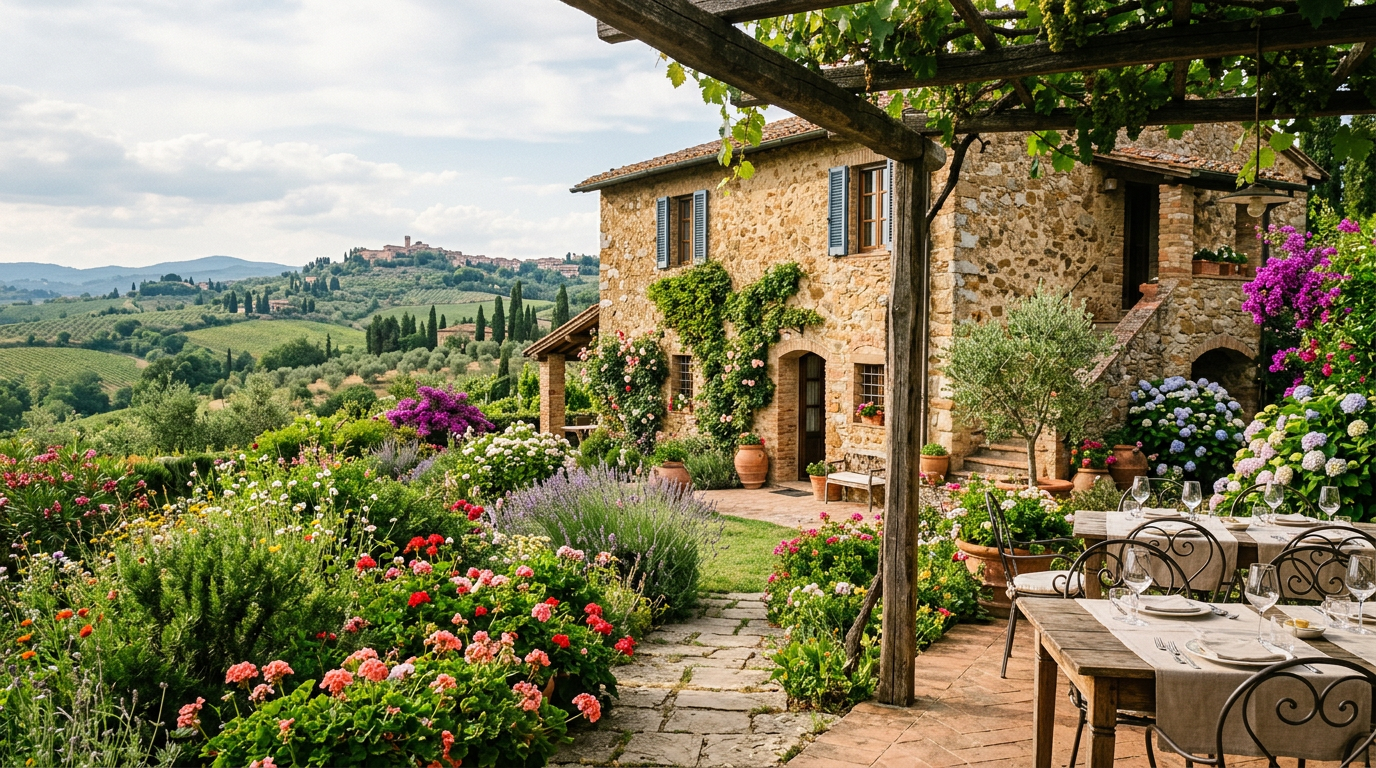
Agriturismo in Val d'Elsa: how to choose the right place
The agriturismo is one of Italy’s most successful agricultural hospitality models. The concept is simple: a working farm opens its rooms, outbuildings, or apartments to guests, who gain proximity to food production, landscape, and rural culture in exchange for a stay that is generally simpler and more direct than a hotel.
The Val d’Elsa has dozens of agriturismi ranging from large commercial operations with swimming pools and spa services to small family farms with two or three rooms and a kitchen that cooks whatever was harvested that day.
Agriturismi in Val d’Elsa
The regulation governing agriturismi in Italy requires that the hospitality activity remain subordinate to the agricultural one. This means the farm must be genuinely farming, not just using the label for marketing.
In practice the quality of the agricultural connection varies significantly. Some agriturismi in the Val d’Elsa are directly involved in wine, olive oil, or vegetable production and make this central to the guest experience. Others use the term more loosely for a rural property with accommodation.
The Val d’Elsa landscape around Barberino, Tavarnelle, and San Donato in Poggio is prime agriturismo territory. The combination of Chianti Classico vineyards, olive groves, and mixed agricultural land supports a density of farms that welcome visitors.
Most of the authentic operations in this area produce at least one of the following: wine, olive oil, vegetables, pecorino, salumi, or honey. The best ones produce several and incorporate them into the meals they offer guests.
What makes a good agriturismo
A good agriturismo is primarily a working farm. The accommodation is secondary to the production activity. If you visit a property and there are no animals, no active fields, no production facility of any kind, the agricultural claim is mostly decorative.
Look for farms that can tell you what they produce and where. Ask whether they serve their own products at meals. Ask whether guests can visit the cellar, the olive press, or the vegetable garden. A farm that welcomes these questions is one where the connection is real.
The dining experience is one of the most important indicators. A genuine farm kitchen will serve seasonal, local ingredients that change throughout the year. A kitchen that offers the same menu in March and August is sourcing its food from a supplier rather than from its own land.
Scale matters too. Smaller agriturismi, with four to ten rooms, tend to offer more personal contact with the farming family. Larger operations with 20 to 30 units function more like small hotels with a rural aesthetic.
Activities on agriturismi
The activities available at a Val d’Elsa agriturismo depend on the season and what the farm produces.
In spring you might participate in the vegetable garden preparation, the pruning of the vines, or the lambing if the farm keeps sheep.
Summer brings guided walks through the vineyards, cooking classes focused on local produce, olive tree care, and in some cases cheese-making demonstrations.
Autumn is the richest season. Grape harvest participation is available at wine-producing farms. Olive harvest runs from October to November. Mushroom and truffle hunts can sometimes be arranged through farm contacts.
Winter is quieter. Wine barrel monitoring, pruning continuation, and fireside dinners are the typical offerings. Some farms use winter for extended stays that attract slow travel visitors who want complete immersion rather than activity-packed days.
Many agriturismi also organise cooking classes on request. These typically focus on pasta-making, ribollita, or the preparation of local sweets. They are informal and hands-on rather than choreographed demonstrations.
Local products you find there
A well-connected agriturismo in the Val d’Elsa will offer at its table wine from its own or a neighbouring vineyard, olive oil pressed in the autumn, bread baked on site or at a local bakery, and seasonal vegetables from the kitchen garden.
Breakfast at a genuine farm includes eggs from the property’s hens, homemade jams from fruit trees in the garden, and local honey. These are not items sourced from a catering supplier. They have a flavour that comes from proximity.
Dinner at a farm that takes its food seriously is often the most memorable meal of a trip to Tuscany. Not because it is elaborate but because the ingredients are exactly right for the season and the location. A ribollita made with the farm’s own cannellini beans in October, dressed with the first pressing of the new olive oil, is irreplaceable.
Farms also often sell their products directly to guests for take-home. Wine, olive oil, honey, and preserved jams are common. These make more meaningful souvenirs than anything bought in a shop.
How to choose the right place to stay
Start with the agricultural profile. What does the farm actually produce? Wine and olive oil production are the most common in this area and both are verifiable from the farm’s description and website.
Read reviews with attention to the food and the personal connection with the host. Reviews that focus only on the pool or the view tell you less about the farm’s character than those that describe conversations with the family or the quality of the dinner.
Contact the agriturismo directly before booking. Ask about the current season and what activities are running. A farm that responds with specific detail is one that is genuinely engaged with visitors.
Consider your priorities. If you want a cooking class, check whether the farm offers them. If you want to participate in the harvest, contact in August and specify your dates. If you want quiet and no fixed programme, say so and see how the farm responds.
Where to stay
Sogno d’Oro in Barberino Val d’Elsa offers the proximity of a guesthouse with the atmosphere of a genuine rural stay. You are in the heart of Val d’Elsa agricultural country, within reach of vineyards, olive groves, and the working farm landscape that defines this part of Tuscany.
It is a calm, personal base from which to explore everything the area offers without the compromises of a larger commercial operation.