Colle Val d'Elsa: What to See in This Hidden Gem
Colle Val d’Elsa: a question worth asking before you drive on, because this Tuscan city has far more to explore than it appears at first glance. Situated between Siena and San Gimignano, divided between a modern lower town and a medieval village perched atop a hill, Colle is the birthplace of Arnolfo di Cambio - the genius of medieval architecture - and the European capital of handcrafted crystal glass. Two excellences that alone justify a visit.
Colle Alta: the medieval village on the ridge
The most interesting part of Colle Val d’Elsa is undoubtedly the upper town, known simply as Colle Alta. To reach it from the lower town you can climb the steps on foot, drive up via the panoramic road, or take an inclined lift that rises from the commercial centre to the ancient village.
Colle Alta runs along a narrow hilltop ridge: a main street about 700 metres long, with side alleys descending steeply on both sides towards the countryside. Walking from one end to the other means crossing different eras: from the medieval stone gateways to the elegant Renaissance facades of the noble palaces, to the artisan workshops where crystal is still worked by hand today.
The atmosphere is intimate and quiet, far from the tourist frenzy of the more famous villages. What to see in Colle Val d’Elsa is discovered by strolling slowly, leaning over panoramic balconies, stepping into churches, pausing to look in the crystal shop windows.
Porta Nova and the medieval walls
The main entrance to the upper town is through Porta Nova, a monumental sixteenth-century gate with a round arch and heraldic shields on the facade. At the other end of the village stands Porta Vecchia, older and more austere, which still preserves the original closing mechanisms. The walls connecting the two gates are partly open to visitors and offer views over the surrounding countryside.
Arnolfo di Cambio: the genius born in Colle
Colle Val d’Elsa is the birthplace of Arnolfo di Cambio, one of the greatest architects and sculptors of thirteenth-century Italy. Born around 1240, Arnolfo was a pupil of Nicola Pisano and became master builder of the Opera del Duomo in Florence, where he designed the original facade and initiated work on the great cathedral of Santa Maria del Fiore. He is also responsible for the Basilica of Santa Croce and the early stages of Palazzo Vecchio.
The Casa-Torre Arnolfo is open to visitors: a medieval tower converted into a house-museum housing copies of some of the master’s most significant works, historical documents and reconstructions of his working methods. The museum is not large, but offers an effective introduction to an artist often overlooked in comparison to the giants of the later Renaissance.
The Duomo di Santa Maria in Canonica
The main church of Colle Alta is the Duomo di Santa Maria in Canonica, which preserves a baptismal font attributed to Jacopo della Quercia and several medieval and Renaissance artworks. The interior is sober and luminous. The position of the Duomo, at the village’s end towards the Val d’Elsa, allows you to step outside onto the forecourt and enjoy a 180-degree view over the Tuscan countryside.
The crystal of Colle: a 250-year tradition
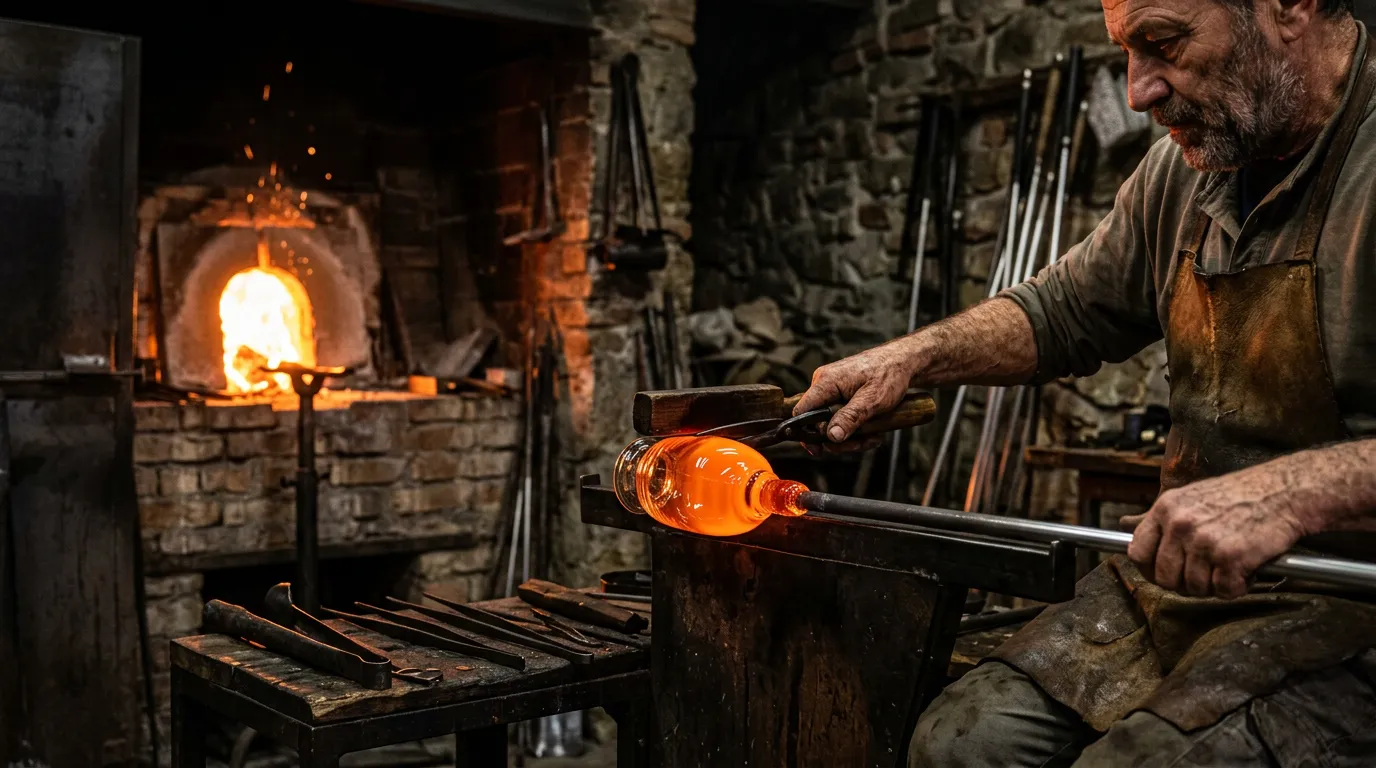
Perhaps the most surprising thing to discover in Colle Val d’Elsa for many visitors is the crystal tradition. Colle Val d’Elsa is the leading European producer of handcrafted crystal glass: approximately 15% of the world’s fine crystal comes from this city. The tradition began in the eighteenth century when Bohemian craftsmen brought their techniques here, and it has never been interrupted since.
The Museo del Cristallo, located in the upper town, tells this story through historic pieces, working tools and photographic documentation. The display cases exhibit objects ranging from tableware to art chandeliers, decorative items to traditionally blown goblets. A visit to the museum is most often followed by an opportunity to purchase in the specialist shops in the village.
Some glassworks also offer live demonstrations: watching molten crystal being blown, cut and engraved is a spectacle that fascinates both adults and children. To book a demonstration it is best to contact the workshops directly, as activities generally take place during production hours.
What to do in Colle Val d’Elsa: activities and surroundings
In addition to visiting the village and discovering the crystal, there are other activities that enrich a day in Colle Val d’Elsa.
Panoramic walk: from the belvedere on the north side of the village you can see the Valle dell’Elsa with its cultivated fields, the river flowing in the valley below, and in the background the Chianti hills. At sunset the low-angled light creates extraordinary chiaroscuro effects.
Wine bars and restaurants: Colle Alta has some excellent trattorias where you can sample Sienese cooking. Pici with wild boar ragù, ribollita, Florentine tripe are all dishes easily found in the village restaurants.
Weekly market: on Friday morning a market is held in the lower town, a regular appointment for residents from across the area seeking fresh local produce, cheeses, cured meats and crafts.
Excursions nearby: from Colle Val d’Elsa you can easily reach San Gimignano (15 minutes), Volterra (40 minutes), Monteriggioni (25 minutes) and Siena (30 minutes). The location is ideal as a base for day trips.
Practical tips for your visit
The Museo del Cristallo is open every day except Monday; it is advisable to check updated hours on the municipality’s website. The Casa-Torre Arnolfo has more limited hours and in the low season opens mainly at weekends. Admission to both museums is charged but modest.
For those arriving by car, parking is available in the lower town. From there you can walk up or take the inclined lift. A complete visit to the upper town takes about two hours for those who want to see everything at leisure, less for a quicker stroll.
Where to stay
Homelink Sogno d’Oro is just 10 minutes by car from Colle Val d’Elsa, nestled in the hills of the Val d’Elsa between Barberino and Poggibonsi. A convenient position for visiting the crystal city in the morning and continuing in the afternoon towards San Gimignano or Siena - with the advantage of returning in the evening to a farm stay surrounded by the silence of the Tuscan countryside.
Related property: Homelink Sogno d’Oro Link: /sogno-doro/
Where to stay
Dove dormire: Homelink Sogno d'Oro - Val d'Elsa · tra Firenze e Siena
Controlla la disponibilità