Diving at Monte Argentario: What You Need to Know
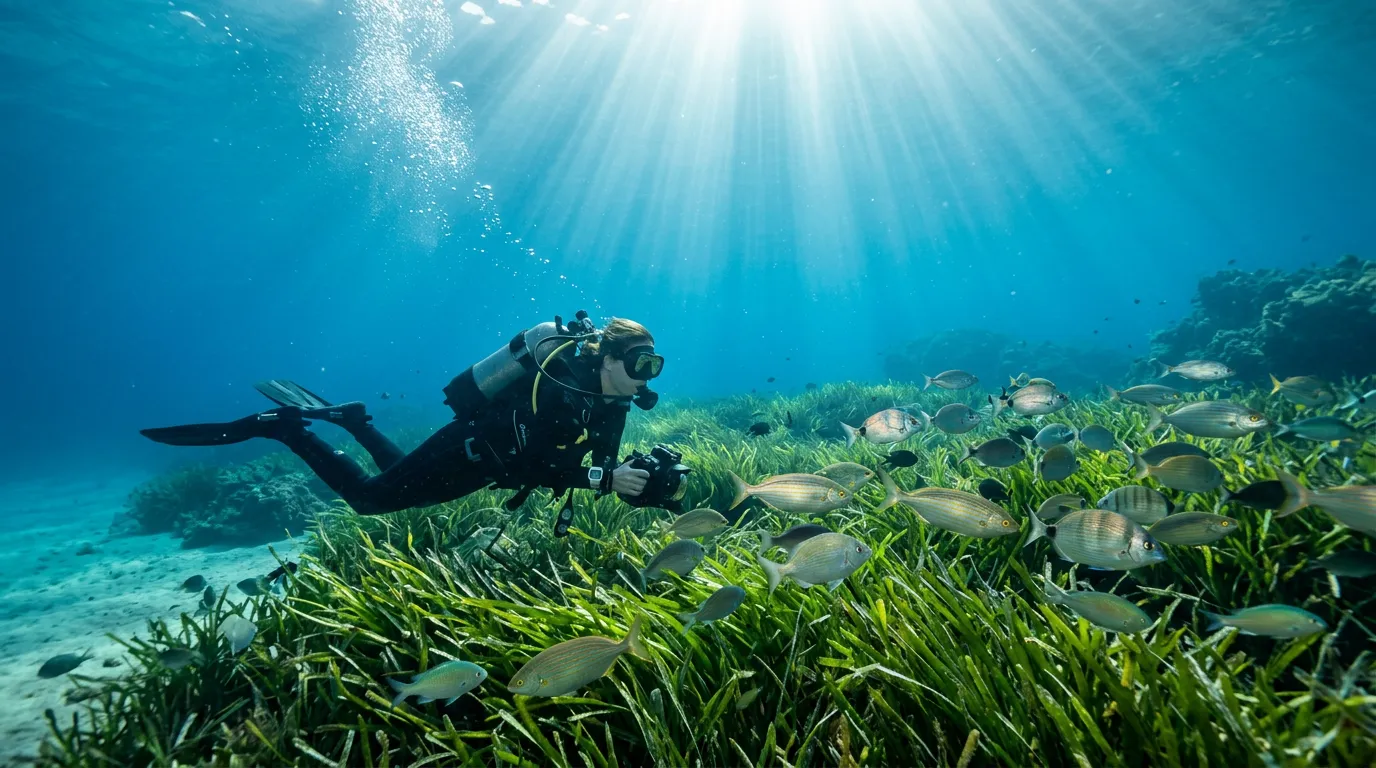
Diving at Monte Argentario is among the finest in the central Mediterranean. The Monte Argentario promontory, with its clear waters and seabeds rich in biodiversity, is a privileged destination for divers of all levels, from beginners to experienced divers. The combination of rocky reefs, posidonia meadows, sea caves and submerged wrecks creates an underwater environment of rare variety and beauty.
The waters of the Argentario are part of a relatively protected and well-preserved marine ecosystem, thanks to the distance from commercial shipping and the absence of heavy industry along the coast. This has allowed the seabeds to maintain abundant fish populations, with sea bream, grouper, octopus, sea urchins and moray eels keeping divers company.
The Argentario seabeds: what to expect
The seabeds of Monte Argentario vary considerably depending on the dive site. The eastern side, more sheltered, has sandy bottoms with posidonia oceanica meadows down to 15–20 metres depth. These meadows are essential habitats for many marine species, including cuttlefish, squid and numerous reef fish.
The western side, exposed to the prevailing south-westerly wind, offers more dramatic scenery: rock faces, crevices, sea caves and pinnacles that descend to considerable depths. Visibility in these areas can exceed 20–25 metres on calm days, making dives a visually extraordinary experience.
The main dive sites at the Argentario
The Secca di Punta Lividonia
One of the most famous reefs of the Argentario, accessible from Porto Ercole. The rocky point descends to 30 metres with walls covered in yellow and red gorgonian sea fans, red coral and sponges. It is a site suited to divers with some experience, given the moderate current and the depth. The marine life is rich: grouper, corvina, sea bream and shoals of amberjack are regularly encountered.
The seabeds of Cala Grande and Cala Piccola
The two coves on the southern side of the Argentario offer ideal conditions for less demanding dives. The rocky bottoms with sandy patches are home to red mullet, saddled sea bream, salema and octopus in abundance. Cala Piccola is particularly appreciated for its excellent visibility and the sea caves accessible even by freediving.
The wreck of the Polluce
In the waters north of Porto Santo Stefano lies the wreck of the steamship Polluce, which sank in 1841. The wreck lies at about 40 metres depth and is accessible only to advanced divers with appropriate equipment. The metal structure is now colonised by corals, sponges and dense marine life. It is one of the most historically interesting wrecks in the northern Tyrrhenian Sea.
The island of Giglio: an underwater paradise within reach
From Porto Santo Stefano ferries depart for the island of Giglio, about an hour’s sailing away. The island, part of the Tuscan Archipelago, is famous for some of the best diving in the Mediterranean. The Capel Rosso lighthouse, the Cantoniera reef and the caves of Cala delle Cannelle are legendary sites among Italian divers.
The wreck of the Costa Concordia has been completely removed and the seabed in the shipwreck area is slowly repopulating. In the waters of Giglio the clarity is extraordinary, with visibility often exceeding 30 metres, and the marine life is among the richest in the entire Tuscan Archipelago.
Dive centres at the Argentario
Porto Ercole and Porto Santo Stefano
Both Argentario ports have well-equipped diving centres that offer complete services: equipment hire, beginner courses (up to PADI/SSI Open Water certification), daily boat trips, certified guides and weekly packages. The centres also organise excursions to the island of Giglio and the island of Giannutri.
What to pack in your dive bag: wetsuit (5mm recommended for the first part of the season), personal mask and fins if available, certification card, log book and diving insurance.
Best period for diving at the Argentario
The Argentario sea is accessible to divers from May to late October. The best conditions are generally recorded between June and September, with warm water (22–26°C at the surface), good visibility and calm sea in the early morning hours.
May–June: The water is still cool (18–20°C) but visibility is excellent. The seabeds are little frequented and the marine life is particularly lively in the pre-summer period.
July–August: Peak season. The sea is warm and conditions generally excellent, but the diving centres are busier. It is advisable to book trips in advance.
September–October: Often the best period: water still warm, visibility at its highest, fewer tourists. The days shorten but the central hours are perfect for diving.
Diving for all levels
Diving at the Argentario adapts to any level of experience.
Beginners: Diving centres offer “baptism of the sea” dives with an instructor, without needing a qualification. The sheltered coves with shallow bottoms are ideal for first experiences.
Intermediate: The reefs, sea caves and posidonia meadows are perfect for those who already hold an Open Water qualification. The variety of sites allows exploration of different environments in a few days.
Advanced: The wrecks, deep caves and vertical walls of the Argentario and Giglio offer interesting technical challenges for the most experienced divers.
Where to stay
Tramonto Dorato in Montiano is about 30 minutes by car from the Argentario, both from Porto Ercole and from Porto Santo Stefano. The distance is easily manageable for those wanting to organise early-morning boat trips. Back at the apartment, the panoramic portico with views over the Argentario promontory offers the ideal setting to relive the emotions of the day.
Related property: Homelink Argentario · Tramonto Dorato Link: /tramonto-dorato/
Where to stay
Dove dormire: Homelink Argentario · Tramonto Dorato - Maremma Toscana · Grosseto
Controlla la disponibilità