The Authentic Maremma: Beyond the Tourist Circuit
The authentic Maremma is not found on the covers of the most widely read tourist guides. You encounter it by travelling secondary roads between olive groves and vineyards, stopping in small villages where the local bar is still the heart of social life, listening to the silence of holm oak woods or sitting down at a table in an osteria that has never felt the need to update its menu to please tourists. This Maremma still exists, and it is the one most worth going to find.
The Tuscan Maremma covers most of the province of Grosseto and extends from the upper Maremma, near Grosseto, down to Lazio, with landscapes that change continuously: gentle hills, sea headlands, plains reclaimed in the twentieth century, coastal forests, lagoons and tuff plateaus.
The authentic Maremma of the interior
The inland Maremma is the beating heart of this land. Far from the beaches and the Argentario, a few kilometres from the main tourist routes, lie places that have kept their identity intact.
Montiano and the minor hill villages
Montiano is a small medieval village on the Monti dell’Uccellina, with a few hundred inhabitants and an atmosphere of absolute quiet. It is not on the list of the most famous villages, but it is exactly the kind of place that makes the Maremma different from all other Italian regions: authentic, without filters, indifferent to tourism. The country roads that branch out from here lead to Magliano in Toscana, Scansano and the coast in just a few minutes.
Many villages of the upper Maremma deserve a stop: Roccastrada, with its medieval castle; Civitella Paganico, almost unknown yet beautiful; Castiglione della Pescaia, renowned for the sea but with a medieval historic centre that holidaymakers almost always ignore.
The Etruscan vie cave
The vie cave are one of the most enigmatic and fascinating phenomena of the Maremma. These are deep corridors carved into the volcanic tuff by the Etruscans, probably for road and ritual purposes. Some reach 20 metres in height with vertical walls that almost touch at the top, creating the effect of a natural tunnel. The most beautiful are found around Pitigliano, Sovana and Sorano. Walking through them on foot, in silence, is an experience with no equal.
The Orbetello lagoon: a treasure chest of biodiversity
The Orbetello lagoon is one of the richest and least known coastal ecosystems in Italy. This vast expanse of brackish water, separated from the sea by the two tombolo of the Feniglia and the Giannella, hosts hundreds of species of migratory birds, including pink flamingos, grey herons, black-winged stilts and, in winter, cormorants and grebes.
The WWF nature reserve of the lagoon can be visited with naturalist guides. Birdwatchers find a unique opportunity here, especially in spring and autumn when migrants stop in the lagoon waters. The lagoon is also the site of production of the famous Orbetello mullet bottarga, considered among the finest in Italy.
The butteri: the tradition of the Tuscan cowboys
The butteri are the horsemen of the Maremma, an almost mythical figure dating back to the period of malaria and land reclamation. Today this tradition has survived thanks to the farm holiday businesses that still raise Maremma horses and semi-wild cattle in the Maremma Park and the surrounding countryside.
Participating in an excursion with the butteri, on horseback through the Mediterranean scrub and the clearings of the park, is one of the most authentic experiences the Maremma offers. Some farms also allow beginners to approach these robust and docile horses.
Local gastronomy: flavours without compromise
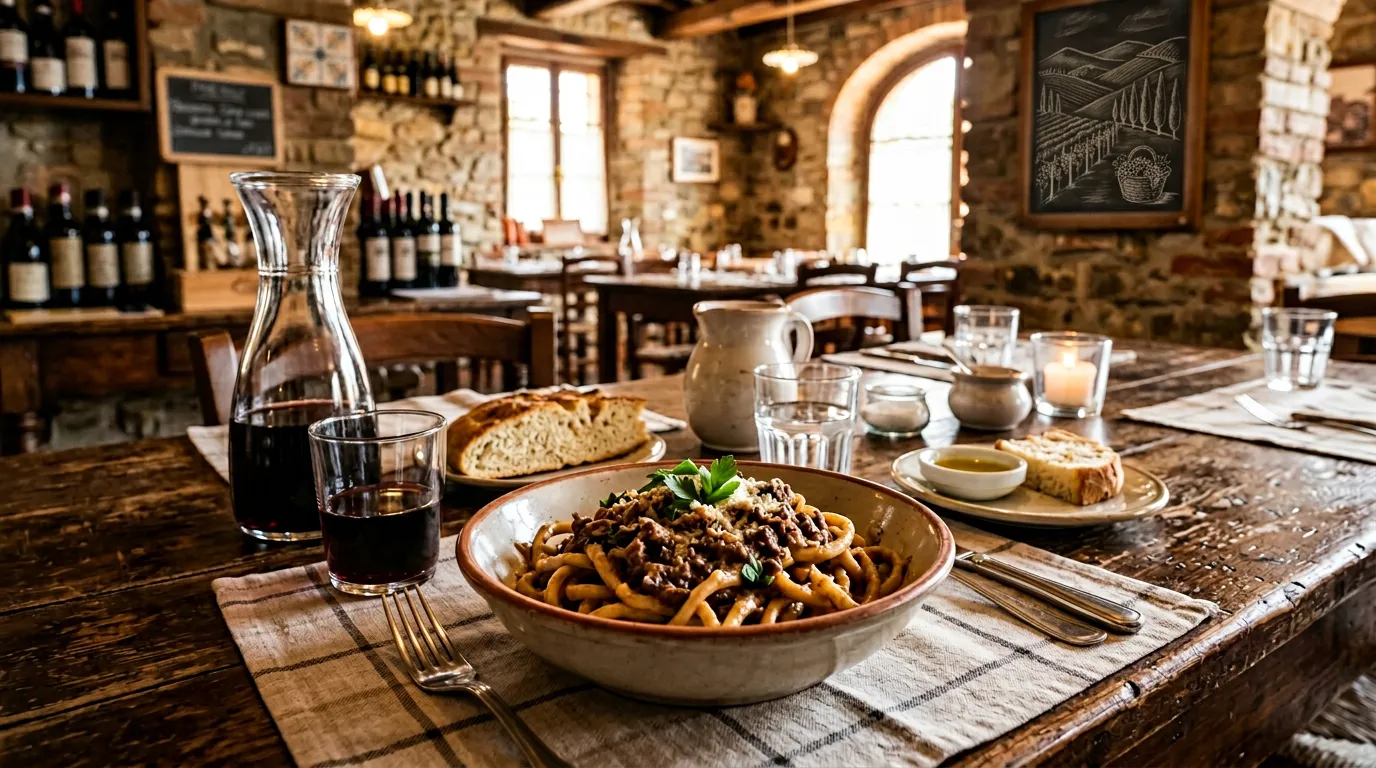
Maremma cuisine is the other face of its authenticity. There are no fusion influences, no extravagant experiments: there is game, cooked with methods passed down from father to son. There is the unsalted bread that forms the base for panzanella and ribollita. There is the green and pungent extra virgin olive oil from the presses of Magliano and Capalbio.
What to look for
Look for trattorias without a written menu, or with a menu that changes every day. The seasonal produce dictates what is eaten: wild boar in autumn and winter, lamb and wild asparagus in spring, grilled vegetables and fish in summer. The wine is almost always local: Morellino di Scansano, Ansonica, Vermentino, Montecucco.
Village festivals are an excellent way to make contact with local cuisine. Every village has its autumn festival, dedicated to a product of the territory: chestnuts, porcini mushrooms, wild boar, new wine.
Tips for experiencing the Maremma off the beaten track
Hiring a car is essential. The authentic villages are not served by public transport and are often only reachable via dirt roads or little-used provincial roads.
Avoid August if you want to find the authentic Maremma. The beaches fill up, prices rise and many establishments change their menu to adapt to tourist tastes. May, June, September and October are the best months.
Ask the locals for advice: the best trattoria is almost never the one with the blackboard sign outside the entrance. It is often a place without a sign, found only by asking the tobacconist or the village barman.
Where to stay
Tramonto Dorato is located in Montiano, an authentic village of the Maremma far from mass-tourism circuits. Here the silence of the hills, the view over the Orbetello lagoon and the clean air of the Mediterranean scrub offer an experience of total immersion in the authentic Maremma. The position is ideal for exploring both the coast and the hinterland.
Related property: Homelink Argentario · Tramonto Dorato Link: /tramonto-dorato/
Where to stay
Dove dormire: Homelink Argentario · Tramonto Dorato - Maremma Toscana · Grosseto
Controlla la disponibilità