San Frediano Florence: Neighbourhood Guide
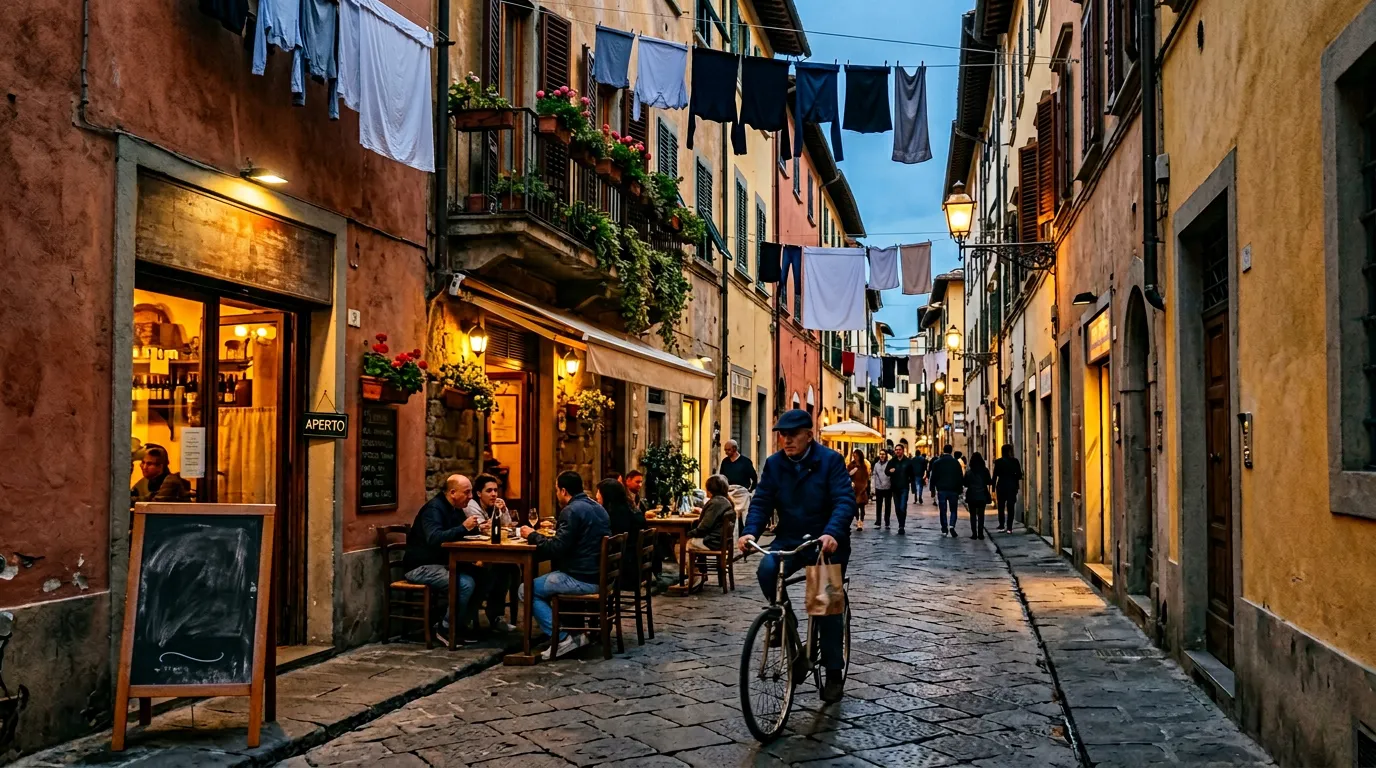
San Frediano is the most popular and authentic neighbourhood in Florence, the part of the Oltrarno where mass tourism has not yet managed to completely transform the character of the place. San Frediano Florence means artisan workshops, unpretentious trattorias, neighbourhood markets, families who have lived here for generations and a local life that resists the homogenisation that has struck so many other parts of the city.
The history of San Frediano
The neighbourhood takes its name from the Church of San Frediano in Cestello, which stands on Lungarno Guicciardini overlooking the Arno. The church dates from the seventeenth century but the neighbourhood is much older: already in the Middle Ages this area was inhabited by workers in the industries that used the river’s water, especially tanneries and textile dye works.
The popular character of San Frediano Florence has deep roots in the city’s manufacturing economy. Workshop and factory workers settled here because rents were lower than in the centre, houses simpler, life less ceremonious. In the twentieth century, San Frediano was one of Florence’s working-class neighbourhoods: older Florentines still remember the consumer cooperatives, the trattorias where you played cards after work, the neighbourhood festivals.
Today the neighbourhood has changed but still preserves something of that character. The young artists and creative professionals who have moved in over recent decades coexist with the older residents, and the result is an interesting mix of tradition and contemporaneity.
Borgo San Frediano and the main streets
Borgo San Frediano is the neighbourhood’s main street: it starts from Porta San Frediano, one of the gates in Florence’s medieval walls, and extends towards the centre. In the morning, the borgo is still reasonably authentic: a butcher with a queue of regular customers, a bakery with unsalted Tuscan bread, a hardware shop where you can find improbable things.
Via dell’Orto, Via dei Serragli and Via della Chiesa are the most interesting side streets for those who want to discover the less touristy San Frediano Florence. Here you find restoration workshops, carpentry studios, small artists’ ateliers.
Porta San Frediano, one of Florence’s best-preserved medieval gates, marks the western end of the borgo. The medieval walls extend from here towards the Forte di Belvedere: a walk along the walls is possible in certain sections.
Authentic trattorias and restaurants
San Frediano is still one of the neighbourhoods where you eat best in Florence at the best quality-to-price ratio. The neighbourhood’s historic trattorias have no need of signs to attract customers: the Florentines who have been going for years are the best advertisement.
The typical dishes found in San Frediano Florence trattorias are those of Tuscan cucina povera: ribollita, pasta e fagioli, lampredotto (beef stomach cooked in broth, a must for those who really want to taste Florentine cuisine), pappardelle al cinghiale, peposo dell’Impruneta (a beef stew with black pepper and red wine).
For a quick lunch, the sandwich shops in the neighbourhood are some of Florence’s best: quality ingredients, generous portions, honest prices. Panini with porchetta, finocchiona (Tuscan salami with fennel seeds) and quality mortadella are among the most popular.
San Frediano’s markets
The Piazza dei Nerli market takes place every Friday morning: it is a small neighbourhood market with fruit, vegetables, bread and a few household products. It is not large, but it is frequented almost exclusively by neighbourhood residents and is one of the places where you still feel the authentic life of San Frediano.
The Sant’Ambrogio market, technically outside the neighbourhood but reachable in 15 minutes on foot, is Florence’s most authentic food market: seasonal fruit and vegetables from Tuscan farmers, cheeses, cured meats, flowers. It is open Monday to Saturday from 7am to 2pm.
The craftsmanship of San Frediano
Like the whole Oltrarno, San Frediano preserves a living artisan tradition. The most represented categories in the neighbourhood:
Carpenters and furniture restorers are still numerous: their workshops are recognisable by the smell of wood and solvents coming from open doors. Many are happy to show their work to curious visitors.
Weavers and upholsterers: the neighbourhood’s textile tradition is ancient and a few workshops survive.
Luthiers: Florence has a tradition of building and restoring musical instruments, and San Frediano is home to some of the most important. The lutherie workshops in the neighbourhood are small but of the highest level.
The Church of Santa Maria del Carmine and the Brancacci Chapel
The Church of Santa Maria del Carmine, in Piazza del Carmine, houses the Brancacci Chapel: one of the most important fresco cycles in the history of European art. The frescoes, begun by Masaccio and Masolino around 1424 and completed by Filippino Lippi in 1480, tell the life of Saint Peter with an expressive power and rendering of the human figure that anticipates by decades the developments of mature Renaissance painting.
A visit to the Brancacci Chapel requires booking (maximum 30 people at a time) and the stay is limited to 15 minutes, but it is an intense experience. Masaccio’s Tribute Money in particular is one of the most studied and admired works in the entire history of art.
San Frediano today: the neighbourhood that changes slowly
In recent years, San Frediano Florence has attracted a new generation of residents: designers, creative craftspeople, restaurateurs opening unconventional venues, art galleries. The result is a neighbourhood in slow transformation, where gentrification is present but has not yet erased the original character.
The neighbourhood’s newer bars stand alongside the historic trattorias without replacing them. At weekends, when aperitivos at the bars on Borgo San Frediano and Via dell’Orto draw Florentines and residents from nearby areas, the neighbourhood has a particular energy: a mix of authentic and contemporary that works.
Where to stay
Homelink De’ Medici is located at Via Pisana 191, just 5 minutes’ walk from San Frediano Florence: the perfect distance to explore the neighbourhood early in the morning or to walk back after dinner at one of the Borgo’s trattorias. It is the ideal base for those who want to experience the most authentic side of Florence.
Related property: Homelink De’ Medici Link: /de-medici/
Where to stay
Dove dormire: Homelink The Key - Porta al Prato / Santa Maria Novella
Controlla la disponibilitàDove dormire: Homelink Charlotte - Centro storico · Santa Maria Novella
Controlla la disponibilità