Oltrarno Florence: The Complete Neighbourhood Guide
The Oltrarno di Firenze is the neighbourhood on the other bank of the Arno, separated from the historic centre by the medieval bridges. It is the part of Florence that has most faithfully maintained the authentic character of the city: craftspeople, trattorias, residents who have lived here for generations, university students and artists. Knowing the Oltrarno means knowing a Florence different from the one in traditional tourist guides.
The history of the Oltrarno
The name Oltrarno means literally “beyond the Arno”: this area was considered peripheral until the fourteenth and fifteenth centuries, when Florence’s great families began to build their palaces on this bank of the river. The Pitti family purchased an imposing palace in 1457 (today’s Palazzo Pitti, Florence’s largest museum), and this transformed the Oltrarno into a neighbourhood of status.
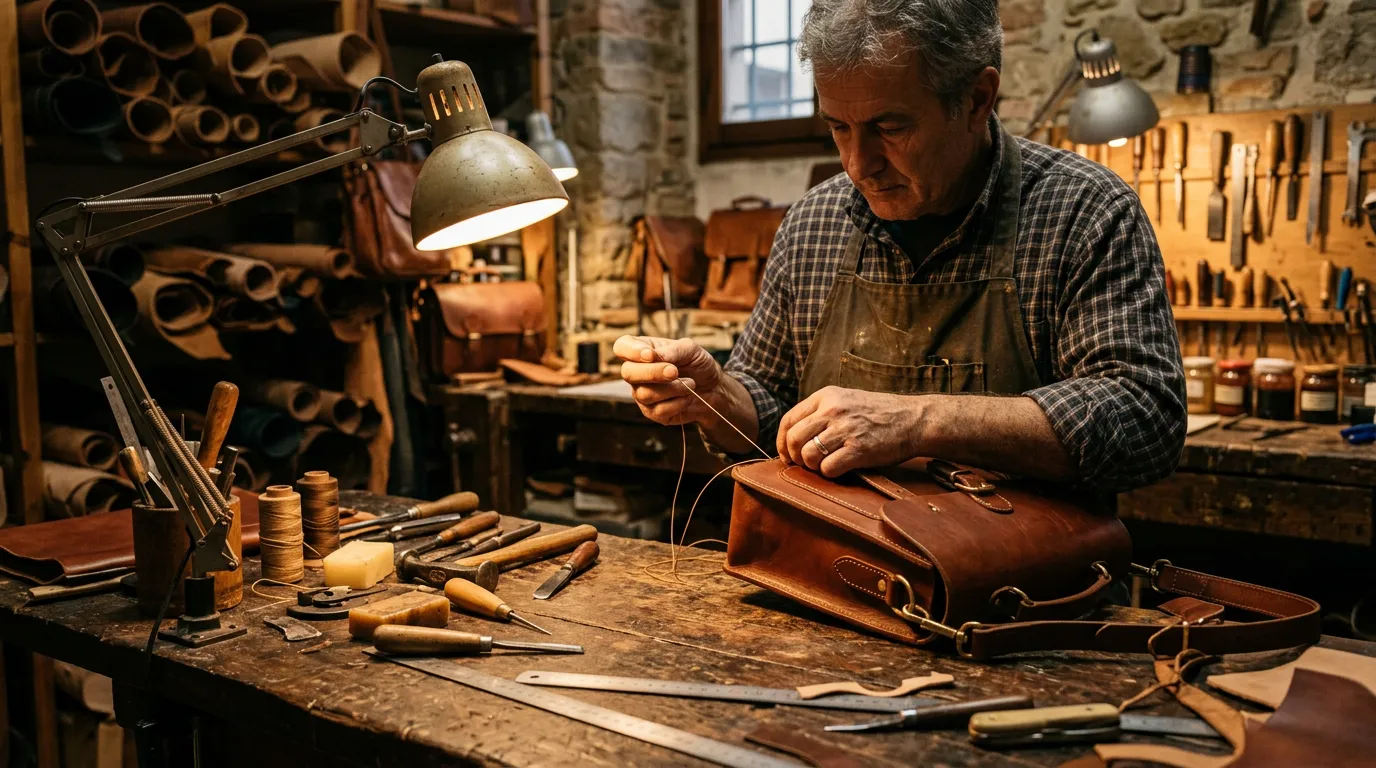
But the most interesting part of the Oltrarno’s history is that of the artisan workshops. Weavers, tanners, blacksmiths and carpenters settled here because they needed the Arno’s water for their production processes. This manufacturing tradition has never completely disappeared: still today, walking through the Oltrarno’s streets, you hear the sounds of restoration workshops, see carpenters working outdoors on fine days, and meet craftspeople working leather or stone.
Palazzo Pitti and the Boboli Gardens
Palazzo Pitti is the Oltrarno’s great museum. The palace, built in 1457 to a design by Brunelleschi (later completed by Bartolomeo Ammannati), is the largest in Florence by floor area. It houses five distinct museums:
The Palatine Gallery contains the most important painting collection after the Uffizi: Raphael, Titian, Rubens, Caravaggio, Murillo. The rooms are decorated with Medici splendour, frescoed and ornamented with stuccos. The visit is different from the Uffizi: less chronologically organised, more immersive in the lifestyle of a Renaissance court.
The Boboli Gardens, behind the palace, are a historic park of 45,000 square metres. Designed by Niccolò Tribolo from 1549 onwards, the gardens preserve sculptures, fountains, cypress avenues and three artificial grottos. The Buontalenti Grotto (1583–1593) is among Florence’s most bizarre and fascinating Mannerist works: the walls are covered with sea sponges and artificial stalactites, with human figures emerging from the rock.
Santo Spirito: the social heart of the Oltrarno
Piazza Santo Spirito is the place where you understand why the Oltrarno di Firenze is loved by those who live there. The irregular square, shaded by large lime trees, is frequented all day long by residents, students and artists. The morning is tranquil: a few bars with outdoor tables, a small neighbourhood market on Monday mornings. In the evening, especially in the warm months, it becomes one of Florence’s most animated places: outdoor tables, occasional live music, cocktails served by the bars facing the square.
The Basilica of Santo Spirito
The Basilica of Santo Spirito, which gives the square its name, is one of Brunelleschi’s architectural masterpieces. The original design, begun in 1436, envisaged a perfectly symmetrical church with apses on all four sides. The final plan was altered after Brunelleschi’s death, but the interior preserves a rare geometric perfection: 40 chapels distributed along the naves, columns in pietra serena, rational proportions that give a sense of serene order.
Inside you find works by Filippino Lippi, Lorenzo di Credi and a Pietà attributed to a young Michelangelo.
The Oltrarno’s artisan workshops
The Oltrarno di Firenze is still the craftspeople’s neighbourhood. Some of the most represented artisan categories:
Furniture and painting restorers are found mainly on Via dei Serragli, Via dello Sprone and Via dei Vellutini. Many have their doors open during work and are happy to welcome those who stop to look. Some workshops offer short restoration courses.
Bookbinders and paper makers are present on Via dei Serragli and around Piazza Santo Spirito. Florentine marbled paper, still produced using eighteenth-century techniques, is among Florence’s most original souvenirs.
Custom cobblers are still present in the neighbourhood: fewer than before, but some survive. For those who want a pair of handmade shoes in Tuscany, the Oltrarno is the place to look.
What to eat in the Oltrarno
The Oltrarno has some of Florence’s most authentic trattorias. The hallmarks of the best places: handwritten menu or chalkboard, few tables, reservation often needed in the evening, cooking based on Florentine tradition without concessions to fashion.
Ribollita - the soup of bread, cavolo nero and beans that is “re-boiled” the following day - is the most typical winter dish. Pappa al pomodoro, less wintry, is perfect in summer with seasonal tomatoes. Pappardelle al cinghiale, pasta e fagioli, peposo (a black pepper and beef stew) are other classics found in the neighbourhood’s trattorias.
For panini, the Oltrarno has several small shops where you can eat standing: these are often the best places for a quick lunch, with quality ingredients and honest prices.
The Lungarni and walks along the Arno
The Oltrarno’s Lungarni, the roads running alongside the river, are among Florence’s finest for an evening walk. The Lungarno Guicciardini, Lungarno Soderini and Lungarno Serristori offer continuous views of the historic centre: the medieval palaces on the other bank, Ponte Vecchio, Brunelleschi’s dome appearing and disappearing between the rooftops.
At dusk, when the city’s lights come on and reflect on the Arno, the walk along the Lungarni is one of the finest moments Florence can offer.
Where to stay
Homelink De’ Medici is located at Via Pisana 191, in the heart of the Oltrarno di Firenze: 5 minutes on foot from Piazza Santo Spirito, 5 minutes from San Frediano, 12 minutes from Palazzo Pitti and 15 minutes from Ponte Vecchio. Staying in the Oltrarno means waking up already immersed in Florence’s most authentic neighbourhood.
Related property: Homelink De’ Medici Link: /de-medici/
Where to stay
Dove dormire: Homelink The Key - Porta al Prato / Santa Maria Novella
Controlla la disponibilitàDove dormire: Homelink Charlotte - Centro storico · Santa Maria Novella
Controlla la disponibilitàDove dormire: Homelink De' Medici - Oltrarno · San Frediano / Santo Spirito
Controlla la disponibilità