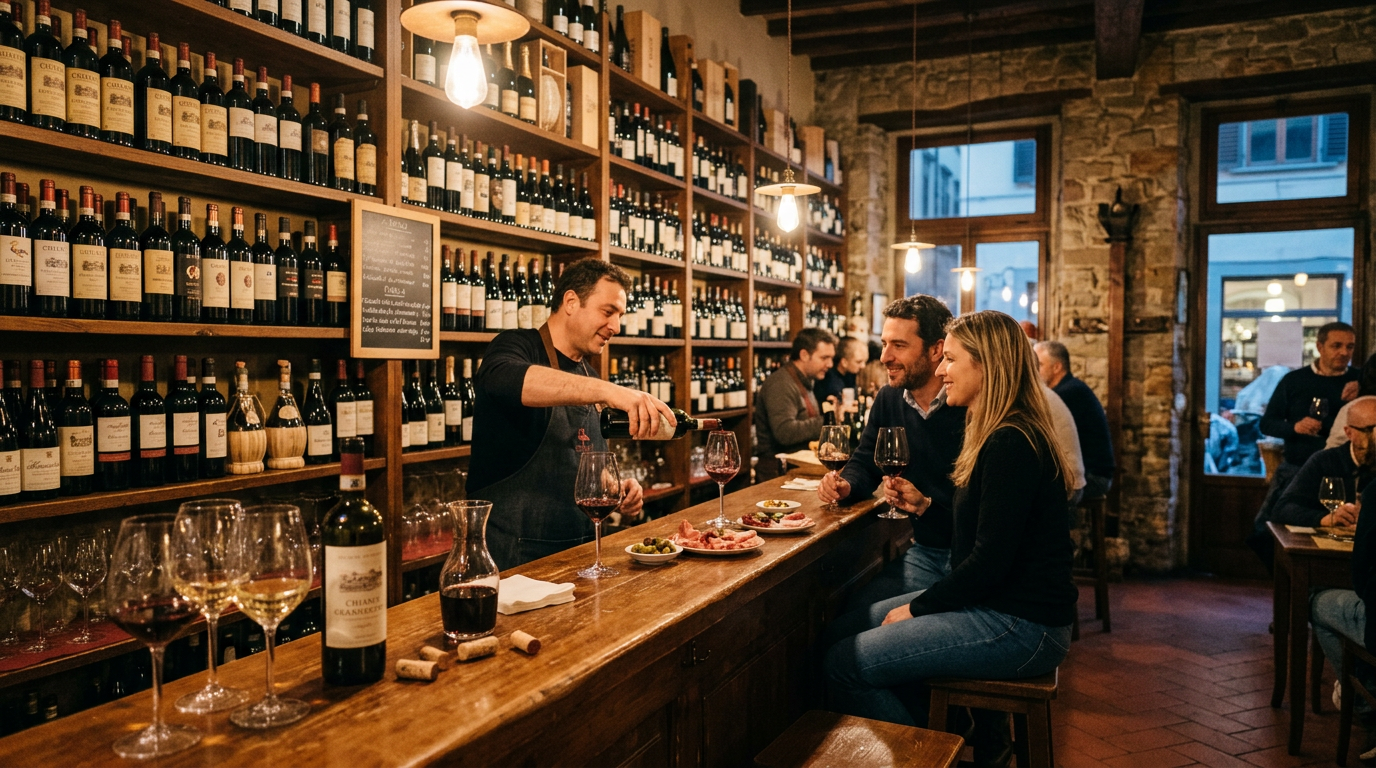
Florence natural wine and wine bars in Oltrarno
Natural wine in Florence
Florence is not the first city that comes to mind when people discuss the natural wine movement. Piedmont, the Jura, and various parts of France have more established reputations in this area. But Florence, and Oltrarno specifically, has developed a serious natural wine culture over the past decade.
The movement arrived partly through young Florentine sommeliers and restaurateurs who trained or worked elsewhere in Italy and returned with different ideas about wine. It arrived partly through the general reassessment of Italian viticulture that has been happening since the early 2000s. Tuscany, with its strong tradition of organic farming and small-scale production, was fertile ground.
The result is that several wine bars in Oltrarno now specialise in natural, biodynamic, and low-intervention wines from Tuscany and other Italian regions. These are not tourist businesses. They serve a clientele of informed Florentines who have shifted their drinking habits.
Understanding what natural wine means, and what it does not mean, helps you navigate the wine bars and choose what to drink.
What distinguishes natural wine
The term natural wine has no legal definition in Italy or elsewhere. It is a loose category that encompasses several different approaches to winemaking, all of which share a commitment to minimal intervention in the vineyard and the cellar.
In practice, natural wine is typically made from organically or biodynamically farmed grapes. No synthetic pesticides, herbicides, or fertilisers are used in the vineyard. The harvest is done by hand. The grapes are pressed without mechanical concentration. Fermentation happens with native yeasts rather than commercial yeasts added from outside.
In the cellar, the winemaker adds little or no sulphur dioxide, which is the standard preservative and stabiliser in conventional winemaking. This means the wines can be more fragile, more variable, and more susceptible to faults. It also means the wines express the character of the place and year more directly.
The resulting wines often look and taste different from conventional wines. They may be cloudy. They may have unusual colours: orange wines from white grapes aged on their skins, red wines of lighter or darker colour than the grape variety would suggest. The flavours can be more complex and more challenging.
Not all wines sold as natural are good. The absence of intervention does not guarantee quality. A badly farmed vineyard and a careless cellar will produce bad natural wine just as surely as they would produce bad conventional wine. Judgement and knowledge still matter.
Wine bars in Oltrarno
Enoteca Pitti Gola e Cantina is one of the established natural wine bars in Oltrarno. It sits near Palazzo Pitti and has a selection focused on small Italian producers. The list changes regularly. A glass of wine costs between 6 and 12 euros. The food offering is simple: cheese, charcuterie, and occasionally more substantial dishes.
The area around Piazza della Passera has several small bars that serve natural and low-intervention wine. Look for places where the bottles on the back shelf are unfamiliar labels with hand-drawn or minimal design. This is a reliable, if imperfect, indicator of a natural wine focus.
Borgo San Frediano in the western section of Oltrarno has seen several openings in this category over the past five years. The neighbourhood’s working-class character and lower commercial rents made it attractive for small operators with a different vision. Walk slowly along Borgo San Frediano from Via dei Serragli toward Porta San Frediano and pay attention to what is open in the evenings.
How to choose a bottle
When buying a bottle of natural wine in Florence, the most useful tool is conversation. The people who run serious natural wine bars and shops know their stock personally. They have often visited the producers. Describing what you usually enjoy and asking for a recommendation will get you further than reading labels.
If you want something specifically Tuscan, ask for a Sangiovese-based wine from a small organic producer. Sangiovese is the principal grape of Tuscany and the backbone of Chianti. In the hands of a good natural wine producer, it produces something quite different from conventional Chianti: more textured, more alive, with a complexity that develops in the glass.
Vermentino and Vernaccia are interesting white Tuscan grapes. A well-made skin-contact Vernaccia di San Gimignano from a serious producer is worth seeking out. It is amber in colour and much more complex than the conventional version.
For something outside Tuscany, the wine bars of Oltrarno tend to carry good selections from the Jura, from natural Champagne producers, and from small growers in Campania and Sicily. Asking what is particularly good from outside Tuscany at the moment is a reasonable question.
Average prices and where to find it
A glass of natural wine in an Oltrarno wine bar costs between 5 and 14 euros in 2026. The range reflects the wine itself rather than the markup. A simple natural Sangiovese from a young producer costs at the lower end. A rare bottle from a celebrated small producer opens at the top end.
Bottles to take home from a wine shop are available at more accessible prices. A good bottle of natural Chianti Classico from a certified organic producer runs between 15 and 35 euros from a wine shop in Oltrarno. The same bottle in a restaurant will cost between 35 and 70 euros.
Wine shops in Oltrarno that specialise in natural and artisan wines include a few on Via dei Serragli and the surrounding streets. These are small shops, typically 30 to 50 square metres, with limited but well-chosen stock. The owner is usually present and willing to talk about the wines.
Avoid the large enoteca chains near the main tourist monuments. They carry conventional wines at inflated prices and the staff rarely has deep knowledge of the individual bottles.
Where to stay
De’ Medici is a guesthouse in Oltrarno. The wine bars and shops described in this guide are within a short walk. The neighbourhood’s evening culture, built around good wine drunk slowly with good company, is one of the best reasons to stay on the south bank.