San Niccolò Florence: Authentic Neighbourhood Guide
San Niccolò: Florence’s Most Authentic Neighbourhood
San Niccolò is the easternmost section of Oltrarno. It runs from Ponte alle Grazie to Ponte San Niccolò along the south bank of the Arno, pressed between the river and the steep hillside of the Colle di San Miniato.
The neighbourhood is compact, residential, and almost entirely free of tourist infrastructure. There are no souvenir shops. The few restaurants and bars cater almost exclusively to local residents. Property prices are significantly lower than in the more central parts of Oltrarno, which has kept the social character of the area intact.
San Niccolò: the authentic neighbourhood
The character of San Niccolò is shaped by its geography. The hillside rises steeply immediately behind the main street, Via San Niccolò, limiting the depth of the neighbourhood to a few hundred metres. The river is to the north. The only way in and out is from the west, through the rest of Oltrarno, or over the hill to the east via Viale Michelangiolo.
This relative isolation has protected the neighbourhood from the tourist economy that has transformed much of central Florence. Residents here include older Florentine families who have lived in the area for generations, a significant population of students and young professionals, and a smaller number of artists and craftspeople.
The main street, Via San Niccolò, runs parallel to the Lungarno at about fifty metres from the river. It is lined with residential buildings of various periods, several small bars, a butcher, a baker, and a few specialist shops. There are no international brands and no tourist menus.
The neighbourhood is named after the church of San Niccolò sopr’Arno, which stands on Via San Niccolò. The church was founded in the 11th century and rebuilt in its current form in the 14th century. It contains several notable altarpieces and a sacristy with frescoes attributed to the workshop of Michelozzo.
The tower and the bastion
The most distinctive monument in San Niccolò is the Torre di San Niccolò, a square medieval tower that stands at the junction of Via San Niccolò and Lungarno Serristori. The tower is the only one of Florence’s city gate towers to survive intact. It was built in 1324 as part of the same defensive circuit as Porta Romana.
Unlike the gates in the circuit, which were functional passages through the wall, the Torre di San Niccolò was primarily a defensive structure designed to cover the approach to the river crossing. Its walls are approximately 1.5 metres thick, and it rises to a height of about 30 metres.
The tower is open to visitors in summer, with guided visits organized by the Comune di Firenze. The tour takes you to the top of the tower, from which there is a direct view over the rooftops of San Niccolò to the Lungarno and the river. The climb involves approximately 120 steps on a narrow internal staircase.
The Bastione di San Giorgio, higher up the hillside above San Niccolò, is a massive fortification designed by Michelangelo in 1529 during the siege of Florence by the Medici and their Imperial allies. The bastion was built as part of an emergency defensive programme and represents one of the few surviving examples of Michelangelo’s work as a military engineer.
The bastion is accessible on foot via a path that climbs from Porta San Miniato, the small gate at the eastern end of Via San Miniato. The climb takes about ten minutes. The Giardino Bardini, described separately in another guide, is adjacent to the bastion.
Bars that Florentines prefer
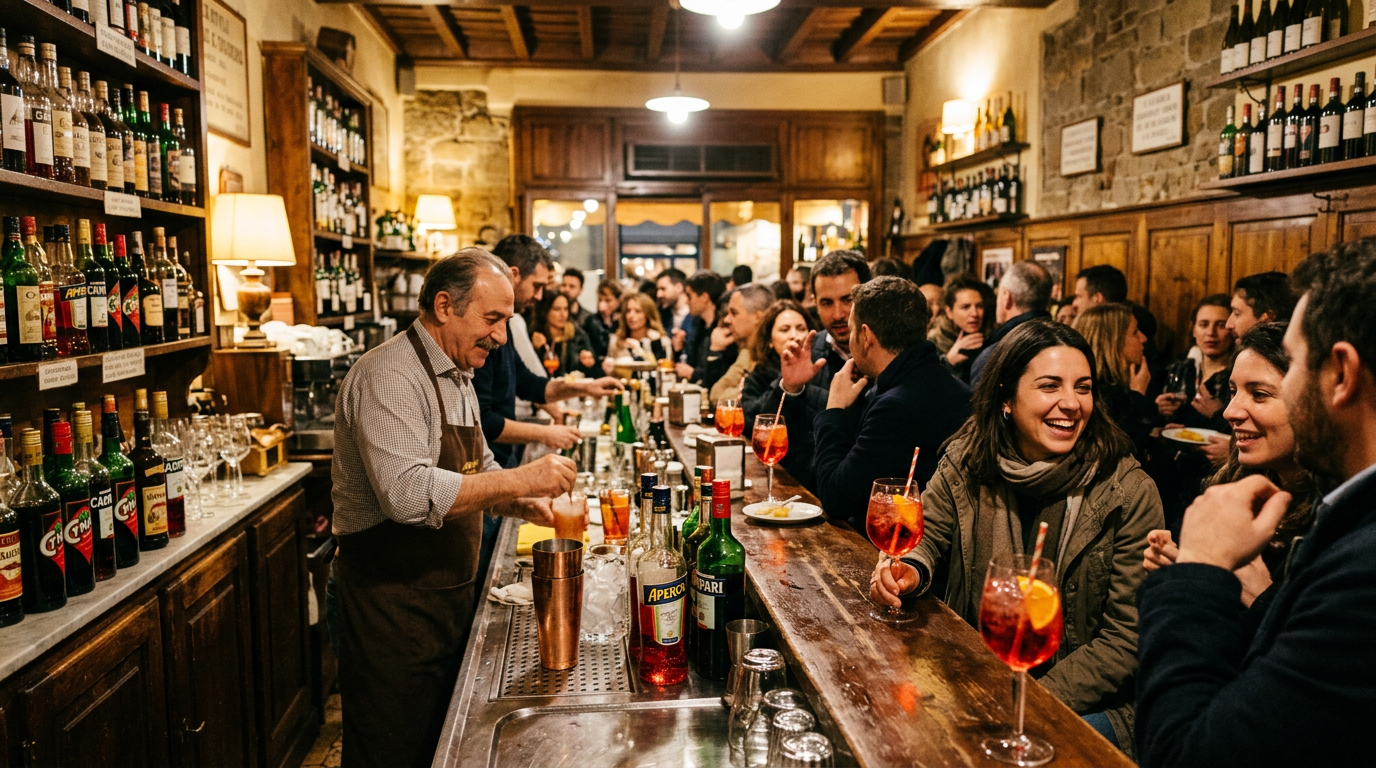
Bar Il Rifrullo on Via San Niccolò is the best-known bar in the neighbourhood. It has a large outdoor terrace with a view up the street and serves good coffee, sandwiches, and a proper aperitivo. In summer, the terrace fills up from 6 pm. Locals use the bar throughout the day.
Zoe on Via dei Renai is a cocktail bar with a more curated drinks list. It attracts a younger, mixed crowd of residents and visitors. The aperitivo here includes light snacks. Cocktails start at about 8 euros.
The Osteria del Cinghiale Bianco on Borgo San Jacopo (just west of San Niccolò proper) serves wild boar and other Tuscan game dishes. This is a traditional Florentine restaurant without any tourist affectation. A full dinner costs around 35-45 euros per person with wine.
For coffee, Bar San Niccolò at the corner of Via San Niccolò and Via dei Renai serves the best espresso in the area. The bar is tiny, has no seating, and is always busy in the morning. A coffee costs 1.10 euros.
Artisan workshops still alive
The craft tradition in San Niccolò is narrower than in other parts of Oltrarno but still present. A few workshops survive on Via San Niccolò and the parallel streets, doing work that has been done in the neighbourhood for generations.
A picture framer on Via San Niccolò has been making frames in the traditional Florentine style, with carved and gilded wood, for over forty years. The workshop is visible from the street: the smell of gesso and linseed oil is unmistakable.
A furniture restorer on Via dei Renai works on pieces that range from 18th-century Tuscan furniture to 1960s Scandinavian design. The workshop takes commissions from both Florentine residents and visitors who have found pieces at the city’s antique markets.
A bookbinder on Via San Niccolò produces handmade notebooks, albums, and document folders using traditional Florentine marbled paper. The shop is open Tuesday to Saturday from 10 am to 1 pm and 3:30 pm to 7 pm.
What to do in the neighbourhood in the evening
The evening rhythm in San Niccolò is slower and more residential than in other parts of Oltrarno. There are no live music venues and no late-night clubs. The neighbourhood goes to bed earlier than Piazza Santo Spirito.
The most characteristic evening activity is the walk on Lungarno Serristori, the south bank embankment between Ponte alle Grazie and Ponte San Niccolò. In summer, from May to October, residents of the neighbourhood sit on the low stone wall of the Lungarno in the evening, with bottles bought from the local supermarket or from Bar Il Rifrullo. The scene is informal and genuine.
Ponte San Niccolò, the bridge at the eastern end of the neighbourhood, is a good place to stand at dusk. Looking west toward Ponte Vecchio, you see the entire south bank of the Arno. Looking east, you see the hillside rising toward San Miniato and the open Arno valley beyond the city.
A walk up to San Miniato al Monte in the evening takes about thirty minutes from Via San Niccolò. The monks sing vespers at 5:30 pm, which in summer means you can walk up in the late afternoon, attend the service, and return to the neighbourhood for dinner as the light fades.
Where to stay
De’ Medici is a guesthouse in Oltrarno, within walking distance of San Niccolò. The neighbourhood is an extension of the same south-bank urban fabric, connected by the Lungarno and the backstreets that link the two areas.