Florence local producers: where to find them
Local producers of Florence
Florence is a city, not a farm. But it sits at the centre of one of the most productive agricultural landscapes in Italy. Within 50 kilometres of the city centre you find olive groves, Chianti vineyards, truffle country, sheep farms producing pecorino, market gardens on the flood plains, and forests thick with porcini in autumn.
The producers who work this land have increasingly found ways to sell directly in the city. The weekly markets, the small food shops, and the newer direct-sales websites allow consumers in Florence to buy from people who actually made what they are selling. This is a relatively recent development in an Italy that for decades sold almost everything through intermediaries.
Understanding where to find these producers, what they sell, and how to buy from them directly is practical knowledge that improves both the quality and the cost of what you eat and take home. It also puts money into the hands of the people who do the work rather than into distribution chains.
This guide focuses on the most accessible ways to make contact with local producers without needing a car or a lot of planning.
The farmers’ market in Florence
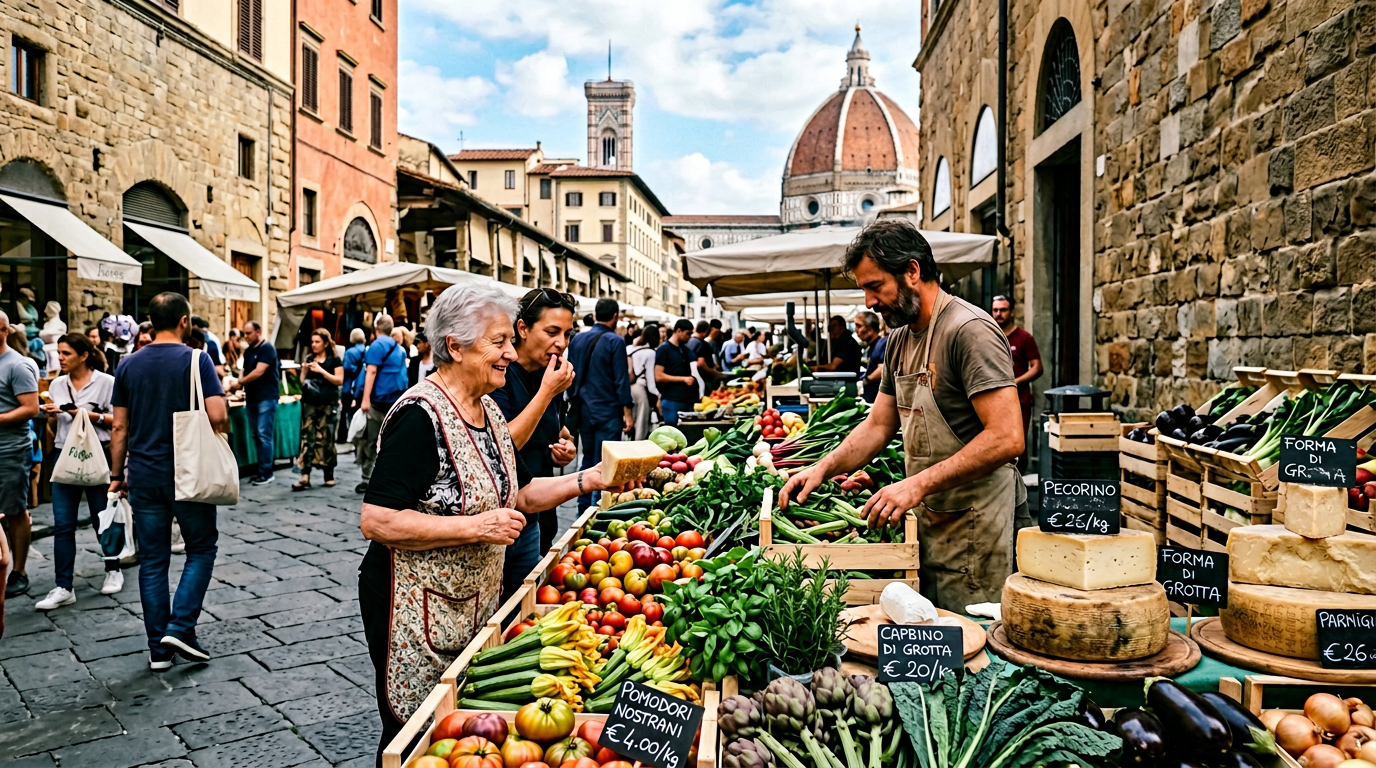
The Mercato dei Contadini at the Cascine park operates on certain Sundays through the year, usually during spring and autumn. The market brings producers from within 100 kilometres of Florence to sell directly to consumers. Honey, vegetables, cheese, cured meats, wine, olive oil, and fruit are all typical products.
Getting there from Oltrarno takes about 20 minutes on foot following the Arno west, or about 10 minutes on bus line 17C from Piazza della Repubblica. The market runs from roughly 9:00 to 13:00. Arriving early gives you the best selection.
The Mercato di Santo Spirito in Oltrarno has a small number of producer-vendors among its regular stalls. They tend to appear on third Sunday markets, which have a specific artisan and food focus. Check the current schedule before planning around this market.
The Mercato di Sant’Ambrogio operates daily except Sunday in the piazza of the same name, east of the centre. This is a traditional neighbourhood market, not a dedicated farmers’ market, but several stalls here sell produce that comes directly from farms near Florence. The cheese and charcuterie vendors at the inner market are particularly worth investigating.
Typical products of the territory
Within a 50-kilometre radius of Florence, the most important agricultural products are olive oil, wine, vegetables from the Mugello valley to the north and the Arno plain to the south, and honey from the wooded hills.
Mugello vegetables, particularly the potatoes and the chestnuts from the beech forests, have a specific character tied to the cooler mountain climate. Mugello potatoes are a prized ingredient in the better Florentine restaurants. You rarely see them in tourist shops.
Pecorino from the Crete Senesi, the grey clay hills south of Siena about 70 kilometres from Florence, is available at good cheese shops and market stalls in the city. The young version is soft and mild. The aged version, stagionato, is hard and sharp. Both are excellent.
Lardo di Colonnata, cured lard from the marble quarrying town of Colonnata near Carrara, is about 70 kilometres northwest of Florence. It is one of the most distinctive Italian cured products. Sold in thin slices, it melts on warm toast and tastes of the herbs, spices, and Carrara marble caves where it ages.
Truffles from the San Miniato area, about 40 kilometres west of Florence, are available from October through December for the white truffle, and from December through March for the black. The truffle shops in the city centre sell them at tourist prices. Buying from the producers at the market, when available, saves 20 to 30 percent.
Where to find the producers
The most direct approach is the Sunday and seasonal markets described above. These bring producers physically into the city. The level of direct buying is as high as you will find without travelling to the countryside yourself.
Several food shops in Florence operate as aggregators for local producers. They source directly and sell in the shop. These places are not tourist shops with Tuscan branding. They are neighbourhood food businesses with a genuine commitment to local sourcing. You find them by asking people who live in the neighbourhood rather than by searching online.
The Mercato Centrale in San Lorenzo has a downstairs level with traditional market stalls and an upstairs level with a food hall. The downstairs level has been there for over a century. The upstairs was added more recently and is more tourist-focused. The downstairs is where the serious buying happens.
The Associazione Mercato Dei Contadini website lists current schedules for direct-sales markets in and around Florence. The website is in Italian but the information is practical and navigable even without Italian.
How to buy directly
Buying directly from a producer requires a small amount of initiative but no special knowledge. At a market stall, you can taste before you buy. Do this. Ask the vendor what the product is, how it was made, and what it pairs well with. Italian market vendors are usually delighted to talk about their products.
Do not expect English to be spoken at all producer stalls. Pointing, gesturing, and a few numbers work perfectly well. The universal language of tasting samples eliminates most communication barriers.
Payment at direct-sale markets is often cash only. Bring small bills. A 50-euro note for a 5-euro purchase creates minor inconvenience. A handful of 5 and 10-euro notes makes everything easier.
Packaging at producer markets is minimal. Bring your own bag, ideally an insulated bag for temperature-sensitive items like fresh cheese, cured meat, or chilled wine. Plastic bags are available but minimal.
If you want to contact producers directly for larger purchases, wine and olive oil producers in particular often ship nationally and sometimes internationally. A quick search for the producer name plus “acquisto online” will usually find their shop page. Wine shipments within Italy start at around 10 euros for a case. International shipping depends on destination.
Where to stay
De’ Medici is a guesthouse in Oltrarno, close to the Mercato di Santo Spirito and within reach of every major Florence market on foot or by short bus. The neighbourhood is your practical base for finding and buying from the local producers of the Florence region.