Florence Palazzo Davanzati Visit: Full Guide
Visiting Palazzo Davanzati in Florence
Palazzo Davanzati is one of the most overlooked museums in Florence. While visitors queue for the Uffizi and the Accademia, this 14th-century merchant’s palace stands quietly on Via Porta Rossa, a short walk from Piazza della Signoria, with almost no waiting.
The building is extraordinary. It gives you a direct, unfiltered view of how a wealthy Florentine family lived in the late medieval period. No reconstruction, no labels explaining what things looked like. The rooms still contain original furniture, textiles, and frescoes.
Palazzo Davanzati: history of a medieval house
The palace was built in the second half of the 14th century for the Davizzi family, a wealthy merchant clan. The name Davanzati comes from a later owner, Bernardo Davanzati, a historian and Renaissance writer who occupied the building in the 16th century.
The structure follows the typical form of a Florentine merchant’s palace. The ground floor was used for business, with a large open space for storing goods and receiving clients. The upper floors contained the family apartments.
What makes Palazzo Davanzati unusual is its survival. Most medieval palaces in Florence were modified, enlarged, or rebuilt during the Renaissance and later periods. This building was left largely as it was because successive owners lacked the money or the inclination to change it.
By the 19th century the palace had become a tenement, divided into many small apartments. In 1904, an antique dealer named Elia Volpi bought the building and spent years stripping out the later additions and restoring it to what he believed was its original appearance.
Volpi filled the rooms with medieval and Renaissance furniture, ceramics, textiles, and objects collected from across Tuscany and beyond. The result is part authentic medieval palace and part early-20th-century reconstruction. Knowing this helps you understand what you are looking at.
The Italian state purchased the palace in 1951. It has been open as a museum since 1956. A major restoration was completed in 2009.
What you see inside
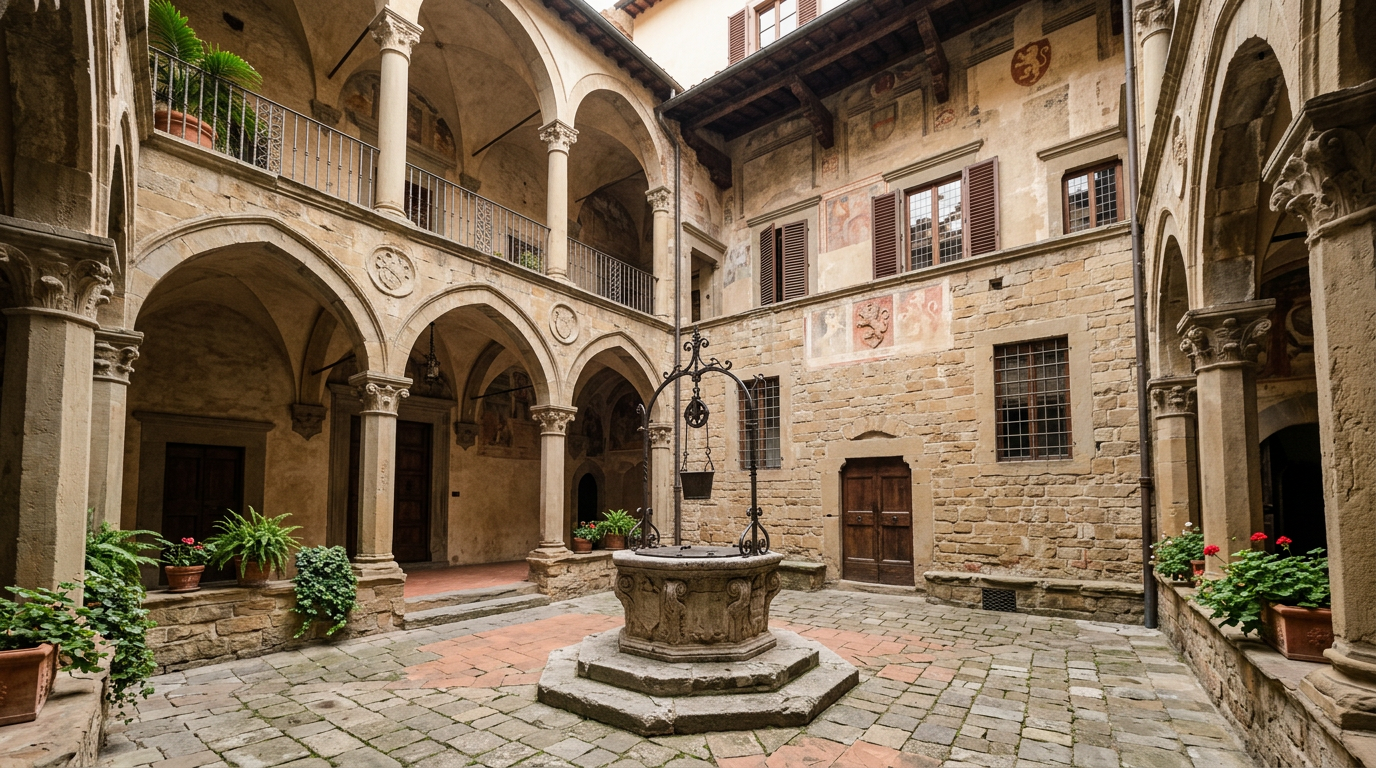
The ground floor holds the entrance hall, originally used as a loggia open to the street. The stone columns still stand. The arched openings were later filled in with stone, giving the facade its current appearance. The wide doorways on the ground level were designed to allow the passage of bales of goods.
The first floor contains the main reception room, the Sala Grande or Sala Madornale. This is the most impressive space in the building. The ceiling is high. The walls are decorated with a large fresco cycle depicting a French romance, “La Chatelaine de Vergy”, painted around 1350. This is one of the few surviving secular fresco cycles of the medieval period in Florence.
The second floor holds the bedrooms and a second reception room. The frescoes here depict parrots, a pattern derived from Persian and Islamic textiles that were fashionable among Florentine merchants of the period. The bedroom contains a large curtained bed of the type used in 14th-century merchant families.
The kitchen on the upper floor is particularly interesting. It shows the practical arrangements of a medieval household: the hearth, the storage systems, the utensils. The well shaft runs through the centre of the building from the courtyard to the top floor, allowing water to be drawn at each level.
The private chapel contains a painted altarpiece and devotional objects of the kind a prosperous medieval family would have used for daily prayer. The room is small and intimate.
Throughout the palace, display cases contain embroidered textiles, ceramics, carved wooden chests, and glass objects. Many of these were collected by Volpi from different sources and are not original to the building, but they create a convincing atmosphere of 14th-century domestic life.
Opening hours and prices
Palazzo Davanzati is open Tuesday to Sunday. Closing day is Monday.
Morning hours run from 8:15 am to 1:30 pm. Access to the upper floors is by guided tour only, with tours departing at 10:00 am, 11:00 am, and 12:00 noon. Tours last approximately 45 minutes.
Afternoon hours run from 1:30 pm to 6:45 pm on selected days. Check the official museum website before you visit, as hours change seasonally and the museum sometimes closes for restoration work.
Entry costs 6 euros for adults. Visitors under 18 are admitted free. EU citizens between 18 and 25 pay a reduced price of 2 euros. Entry is free on the first Sunday of each month, in common with other state-run museums in Italy.
The museum is included in the Firenze Card, a 72-hour city card that covers entry to most of the major museums. If you plan to visit several museums in one trip, the card may represent good value.
How to get there
Palazzo Davanzati is at Via Porta Rossa 13, in the centre of Florence. The address is about 400 metres west of Piazza della Signoria and 300 metres north of the Arno.
On foot from Oltrarno, cross Ponte Vecchio and walk north along Via Por Santa Maria, then turn left onto Via Porta Rossa. The walk takes around eight minutes.
On foot from the Duomo, walk south along Via dei Calzaiuoli to Piazza della Repubblica, then continue along Via degli Strozzi and turn right at Via del Terme into Via Porta Rossa. The walk takes about ten minutes.
There are no trams or metro stops close to the palace. Bus lines that stop near Piazza della Repubblica include the C1 and several suburban lines. From Oltrarno, the walk is the most practical option.
The entrance is easy to miss. Look for a medieval facade with three arched openings at street level and a loggia at the top. A discreet museum sign marks the entrance.
Why it is worth visiting
Most visitors who come to Florence spend the majority of their time looking at art. Paintings, sculpture, frescoes. Palazzo Davanzati offers something different: a direct experience of domestic space and everyday life in the medieval city.
Walking through the rooms, you understand how a wealthy Florentine family organised their daily existence. Where they slept, where they ate, how they cooked, how they stored their goods, how they worshipped. This is history made tangible rather than symbolic.
The fresco cycles are also genuinely remarkable. The secular narrative frescoes in the Sala Grande are rare surviving examples of a type of decoration that was once common in Florentine domestic interiors. Almost all the others have been destroyed or lost.
The absence of crowds is itself a reason to visit. You can stand in the rooms for as long as you like. There is no pressure to move on. The guides who lead the tours of the upper floors are knowledgeable and informative.
Palazzo Davanzati requires about ninety minutes if you take one of the guided tours of the upper floors. Allow more time if you want to examine the display cases carefully.
Where to stay
De’ Medici is a guesthouse in Oltrarno, an eight-minute walk from Palazzo Davanzati across Ponte Vecchio. You can visit the palace in the morning and return to the neighbourhood for lunch with no need for transport.