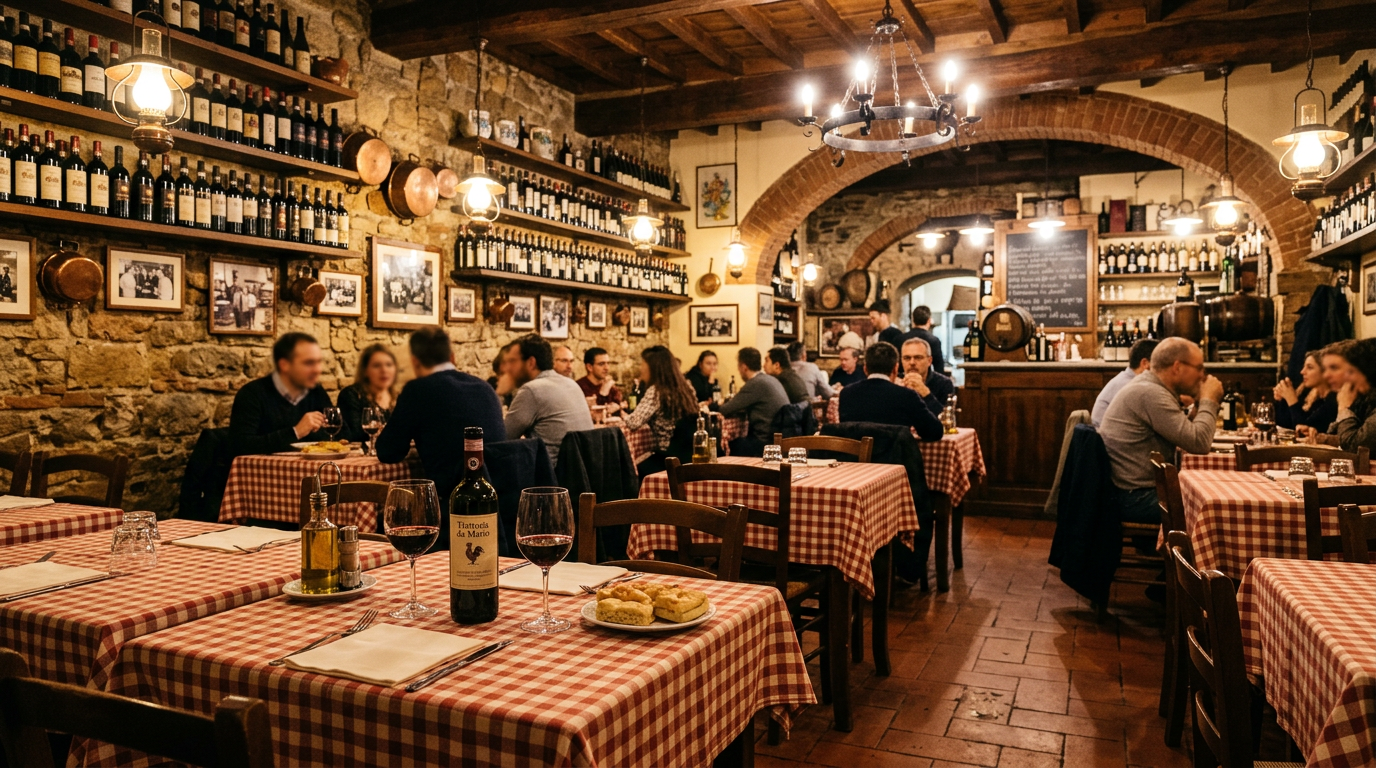
Florence typical trattorias: real Florentine taverns
Typical Florentine taverns
Florence has been exporting a romanticised version of its eating culture for decades. The result is a city full of places that look like old trattorias but function as tourist traps. Recognising the difference requires some attention.
A genuine Florentine osteria is not trying to charm you. It is feeding its regular customers at a price they can afford, with food that corresponds to the season and to what the cook knows how to make. Everything else, the decor, the presentation, the English menu with photographs, is a sign you are in the wrong place.
The word osteria originally referred to a place where you could buy wine by the glass and bring your own food. Over time, these places began offering simple cooked food to accompany the wine. The category evolved slowly, and many of the places that still call themselves osterie today trace a direct line to that working tradition.
What distinguishes a real osteria
The most reliable signs are the most basic. A handwritten or chalk-written menu. A short wine list of local bottles. A room that is full of Italian speakers at lunchtime. A kitchen whose smell reaches you before you open the door.
Real osterie in Florence do not offer multiple pages of options. A good one might have four or five starters, three or four pasta dishes, and two or three meat mains on any given day. The vegetables are seasonal and often listed on a board. There is no sushi, no avocado toast, and no burger.
The pace of service is steady but unhurried. No one will rush you. Florentines eat lunch slowly. A table is yours for the duration of your meal. The idea of turning tables quickly does not apply in a proper osteria.
Payment is usually by cash, though this is changing. Many smaller places now accept cards. Do not assume one way or the other. Ask at the start of the meal if it matters.
The dishes that are always on the menu
Ribollita appears on virtually every traditional osteria menu in Florence between October and April. It is a thick vegetable and bread soup that is reheated and sometimes baked. The name means “reboiled.” The best versions have a coarse texture and taste of cavolo nero and beans.
Pappardelle al cinghiale, wide pasta ribbons with wild boar ragu, appears through the autumn and winter. The sauce is slow-cooked and rich. This is not a light dish. It is made for people who have been working outdoors.
Bistecca fiorentina appears on most traditional menus as a seasonal presence. It is priced by weight, typically between 5 and 8 euros per 100 grams, with a minimum cut of around 700 grams. Expect to pay 35 to 55 euros for a full steak for two people.
Trippa alla fiorentina, tripe cooked in tomato sauce with herbs, is a classic that divides opinion. It is cheap, around 8 to 12 euros, and deeply flavoured. If you want to eat as Florentines have eaten for centuries, this is the dish.
Fagioli all’olio, white beans dressed with good olive oil and sage, appear as a side dish or starter. They are simple and excellent. They cost very little. Order them.
Neighbourhoods where to look
Oltrarno is the most reliable area for authentic osterie. The neighbourhood has a higher concentration of working local restaurants than the north bank. Via dei Serragli, Borgo San Frediano, and the streets around Piazza del Carmine all have genuine options.
San Frediano, the western part of Oltrarno, is particularly worth exploring. It has a strong working-class identity and fewer tourist businesses than the areas closer to Ponte Vecchio. The osterie here tend to be smaller and more basic, which is usually a good sign.
Campo di Marte and Gavinana, on the east side of the city, have traditional neighbourhood restaurants that almost no tourist ever visits. These require a bus ride, about 20 minutes from the centre, but the experience of eating in a place that has never adjusted itself for outsiders is worth the effort.
Sant’Ambrogio, east of the centre, has a morning market and a cluster of good traditional restaurants nearby. The neighbourhood was historically working-class and has kept more of its food identity than much of the historic centre north of the Arno.
How to behave in a Florentine osteria
Enter and wait to be seated. Do not pick your own table without acknowledgement, even if the restaurant appears empty. A nod from the owner or staff is the usual signal to choose your place.
Do not ask for modifications to dishes. This is Italian restaurant culture in general, but it applies with particular force to traditional Florentine cooking. The cook knows what they are making. The dish arrives as it is meant to arrive.
Order water and wine at the beginning. Still or sparkling water costs 2 to 3 euros per bottle. House wine by the carafe, a quarter litre, costs between 3 and 5 euros. A half litre costs between 5 and 8 euros.
Bread is typically placed on the table without being asked and is charged at around 1.50 to 2.50 euros per person as a cover charge. This is called pane e coperto. It is standard and not negotiable.
Leave the table when you have finished. Do not occupy space for hours after eating. This is a practical courtesy in a small restaurant with a full room. Take your coffee at the bar counter if one is available, as Florentines do.
Where to stay
De’ Medici is a guesthouse in Oltrarno, the neighbourhood with the highest concentration of genuine Florentine osterie. From here, you are within a short walk of the places where real Florentine food is still being cooked for real Florentine customers.