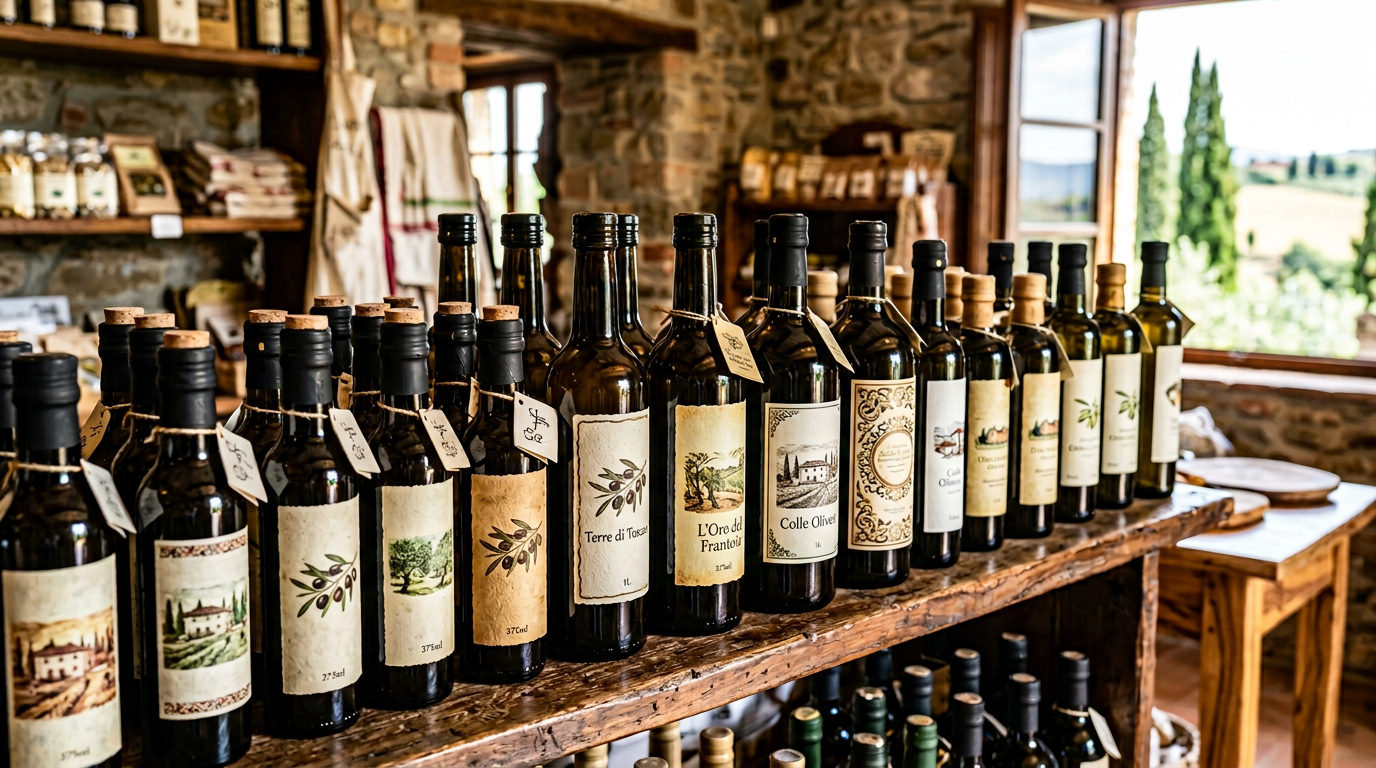
Florence extra virgin olive oil: how to buy well
Tuscan extra virgin olive oil in Florence
Tuscany produces some of the finest extra virgin olive oil in the world. The combination of ancient olive varietals, a challenging growing climate that stresses the trees, and a tradition of early harvest and rapid processing creates an oil with a character that is distinct from the oils of southern Italy, Spain, or Greece.
Tuscan extra virgin olive oil is typically peppery, herbaceous, and pungent. It bites slightly at the back of the throat, which is a sign of high polyphenol content and freshness. This intensity can surprise people accustomed to milder, rounder oils from further south.
The new oil, olio nuovo, is pressed in late October and November. It is greener, more intensely flavoured, and slightly cloudy from the natural wax of the olive skin. Florentines celebrate the arrival of new oil by dressing it on toasted bread, fettunta, as a simple seasonal ritual. If you are in Florence in November, this is one of the best things you can eat.
Understanding what to look for in a bottle, how to read labels, and where to buy reliably is the practical knowledge that allows you to take home something genuinely worth having.
How to recognise a good oil
The label is your first source of information. Look for a specific harvest date rather than just a “best before” date. Good producers display the harvest date prominently. Extra virgin olive oil is at its best in the first twelve to eighteen months after pressing. After two years, even the best oil loses most of its character.
Look for a specific geographic indication. DOP Toscano, the protected designation of origin for Tuscan olive oil, is a useful baseline. It guarantees that the olives were grown and pressed in Tuscany. It does not guarantee exceptional quality, but it does eliminate the blended oils that use cheaper raw materials.
Look for single-estate or single-origin production. An oil that names its farm and the specific varieties of olive used is more traceable and more likely to be genuinely high quality than a blend of oils from multiple unnamed sources.
The colour of good Tuscan extra virgin olive oil ranges from golden yellow to deep green. The green colour comes from chlorophyll and is more intense in early-harvest oils. It is not a definitive quality indicator on its own, but very pale, clear oil that has lost its green entirely is likely old.
Smell the oil if you can before buying. Good Tuscan extra virgin oil smells of fresh-cut grass, artichoke, green tomato, and almonds. These aromatics fade with time and with poor storage. An oil that smells flat, rancid, or like nothing in particular is not worth buying.
Specialist shops
Several food shops in Florence specialise in or carry high-quality Tuscan olive oil. The best ones source directly from farms they know and rotate their stock to ensure freshness.
The area around the Mercato Centrale has a cluster of specialty food shops that carry a selection of Tuscan oils alongside other local products. The prices here are reasonable and the selection usually includes oils from different Tuscan regions.
Oltrarno has several small alimentari and specialty food shops on Via dei Serragli and Via Sant’Agostino. These tend to carry oils from producers they know personally. Some are also licensed to sell wine and other local products. Ask specifically about the harvest date and origin of the oil.
Frantoio, an olive oil mill, is the best place to buy oil if you can reach one. Several working mills in the Florence hills offer direct sales. The Frantoio di Santa Tea in Reggello, about 30 kilometres southeast of Florence, and the Frantoio Franci in Montenero d’Orcia, about 150 kilometres south, are both considered among the best in Tuscany. A visit to a frantoio during the harvest season in November is an exceptional experience.
What to take home
The most practical format for travel is a 500-millilitre tin. Tins protect the oil better than glass, block light completely, and do not break. A 500-millilitre tin of quality Tuscan extra virgin olive oil weighs about 700 grams and fits easily in a checked bag.
Glass bottles of 500 millilitres or 750 millilitres are more common in shops and are fine if you pack them carefully. Wrap each bottle in several layers of clothing and place it at the centre of your checked bag. The risk of breakage is real. Consider putting the wrapped bottle in a sealed plastic bag as secondary containment.
A litre tin from a reputable Tuscan producer costs between 15 and 30 euros at a specialist shop in Florence. The same oil from a tourist shop near the Duomo may cost 35 to 50 euros. The oil inside the tin is identical. The location drives the price.
For a more special gift or souvenir, single-estate DOP Toscano oil in a 500-millilitre bottle from a known producer costs between 20 and 45 euros. This is real quality that will improve any kitchen for the next twelve months.
Prices and formats
Standard extra virgin olive oil in a Florentine supermarket costs between 6 and 12 euros per litre. This is typically Pugliese or Sicilian oil of acceptable but not exceptional quality. It is fine for cooking.
Quality Tuscan extra virgin olive oil from a specialist shop costs between 15 and 35 euros per litre, depending on the producer and the specific oil. The price difference reflects the higher production costs of Tuscan olives, the earlier harvest dates, and the small-scale production.
The smallest practical retail format is 250 millilitres, which some producers offer as a tasting or gift size. These cost between 8 and 18 euros and are a sensible choice if you want to try several different oils without spending too much.
The largest standard format is a 5-litre tin. These are used by professional kitchens and serious home cooks. A 5-litre tin of good Tuscan extra virgin olive oil costs between 60 and 120 euros from a producer or specialist shop. They are heavy and awkward to transport but represent excellent value per litre.
Where to stay
De’ Medici is a guesthouse in Oltrarno. The neighbourhood’s specialist food shops are your best practical resource for buying genuine Tuscan olive oil at fair prices. The staff at the guesthouse can point you toward the most current local sources.