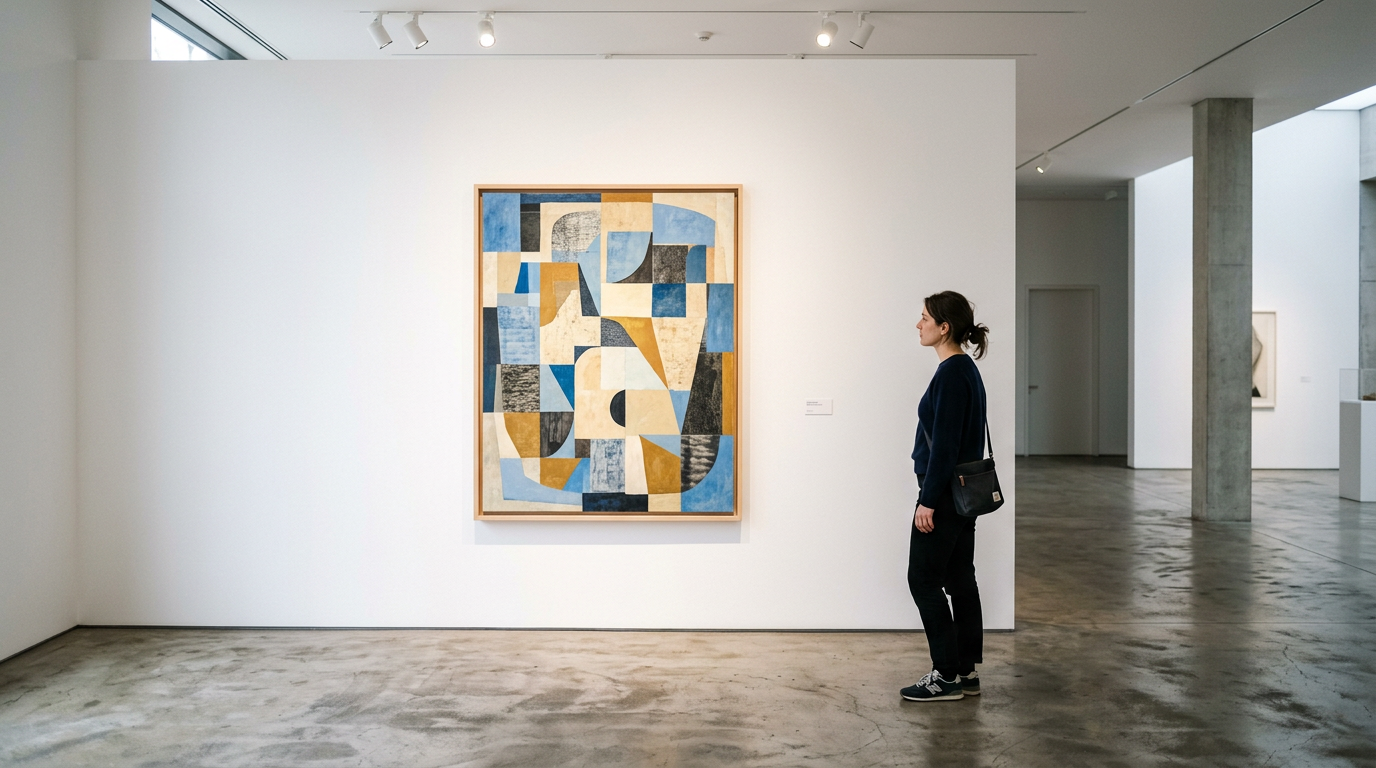
Contemporary Art Galleries Oltrarno Florence
Contemporary Art in Florence Oltrarno
Florence is known for the Renaissance. But Oltrarno, the neighbourhood south of the Arno, has also been home to contemporary art for decades. Working artists, small galleries, and studio spaces sit alongside the medieval churches and Renaissance palaces.
This is not the contemporary art of big international fairs. It is smaller, more personal, and more connected to the city’s craft traditions. Many of the artists here work with materials and techniques that have roots in Florence’s longer history.
Contemporary art in Oltrarno
The concentration of contemporary art activity in Oltrarno is no accident. The neighbourhood has historically been home to artisans: frame-makers, gilders, furniture restorers, ceramicists, and textile workers. These craft industries created a culture of skilled handwork that contemporary artists have found compatible with their own practice.
From the 1970s onwards, artists began moving into the neighbourhood, attracted by lower rents and the presence of specialist suppliers. A goldbeater’s workshop on Via Toscanella, for example, was used by painters working in tempera and fresco techniques that require gold leaf.
Today the neighbourhood contains around twenty galleries of varying scales, plus numerous artists’ studios that occasionally open for exhibitions and events. The density of activity is higher than in any other neighbourhood in Florence.
Galleries in the neighbourhood
Galleria Frittelli Arte Contemporanea on Via dei Pilastri (just across the Arno, but closely connected to the Oltrarno scene) represents Italian and international artists. It focuses on painting and works on paper. Opening hours are Tuesday to Saturday, 10:30 am to 12:30 pm and 3:30 pm to 7:30 pm.
Galleria Tornabuoni Arte has a space on Lungarno Soderini in Oltrarno. The gallery represents established names in post-war and contemporary Italian art, including Mario Schifano, Carla Accardi, and Alighiero Boetti. Prices reflect the quality of the artists. Entry is free.
Sergio Tossi Arte Contemporanea operates from a space near Porta Romana. The gallery has been active since the 1980s and has a strong track record in Italian conceptual art. It represents artists including Stefano Arienti and Vedovamazzei.
Sala Vanni, in a former convent on Piazza del Carmine, is a large multi-purpose cultural space that hosts exhibitions, concerts, and performances. The building itself is worth seeing: the former refectory and cloisters have been converted into flexible exhibition spaces while retaining much of the original architecture.
Fondazione Palazzo Strozzi, while technically on the north side of the Arno, organises major contemporary art exhibitions that draw international attention. The Strozzina space within the palace hosts shows by established international artists. Entry to the courtyard is free; exhibition entry costs between 10 and 15 euros.
Artists working in Oltrarno
Several artists with international reputations have maintained studios in Oltrarno for many years. They are not easy to find because they do not advertise themselves in the way that galleries do.
The area around Via Maggio, Via dei Serragli, and the streets between Santo Spirito and the Lungarno has the highest concentration of working studios. Look for buildings with large windows, multiple buzzers on the entry panel, and the smell of turpentine.
Some artists open their studios during events organised by the local cultural association Manifattura Tabacchi (now relocated from its original Oltrarno site) or during Florence-wide open studio events held in spring and autumn.
The Oltrarno neighbourhood has also attracted a number of foreign artists and craftspeople who moved to Florence to study and remained. You will find American painters, British ceramicists, and French silversmiths whose work has been shaped by years of proximity to the city’s art history.
Ask at galleries and cultural spaces about open studio events. These happen irregularly but are among the most interesting cultural experiences the neighbourhood offers.
How to follow openings and exhibitions
Gallery openings in Oltrarno typically happen on Thursday or Friday evenings, between 6 and 9 pm. These events are usually open to anyone who shows up. You do not need an invitation.
The most reliable way to follow the programme is through the galleries’ own websites and Instagram accounts. Most Florentine contemporary art spaces maintain an active social media presence, with exhibition announcements and opening information.
The Firenze Art Guide, published seasonally, lists current exhibitions across the city. It is distributed free at galleries and cultural spaces. Pick one up from any gallery you visit and use it to plan the next few days.
The Comune di Firenze also publishes a cultural events calendar on its website. This includes public exhibitions in institutional spaces and civic buildings.
For a broader picture of what is happening across the city, the Stazione Leopolda in San Frediano, adjacent to Oltrarno, hosts Pitti Uomo, Pitti Arte, and other large-scale cultural events several times a year. These bring significant international attention and temporary art programming to the neighbourhood.
The relationship between ancient and new art
The dialogue between Renaissance art and contemporary practice is one of the most interesting things about working as an artist in Oltrarno. You cannot spend time here without engaging with what surrounds you.
Some artists respond directly. A painter who works in egg tempera is consciously referencing the technique used by Cimabue and Botticelli. A sculptor who makes terracotta works in the same material as Luca della Robbia.
Others react against the weight of history. Minimalist works placed in rooms with baroque ceilings, video installations in medieval stone vaults, these juxtapositions are common in Oltrarno’s gallery spaces and create conversations that you do not find in purpose-built contemporary art contexts.
The Brancacci Chapel at Santa Maria del Carmine contains Masaccio’s frescoes from the 1420s, recognised as the foundation of Renaissance painting. Three hundred metres away, a contemporary artist might be working on a body of abstract paintings. The distance in time is enormous. The physical distance is nothing.
This compression of art history into a small geographical space is what makes Oltrarno unusual. You do not have to choose between the past and the present. They exist side by side here, and each one makes the other more interesting.
Where to stay
De’ Medici is a guesthouse in Oltrarno, at the centre of the neighbourhood where contemporary art and craft have coexisted with the Renaissance legacy for generations. Galleries, studios, and historic churches are all within walking distance.