Florence Oltrarno bistrot: where to eat well
Oltrarno bistros
The word bistro arrived in Florence relatively recently, borrowed from French via northern Italian food culture. But the thing it describes, a small, informal eating place with a short menu and a focus on quality over show, has existed in Oltrarno for generations under different names.
The neighbourhood has an unusual density of small restaurants that fit this model. They are not trattorias in the traditional sense. They tend to change their menus more frequently, source ingredients more consciously, and attract a clientele that mixes younger Florentines with informed visitors.
Several of the most talked-about places in this category sit within a 10-minute walk of Piazza Santo Spirito. That concentration is not accidental. The neighbourhood’s tradition of artisan craft extends to food. The people who run these places tend to care about where things come from.
This guide focuses on what to look for, what to expect to pay, and how to navigate the logistics of eating in a neighbourhood where the best places often have no more than thirty seats.
What to expect from a Florentine bistro
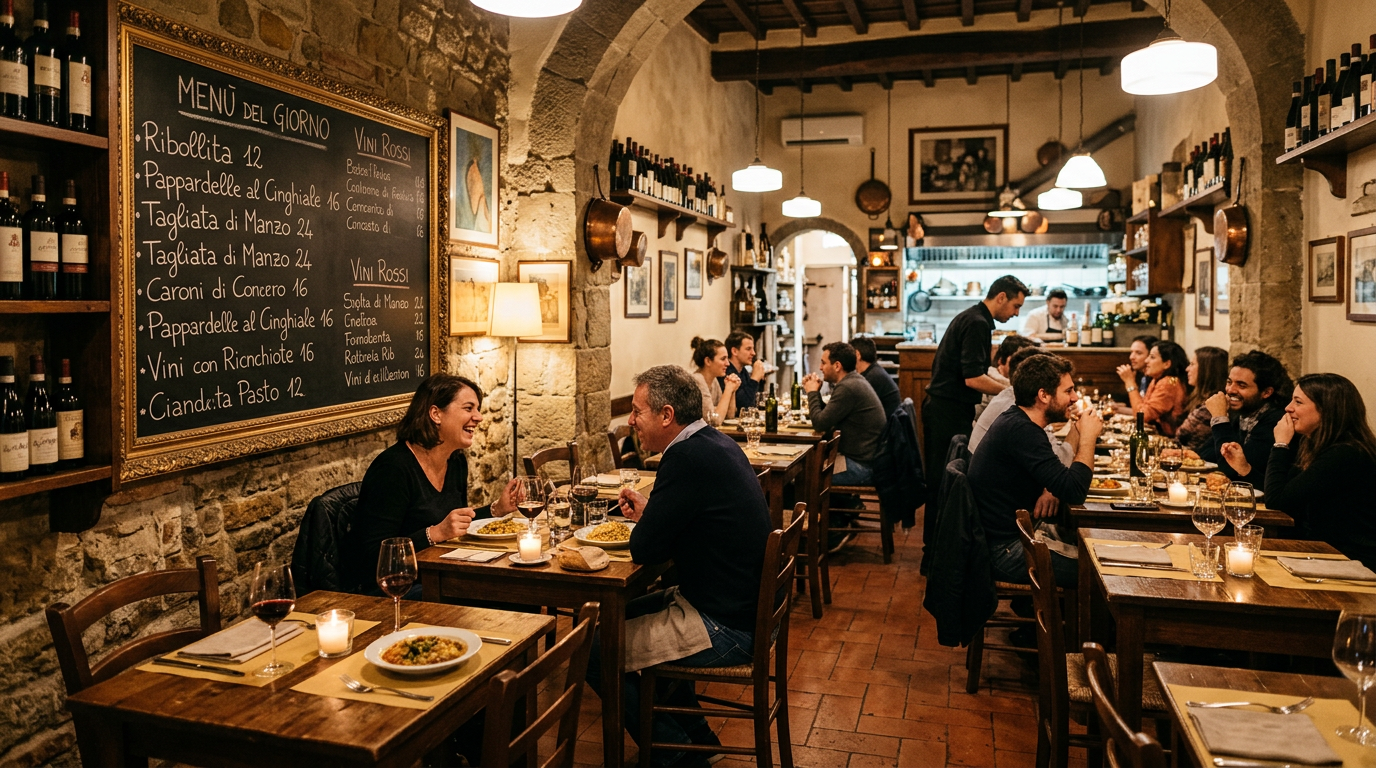
A genuine Oltrarno bistro typically has a handwritten or chalkboard menu that changes daily or weekly. The wine list is short but personal, often featuring small producers from Tuscany and other Italian regions. The space is usually compact, with tables close together.
Service is direct without being unfriendly. You will not be handed a laminated menu with photos. You may be told what is good that day. This is a feature, not a problem. It means the kitchen is working with fresh ingredients.
Portions in Florentine bistros tend to be moderate rather than large. This is consistent with Italian dining culture, where the structure of the meal, antipasto, primo, secondo, contorno, matters as much as the quantity of any single dish. You are expected to order at least two courses.
Expect to spend between 30 and 50 euros per person including wine and water if you eat properly. A single course with a glass of wine brings the cost down to around 18 to 25 euros. Most bistros do not offer a fixed-price lunch menu on weekdays, though some do.
Places worth knowing
Buca Mario on Piazza degli Ottaviani is one of the oldest restaurants in Florence, though it has modernised its kitchen significantly. It is a few minutes west of Ponte Santa Trinita. Prices are in the mid-range.
The area around Piazza della Passera has several small restaurants that have changed ownership or format over the past decade. Check current reviews before visiting, as quality at individual places can shift. The square itself is worth walking through regardless.
On Via dei Serragli, several places operate a lunch-only or dinner-only format. Some have no sign beyond a small plaque. These tend to be the most local. They fill up quickly with neighbourhood residents between 12:30 and 14:00.
Borgo San Jacopo, running along the Arno, has a mix of expensive restaurants and more modest places. The expensive ones are often in historic towers and charge accordingly. The more modest options are better value and often better food.
The zone around Via Sant’Agostino and Via dei Michelozzi, just south of Santo Spirito, has seen several good openings in the past five years. The quality here has risen as younger Florentine cooks have returned from working abroad and brought technique with them.
Average prices and opening hours
A starter in a typical Oltrarno bistro costs between 8 and 14 euros. A pasta dish runs from 12 to 18 euros. A meat or fish main course is typically 16 to 26 euros. A glass of wine from a small producer costs between 5 and 9 euros.
Most bistros open for dinner from 19:00 or 19:30. Lunch service, where offered, runs from 12:30 to about 14:30. Monday is a common closing day, though this varies. Check before you go.
In summer, many Oltrarno restaurants take a break in August, particularly in the first two weeks. This is less common than it used to be, but it still happens. The city in August is very hot and less interesting gastronomically.
The best dining in Oltrarno happens between September and December and between March and June. The weather is better, the produce is in season, and the neighbourhood is not yet saturated with summer tourists.
If you visit in winter, go for the soups. Ribollita, pappa al pomodoro, and acquacotta are all at their best between November and February when the ingredients, particularly beans, cavolo nero, and old bread, are at their seasonal peak.
How to find a seat without booking
Most small bistros in Oltrarno have between 20 and 40 seats. Booking a few days ahead is sensible for dinner on weekends. During the week, showing up at opening time, 12:30 for lunch or 19:00 for dinner, often works without a reservation.
If you arrive at a full restaurant, ask if there is a second sitting. Many places in Oltrarno run two services for dinner, the first at around 19:30 and a second at 21:00 or 21:30. Waiting 45 minutes for the second sitting is often worth it.
The bar at Piazza Santo Spirito operates informally as an outdoor dining area in warm weather. Several of the cafes around the square serve food that is not formal bistro fare but is perfectly adequate for a light meal. This is a good fallback if you cannot get into a restaurant.
Do not rule out eating at the counter or bar. Several Oltrarno places have a few bar seats that are first-come, first-served. Eating at the counter is more casual but gives you a better view of the kitchen.
Lunch on a weekday is always easier than dinner on a weekend. If you have flexibility, use it. A long weekday lunch in a neighbourhood bistro, with a glass of wine, a plate of pasta, and a walk afterward, is one of the best things you can do in Florence.
How this connects to Oltrarno
The bistro culture of Oltrarno is not separate from the neighbourhood’s identity. It grows from the same root as the artisan workshops and the weekly market. It is about quality made by hand and sold without unnecessary ceremony.
The people who open these places tend to know the neighbourhood well. Many grew up here or nearby. They source from producers they know personally. They cook things they would want to eat themselves.
Eating in Oltrarno is one of the most direct ways to participate in the neighbourhood’s life. Spending money in a small local restaurant is more meaningful than buying a souvenir from a shop near the Duomo. It supports the people who keep the neighbourhood real.
Where to stay
De’ Medici is a guesthouse in the heart of Oltrarno, within walking distance of every bistro and restaurant worth visiting in this guide. Staying here puts you inside the neighbourhood, not outside it, and lets you eat where locals eat.