Authentic aperitivo in Florence: where and how
The authentic aperitivo in Florence
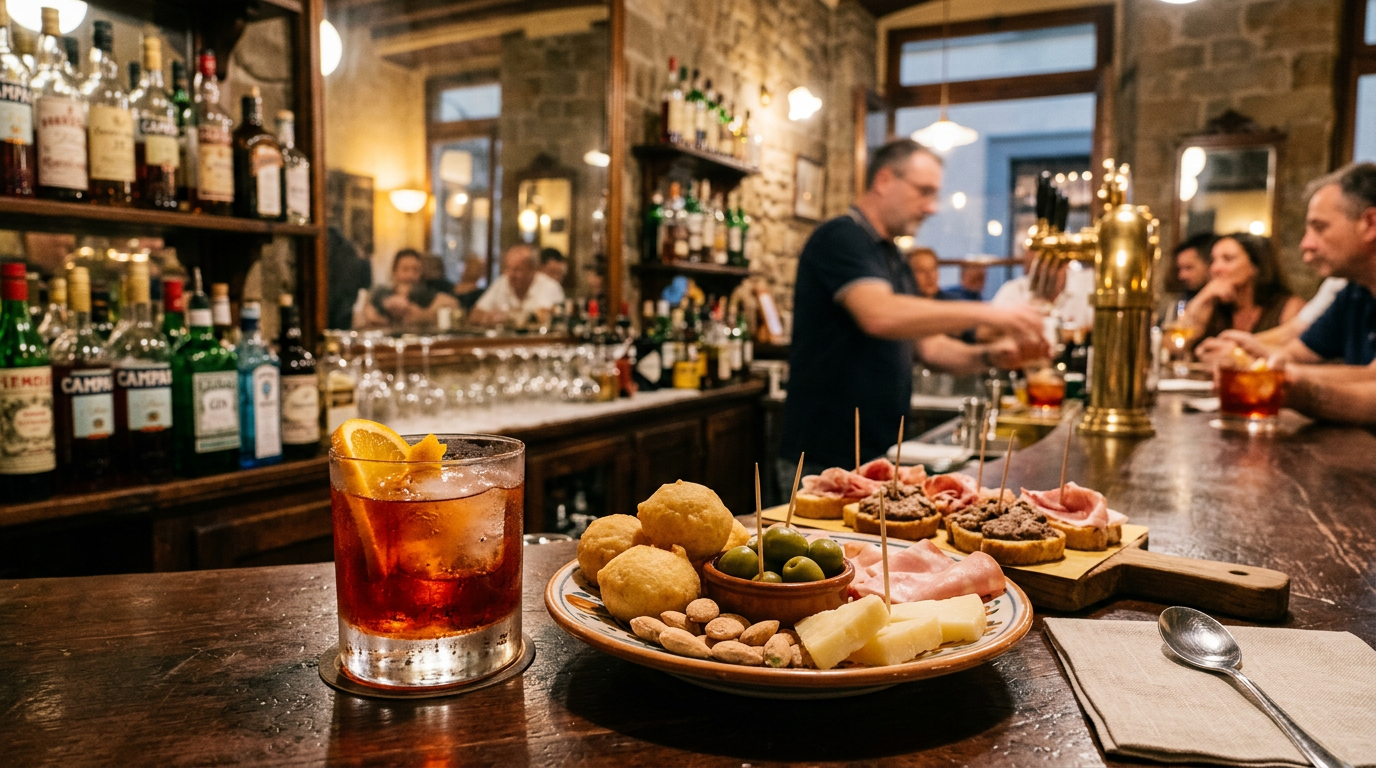
Aperitivo in Florence is not the buffet free-for-all that became common in Milan and other northern Italian cities. The Florentine version is more restrained. You order a drink. You might receive a small snack alongside it. The social function matters more than the food.
The ritual happens between 18:00 and 20:30. The city’s bars and wine bars fill with people ending their working day. The atmosphere in a good Oltrarno wine bar at 19:00 on a weekday evening is one of the more pleasant things Florence offers.
In recent years, the tourist-facing version of aperitivo has spread along the north bank, with places offering generous buffets alongside cocktails. This exists and is not inherently bad. But it is not the Florentine tradition. The Florentine version is slower, more social, and more focused on what is in the glass.
If you want the authentic experience, drink in Oltrarno. Cross the river and find a wine bar or bar a vino where the primary emphasis is on what you are drinking, not on creating a photogenic spread of food.
The history of the Negroni
The Negroni is Florence’s most famous contribution to the cocktail world. The story, which has become part of Florentine cultural identity, is that Count Camillo Negroni asked a bartender at Caffe Casoni, then located on Via de’ Tornabuoni, to strengthen his Americano by replacing the soda water with gin. The year was 1919.
Whether this story is entirely accurate is debated. The drink, equal parts gin, sweet vermouth, and Campari, stirred with ice and garnished with an orange peel, was certainly being made in Florence in the 1920s. The Negroni Sbagliato, substituting Prosecco for gin, was invented later at Bar Basso in Milan and has no Florence connection.
A properly made Negroni in a Florentine bar costs between 8 and 12 euros in 2026. If you are paying less than 8 euros, the ingredients are likely not good. The best versions in Oltrarno are made with a London dry gin and a quality sweet vermouth, stirred long enough to be cold without becoming diluted.
The Americano, the Negroni’s predecessor, is worth ordering at least once. It uses the same vermouth and Campari but replaces the gin with soda water. It is lighter, more bitter, and very good in warm weather.
Historic wine bars in Oltrarno
Buca Mario on the west side of the neighbourhood has been operating in some form since the 19th century. The current incarnation has been updated but retains a serious wine list. It is a few minutes from Piazza Santo Spirito on foot.
The enoteca tradition in Oltrarno is long. For much of the 20th century, the neighbourhood had a high density of small wine shops that sold Chianti by the flask directly to residents. These fiaschi, the straw-covered bottles, were a common sight. Most of the shops are gone, replaced by modern wine bars, but the culture of drinking locally survives.
Several small wine bars have opened in the neighbourhood in the past decade. They tend to focus on small producers, natural wines, and a minimal food offering. These are the places where a glass of well-chosen Sangiovese costs 6 to 9 euros and the person pouring it can tell you where the grapes grew and who made it.
Look for places along Via dei Serragli, Via dello Sprone, and the side streets around Piazza della Passera. The best ones have no terrace and no prominent signage. They fill up quickly after 18:30.
What is served at aperitivo
The most minimal version of a Florentine aperitivo is a drink and a bowl of crisps or olives. This is not the buffet model of northern Italy. The emphasis is on the glass.
Some places in Oltrarno accompany a drink with crostini, small toasts with various toppings. The toppings vary: chicken liver pate, which is a Florentine classic, fresh tomato with basil, or a simple spread of good ricotta. These are snacks, not meals.
If you want something more substantial during aperitivo hour, a charcuterie board, tagliere, is a common option. A decent one, with cured meats, a few cheeses, and bread, costs between 12 and 18 euros and is enough to share between two people as a light dinner alternative.
Vermouths are underappreciated at Florentine aperitivo time. Carpano Antica, Punt e Mes, or a dry vermouth from a Piedmontese producer served with a splash of soda is a traditional option. It costs about 5 to 7 euros and is lower in alcohol than a Negroni.
Average prices and when to go
A cocktail in a serious Oltrarno bar costs between 8 and 14 euros in 2026. A glass of wine during aperitivo hour costs 5 to 9 euros. A non-alcoholic option, a good sparkling water or a bitter soft drink like Crodino, costs 3 to 5 euros.
The best time to arrive at an Oltrarno wine bar for aperitivo is 18:00 to 18:30. By 19:30, the best spots are standing room only. If you arrive at 20:00, you may not find space in the smaller places.
Weekdays are more atmospheric than weekends for aperitivo in Oltrarno. The regular crowd, people who live and work in the neighbourhood, comes out on weekday evenings. Weekends attract more visitors and the character of the bars changes slightly.
Friday evening is the most charged aperitivo moment of the week. The working week ends, the neighbourhood fills up, and the energy in the square at Santo Spirito is noticeably different from a Tuesday. Both are worth experiencing.
Where to stay
De’ Medici is a guesthouse in Oltrarno. The wine bars and aperitivo spots described in this guide are within walking distance. You can return on foot after your evening drink, which is both practical and in keeping with the spirit of the neighbourhood.