Castelfiorentino What to See: Day Trip Guide
Castelfiorentino: What to See on a Day Trip
Castelfiorentino is a small town in the Valdelsa valley, about 50 kilometres southwest of Florence. It is almost unknown to international visitors, which is surprising given what it contains: one of the finest collections of works by Benozzo Gozzoli outside the Medici palace in Florence.
The town is also a genuine example of small-town Tuscan life, without the tourist economy that has transformed many of the more famous hill towns in the region.
Castelfiorentino what to see
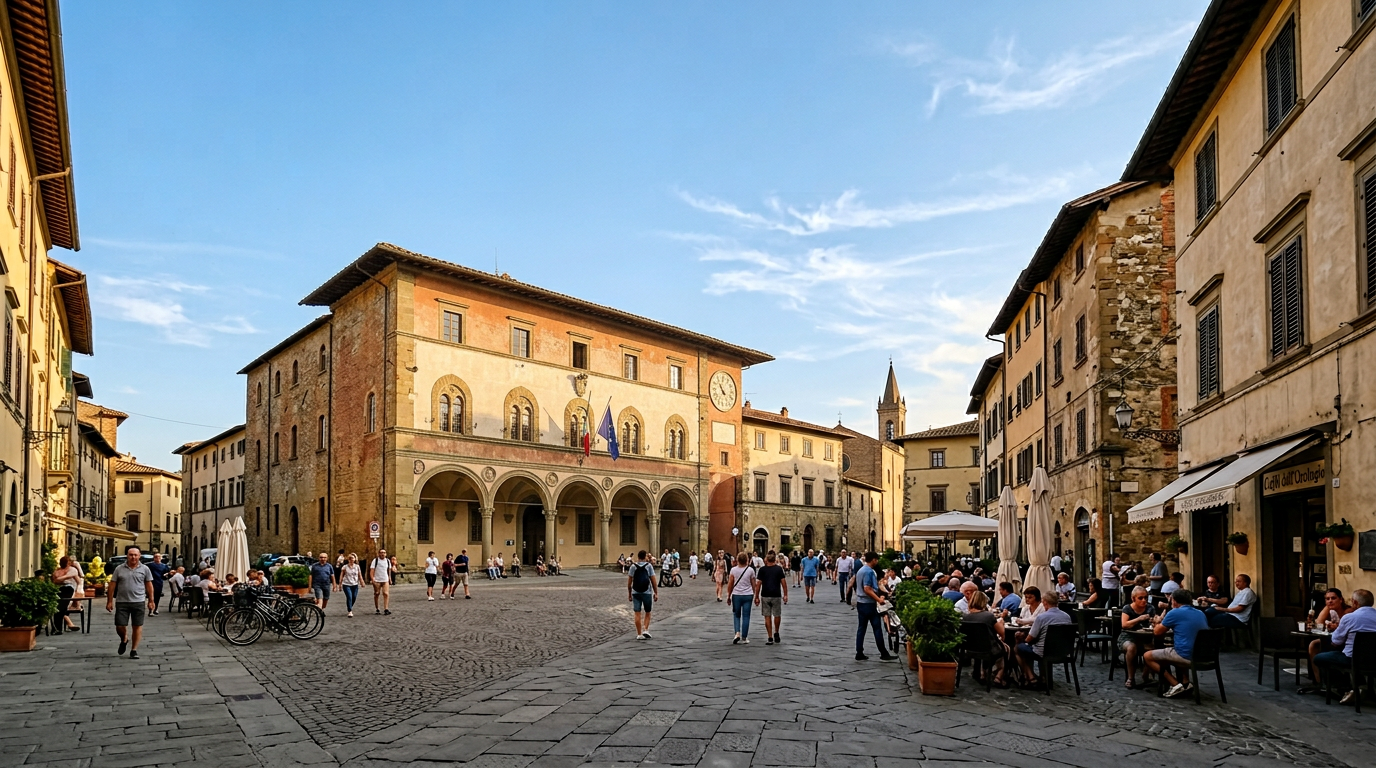
Castelfiorentino sits on both banks of the Elsa river, with the modern lower town on the valley floor and the older upper town, the “Castello”, on the hilltop above. The hilltop section retains most of the historic fabric, while the lower town is a typical 19th and 20th-century Tuscan market town.
The town’s main attraction, the Gozzoli works, is split between two small oratory buildings outside the historic centre, in the area between the old town and the valley. These are not immediately obvious from the main roads and require a short detour on foot or by car.
Allow a full morning or afternoon to visit the town properly. If you are combining it with Certaldo or Empoli, which are both on the same rail line, plan a longer day.
The historic centre and the museum
The historic centre of Castelfiorentino is on the hilltop north of the modern town. The main street, Via Ridolfi, leads from the base of the hill through a series of medieval and Renaissance buildings to the main piazza, Piazza del Popolo.
The Museo Civico Benozzo Gozzoli is the central cultural institution of the town. It is housed in a building adjacent to the Church of San Francesco, in the Castello neighbourhood. Entry costs 5 euros. The museum contains a collection of paintings and decorative objects from the medieval and Renaissance periods, mostly collected from local churches and oratories.
The most important works in the museum are the detached fresco sections by Benozzo Gozzoli, transferred here for conservation from the tabernacle sites where they were originally painted. These include works from the 1470s and 1480s, representing the mature period of Gozzoli’s activity in the Valdelsa.
The museum also contains Florentine and Sienese panel paintings from the 13th to the 15th centuries, ceramics from the medieval period, and a collection of local archaeological objects.
The hidden Benozzo Gozzoli works
Benozzo Gozzoli was born around 1420 and trained in the workshop of Lorenzo Ghiberti before working with Fra Angelico in Rome and Florence. His most famous surviving work is the cycle in the Magi Chapel of Palazzo Medici Riccardi in Florence, painted in 1459.
In the 1460s, 70s, and 80s, Gozzoli spent long periods in the Valdelsa area, executing commissions for local patrons in Certaldo, San Gimignano, and Castelfiorentino. The works he painted in and around Castelfiorentino include the tabernacle frescoes now preserved partly in the civic museum and partly in situ.
The Tabernacolo della Visitazione is located on Via Magenta, at the junction with Via Marchetti, about ten minutes on foot from Piazza del Popolo. The building, a small oratory constructed to house a roadside shrine, contains frescoes by Gozzoli painted around 1484. The cycle depicts the Visitation of the Virgin to Saint Elizabeth and the Nativity.
The frescoes are in good condition considering their age. The colours retain much of their original brightness. The narrative figures, particularly the women attendants in the Visitation scene, show the same combination of elegance and directness that characterises Gozzoli’s best work.
A second Gozzoli tabernacle, the Tabernacolo della Madonna della Tosse, is located on Viale Lincoln near the train station. This tabernacle was built in 1484 and contains frescoes by Gozzoli painted in the same period as the Visitazione. The subject is the Madonna della Tosse, a devotional image of the Virgin connected to a cure for coughing, which was a common type of popular devotion in late medieval Tuscany.
Both tabernacles can be visited free of charge. They are kept locked except during the hours when the civic museum is open, and the keys are held at the museum. Ask at the museum desk for access. The visit to both tabernacles adds about thirty minutes to a museum visit.
How to get there from Florence
Castelfiorentino is approximately 50 kilometres from Florence. By car, the journey takes about 50 to 60 minutes via the FI-PI-LI motorway and the provincial road from Empoli.
By train, take a regional service from Florence Santa Maria Novella to Empoli and then change to the local train toward Siena. Castelfiorentino is two stops after Empoli. Total journey time is approximately 50 minutes to one hour. Trains run roughly hourly.
The train station is in the lower town, about 800 metres from Piazza del Popolo. The walk uphill to the historic centre takes about fifteen minutes.
Certaldo and San Miniato al Monte (the fortified hilltop above San Miniato Basso) are both on the same rail line and can be combined with Castelfiorentino in a single day if you plan your timing carefully. Certaldo is one stop beyond Castelfiorentino on the same line.
Where to have lunch in the area
Trattoria da Osvaldo on Via Ridolfi is a family-run restaurant in the upper town. The menu changes with the season. In autumn and winter, look for dishes with local truffle, porcini mushrooms, and Chianina beef. A full lunch costs around 20-25 euros without wine.
Bar Pasticceria Marchetti on Piazza del Popolo has been serving coffee and pastries in the same location for decades. It is the natural place to stop for a coffee before or after visiting the museum. The morning pastries include cornetti filled with local honey.
For a quick lunch, the bakery on Via Ridolfi sells sandwiches and savoury pastries made fresh each morning. Combined with a glass of local Chianti from the wine shop on the same street, this makes a very satisfactory and inexpensive lunch.
The local wine production is primarily Chianti Colli Fiorentini from vineyards on the slopes above the valley. Several producers in the area around Castelfiorentino offer direct-sale visits, although this requires advance arrangement.
Where to stay
De’ Medici is a guesthouse in Oltrarno Florence, one hour from Castelfiorentino by train and slightly less by car. The town makes an excellent half-day or full-day trip from a Florence base.