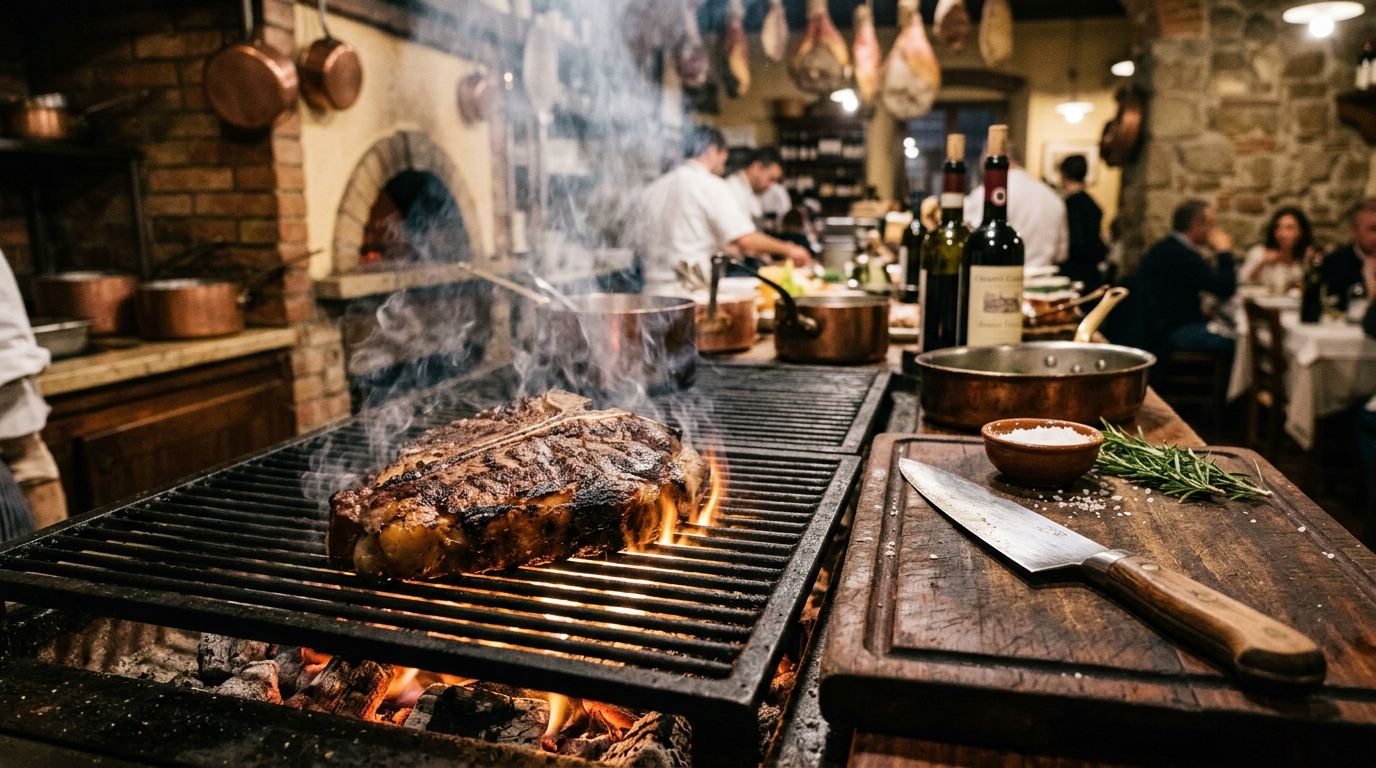
Florentine steak: where to eat the real thing
The authentic bistecca fiorentina
The bistecca fiorentina is perhaps the most specific and uncompromising dish in the entire Italian culinary tradition. There are almost no variables open to interpretation. The breed, the cut, the weight, the cooking method, and the service are all fixed by convention. Deviation is not tolerated.
It is a T-bone steak cut from a Chianina or Val di Chiana breed animal, taken from the loin with the fillet attached. It is at least 3 centimetres thick, more typically 5 to 6 centimetres. It is grilled over high heat from wood or charcoal. It is served rare. That is all.
The dish is associated with the feast of St John the Baptist on June 24th, which is Florence’s patron saint day. Historically, oxen were slaughtered for the feast and the meat was distributed and grilled in the streets. This is why the bistecca is a celebratory dish. It is not everyday food. It is not cheap.
Understanding what you are eating before you order is important. A bistecca fiorentina is not a steak. It is a specific cultural object with a specific set of rules. Arriving at a restaurant and expecting it to be cooked medium or well done will create a problem.
What makes it authentic
Three things define an authentic bistecca fiorentina. The breed of cattle, the cut, and the cooking.
The Chianina is one of the oldest cattle breeds in the world. It has been raised in the Val di Chiana, the valley southeast of Florence, for at least 2,000 years. The meat is lean, dark red, and deeply flavoured. It has a different texture and taste from commercial beef breeds. You can tell the difference immediately if you have eaten both.
The T-bone cut includes both the sirloin and the fillet, separated by the T-shaped bone. The fillet side is smaller. The sirloin side is larger. Both are eaten. The bone heats during cooking and distributes that heat evenly. This is part of why the cut matters.
The cooking is always on a very high heat, briefly on each side. A steak of 700 grams, the minimum weight for a genuine bistecca, spends about 4 to 5 minutes on each side and then is stood on the bone for another 2 to 3 minutes. The interior temperature should be around 50 to 55 degrees Celsius. It is red in the centre.
Seasoning is salt after cooking, never before. A drizzle of good olive oil if the quality is right. No sauce, no mushrooms, no accompaniment beyond a wedge of lemon that you may or may not use. The meat speaks for itself or it is not worth eating.
How to recognise the right cut
If you are ordering in a trattoria, ask specifically about the breed. A good restaurant will know whether the meat is Chianina or another Val di Chiana breed. If the staff cannot answer this question, the bistecca may be from a commercial breed and the price should reflect that.
The minimum weight is 700 grams. Most genuine examples weigh between 800 grams and 1.2 kilograms. Anything smaller than 700 grams is not a bistecca fiorentina by the accepted definition. Some places serve smaller steaks and call them bistecca. This is technically incorrect.
The thickness matters for the cooking. A genuine bistecca is 4 to 6 centimetres thick. Thinner cuts cannot be properly grilled rare without overcooking the exterior. If the steak on the menu is described as thin or is presented as a quick dish, it is not a real bistecca.
Colour before cooking tells you something. Chianina beef is dark red, almost purple. Standard supermarket beef is a brighter red. At the butcher’s counter, ask to see the meat before you buy.
Butchers and trattorias where to eat it
Dario Cecchini in Panzano in Chianti is the most famous butcher in Italy. His shop is 30 kilometres south of Florence, about 45 minutes by car. He sells Chianina beef directly and runs several restaurants on the same property. Visiting requires a reservation and a commitment to eating a large amount of meat.
In Florence itself, Macelleria Falorni has a presence in the city, though the main shop is in Greve in Chianti. Several butchers in the Sant’Ambrogio market sell Chianina beef and will cut a bistecca to order. Expect to pay between 35 and 55 euros per kilogram for quality Chianina beef from a butcher.
For eating in a restaurant in Florence, the places with serious bistecche tend to be in Oltrarno and in the Sant’Ambrogio neighbourhood. Prices at restaurants run from 5 to 9 euros per 100 grams. A single steak that serves two people typically costs between 45 and 75 euros depending on the establishment.
Avoid places near the main monuments that advertise bistecca fiorentina prominently on boards outside. These are almost always using cheaper beef. The price will reflect this: a bistecca priced below 4 euros per 100 grams in a tourist restaurant is not Chianina.
Real prices 2026
In a genuine trattoria in Florence in 2026, a bistecca fiorentina from Chianina beef costs between 5 and 8 euros per 100 grams. A steak weighing 800 grams costs between 40 and 64 euros. Steaks are usually shared between two people.
The cover charge and side dishes add to the total. Fagioli all’olio, white beans in olive oil, is the traditional accompaniment and costs about 5 euros. A bottle of good Chianti Classico to drink alongside costs between 20 and 45 euros depending on the restaurant.
A full bistecca dinner for two people, with beans, salad, a bottle of decent wine, water, and bread, costs between 80 and 130 euros in a good Florentine restaurant. This is a special meal, not a daily event. Budget accordingly.
If you want to cook one yourself, buy from a trusted butcher, grill it over the highest heat you can generate, and do not touch it while it cooks. Let it rest for 5 minutes before cutting.
Where to stay
De’ Medici is a guesthouse in Oltrarno, a few minutes on foot from some of the best trattorias in Florence for a proper bistecca. The neighbourhood’s food culture, built on quality and directness, is the right context for eating one of the world’s great dishes.