The Museo dei Ragazzi in Florence
The Museo dei Ragazzi in Florence
The Museo dei Ragazzi is not a museum in the conventional sense. There is no permanent display to walk through, no labels to read, no glass cases with objects behind them.
Instead, the Museo dei Ragazzi is an education and experience programme housed inside Palazzo Vecchio, the medieval town hall on Piazza della Signoria in central Florence. The programme uses the real palace rooms as its setting. Children become characters in stories set inside the actual historic building, moving through rooms that genuinely functioned as the political and domestic heart of Medici Florence.
For families visiting Florence with children between 5 and 14, the Museo dei Ragazzi is one of the most consistently well-received experiences in the city. The combination of real history, theatrical storytelling, and physical movement through the palace keeps children engaged in a way that a conventional guided tour rarely achieves.
What you find at the museum
The Museo dei Ragazzi is accessed through the main Palazzo Vecchio entrance on Piazza della Signoria. After purchasing your tickets, you meet your guide (typically in costume) in the courtyard of the palace.
The programme takes place in specific rooms of the palace that are also part of the main tourist circuit. You are not taken to a separate “children’s area.” You visit the same frescoed rooms, staircases, and private apartments that adults see, but you are given a different narrative framework for what you encounter.
The rooms you pass through typically include the Salone dei Cinquecento (the enormous assembly hall decorated with battle scenes), the private apartments of the Medici family, the studiolo of Francesco I (a tiny, extraordinarily decorated private study), and the chapel.
Children are given roles within the narrative. In some programmes, they are investigators looking for clues. In others, they are members of the Medici household preparing for a ceremony. The guide maintains the story throughout, and children are expected to participate actively rather than simply listen.
Interactive activities
The interactive dimension of the Museo dei Ragazzi programme varies depending on which visit you book, but most programmes include the following elements.
Handling activities: children handle reproductions of historical objects. These might include quill pens, period clothing, wax seals, or navigation instruments. The act of handling connects children to the material reality of Renaissance life more effectively than looking at objects behind glass.
Problem-solving tasks: children are given puzzles or challenges set within the narrative. A typical example might involve decoding a message using a historical cipher, identifying an object in a room, or finding a specific detail in a large fresco.
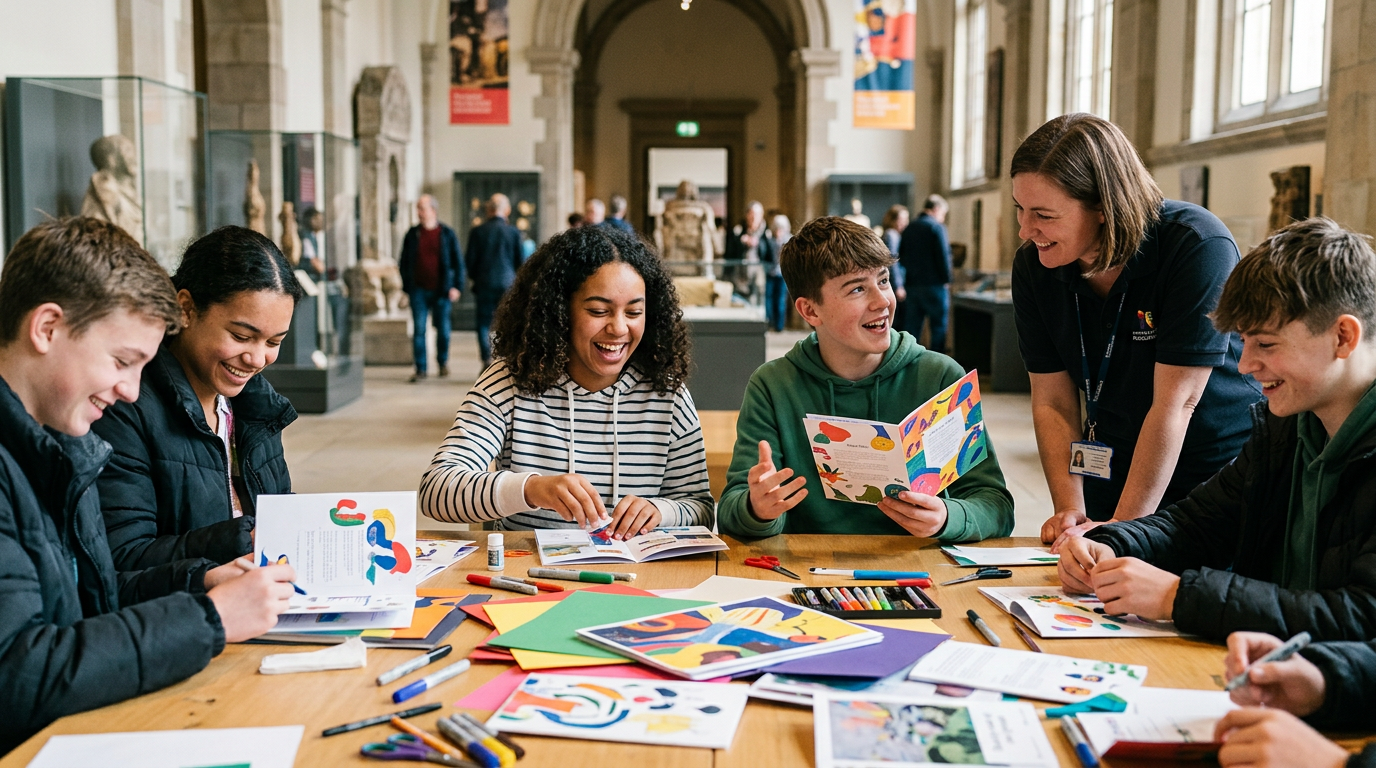
Creative activities: many programmes end with a 15 to 20-minute making session. Children might paint a small illuminated letter, press a wax seal, or create a period-style calligraphic inscription. These activities consolidate the experience and give children something physical to take home.
Question and discussion: the guides who run the Museo dei Ragazzi programmes are typically trained educators with experience in interactive facilitation. They ask genuine questions rather than delivering scripted lectures. Children who ask questions of their own are actively encouraged.
How to book the visit
The Museo dei Ragazzi programmes run throughout the year, with an expanded schedule during school holidays and the summer season. In 2026, the main programmes available for individual family booking are:
“The Secret of the Duke” (Il Segreto del Duca): designed for children between 5 and 10. Duration approximately 75 minutes. Available in Italian and English.
“Cloaks and Daggers” (Cappa e Spada): designed for children between 9 and 14. Duration approximately 75 minutes. Available in Italian and English.
Special seasonal programmes run during Christmas, Easter, and summer, with different themes and sometimes different room routes.
Booking is done through the official Comune di Firenze museum booking system, accessible at the Palazzo Vecchio website. Online booking is strongly recommended for English-language visits, which have fewer scheduled slots than Italian visits. During peak periods (April through October and school holidays), English-language slots fill two to three weeks in advance.
Same-day booking is possible if places remain available, but cannot be relied upon between April and September.
Phone booking is available at the Palazzo Vecchio education office. Speaking Italian is helpful but not essential; the office staff generally speak some English.
Workshops combined with the visit
In addition to the main narrative programmes, the Museo dei Ragazzi runs standalone creative workshops that can be booked separately from the palace visit.
Workshop themes vary by season. Current offerings for 2026 include: Renaissance calligraphy and illumination (ages 7 and above), fresco technique (ages 9 and above), and heraldic design (ages 8 and above). Workshop sessions last approximately 60 to 75 minutes and take place in dedicated rooms separate from the main palace tourist circuit.
Workshop prices are approximately 8 to 10 euros per child in 2026, separate from the Palazzo Vecchio entry fee. A combined ticket that includes the narrative visit and a workshop is available at around 14 euros per child.
Adults accompanying children to workshops pay the standard Palazzo Vecchio entry fee (approximately 12.50 euros per adult in 2026) plus a small participation fee for the workshop (usually 4 to 5 euros per adult).
The summer programme (June through August) runs week-long camps combining daily visits to the palace rooms with daily workshops. These are popular with children who are staying in Florence for more than a few days. The weekly fee for 2026 is approximately 120 to 150 euros per child for a five-day morning programme (09:00 to 13:00).
Practical information
Palazzo Vecchio is open daily. The museum standard hours in 2026 are 09:00 to 19:00 Friday through Wednesday, and 09:00 to 14:00 on Thursdays. Hours during major holidays may differ; check the official website.
The Museo dei Ragazzi programmes typically run in the morning, between 09:30 and 12:30. Afternoon slots are available but less frequent. Weekend slots fill faster than weekday slots.
The entrance is on Piazza della Signoria, the main public square of the historic centre. The piazza is approximately 10 minutes’ walk from Santa Maria Novella train station and is served by multiple bus lines.
There are toilets inside Palazzo Vecchio near the main entrance. A small cafe operates in the courtyard during peak season.
Children under 5 are welcome to accompany older siblings but are not usually able to follow the narrative programme independently. Most guides will accommodate a 3 or 4-year-old accompanying an older child.
Where to stay
Charlotte guesthouse in Florence is ideally placed for families visiting the Museo dei Ragazzi. Palazzo Vecchio and Piazza della Signoria are within a 10-minute walk of central Florence. You can arrive for a morning programme, return to your accommodation for lunch and rest, and use the afternoon for a further activity.
The proximity makes logistics significantly easier, particularly when travelling with children who find long transit times tiring.
Find out more and check availability at Charlotte.