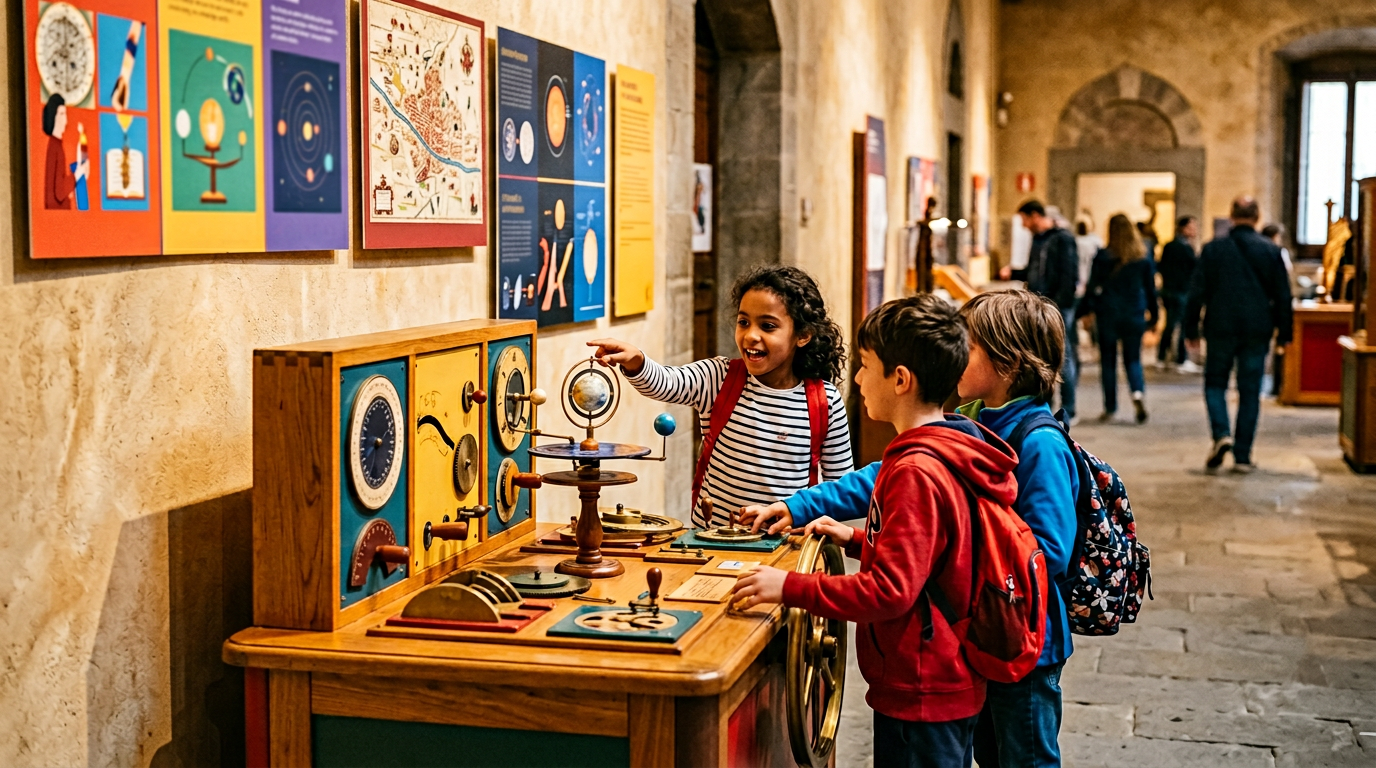
Florence Museums Suitable for Children
Child-friendly museums in Florence
Florence has more museums per square kilometre than almost any other city in Europe. That abundance can feel overwhelming when you are travelling with children. Not every museum is appropriate for young visitors, and choosing the wrong one wastes time and goodwill.
The good news is that several Florence museums are genuinely engaging for children. Some are designed specifically for young audiences. Others contain specific collections that work well across a range of ages.
This guide focuses on the museums that consistently deliver a good experience for families. Each entry includes recommended ages, prices for 2026, practical access information, and honest notes on what to expect.
Museo dei Ragazzi at Palazzo Vecchio
The Museo dei Ragazzi is the most directly child-focused museum in Florence. It is located inside Palazzo Vecchio, the medieval town hall on Piazza della Signoria. The museum does not function like a traditional exhibit. Instead, it offers guided theatrical visits in which children become participants rather than spectators.
The most popular programmes in 2026 are “The Secret of the Duke,” aimed at children between 5 and 10, and “Cloaks and Daggers,” designed for children between 9 and 14. Both treat the history of the Medici family as an adventure story. Guides dress in period costume and lead small groups through the palace rooms.
Sessions last approximately 75 minutes. English-language visits are available and should be booked at least a week in advance during high season. The ticket office opens daily from 09:00. Entry to the children’s programme costs around 6 euros per child. Adults accompanying children pay separately for Palazzo Vecchio entry, which is approximately 12.50 euros per adult.
The combined Palazzo Vecchio and children’s programme family rate in 2026 is around 22 euros for two adults and two children. Check the official Comune di Firenze website for updated pricing before your visit.
Children under 5 are welcome but may struggle with the length of the visit. The recommended minimum age for the theatrical visits is 5 years.
Galleries for family visits
The Uffizi Gallery is one of the world’s great art museums, but it demands careful planning for a family visit. The gallery contains around 45 rooms and can easily take three to four hours to complete fully. With children under 12, a focused 90-minute visit to the highlights is far more effective than attempting a complete tour.
Entry in 2026 is 20 euros per adult during peak season (March through October). Children under 18 from EU member states enter free. Book tickets online in advance to avoid queues, which regularly reach 45 to 60 minutes at peak times.
The sections that tend to hold children’s attention include the Botticelli room (rooms 10 to 14), which contains the Primavera and The Birth of Venus, and the armoured self-portrait by Michelangelo on the ground floor. A family audio guide is available for download via the museum app at no additional cost.
The Accademia Gallery, home to Michelangelo’s David, is a shorter visit of around 45 to 60 minutes. Entry is 16 euros per adult in 2026. Children under 18 from EU countries enter free. The David stands 5.17 metres tall and produces a genuine reaction from children who are not expecting the scale of the sculpture. Pre-booking is essential, especially between April and September.
How to make the visit interesting
The biggest challenge with Florence museums and children is sustaining attention across rooms full of paintings. A few approaches make a measurable difference.
Give children a specific task before entering. Ask them to find three things they had never seen before, or to identify the oldest person and the youngest person in any painting. Giving children an active role changes the dynamic of the visit from passive observation to something more engaged.
Carry a small notebook or sketchbook. Children between 6 and 12 often enjoy sketching a detail from a sculpture or a face from a painting. This slows the pace in a constructive way and gives them something to show at the end of the day.
Avoid visiting on empty stomachs. A snack break before entering a museum improves concentration for at least two hours. Most Florence museums do not allow food inside, but many have a courtyard or terrace where you can stop briefly.
Use the museum shop at the end rather than the beginning. Children who know there is a reward at the end of a visit tend to remain more cooperative throughout. The Uffizi shop carries good quality postcards and small reproductions from around 1.50 euros each.
Family prices and discounts 2026
Italy has a consistent national policy of free entry for EU citizens under 18 at all state-owned museums. This applies to the Uffizi, the Accademia, the Bargello, the Boboli Garden, and Palazzo Pitti in Florence.
Non-EU children are charged at standard rates. For a family of two adults and two non-EU children, a typical Florence museum visit costs between 35 and 50 euros. Buying a combined ticket, such as the Uffizi and Pitti combined pass (around 38 euros per adult in 2026), reduces the overall cost if you plan more than one visit.
The first Sunday of each month is free entry day at all Italian state museums. This includes the Uffizi, the Accademia, and Palazzo Pitti. Queues on these days are significantly longer than usual. Arriving by 08:30 (doors open at 08:15) is the best strategy to avoid waiting more than 20 minutes.
The Firenze Card is a 72-hour pass covering more than 70 museums and sites in Florence. It costs 85 euros per adult in 2026. For families visiting four or more museums over three days, it offers good value. Children under 18 from EU countries do not need it, as they enter state museums for free regardless.
Practical planning for museum days
Schedule museum visits for the morning. Most children between 5 and 12 have better concentration before midday. Afternoon fatigue after lunch makes museum visits significantly harder to manage.
Allow a minimum of 30 minutes between arriving at a museum and starting a guided visit or timed entry. Queuing for tickets, cloakroom storage, security checks, and locating the right entrance all take time.
Florence’s major museums are heavily visited between 10:00 and 13:00. If you arrive before 09:30 at the Uffizi or the Accademia, you will have noticeably quieter rooms for the first 45 minutes.
Most Florence museums close on Mondays. Exceptions include the Museo dei Ragazzi at Palazzo Vecchio (open daily) and the Stibbert Museum (closed on Wednesdays). Always confirm opening days on the official museum website before planning your itinerary.
Where to stay
Charlotte guesthouse in Florence is well placed for families visiting the city’s museums. The historic centre location means you can walk to Palazzo Vecchio and Piazza della Signoria in under 10 minutes, and reach the Uffizi without needing public transport.
Staying centrally removes one logistical layer from a museum day, which matters when you are travelling with children.
More details about rooms and availability are at Charlotte.