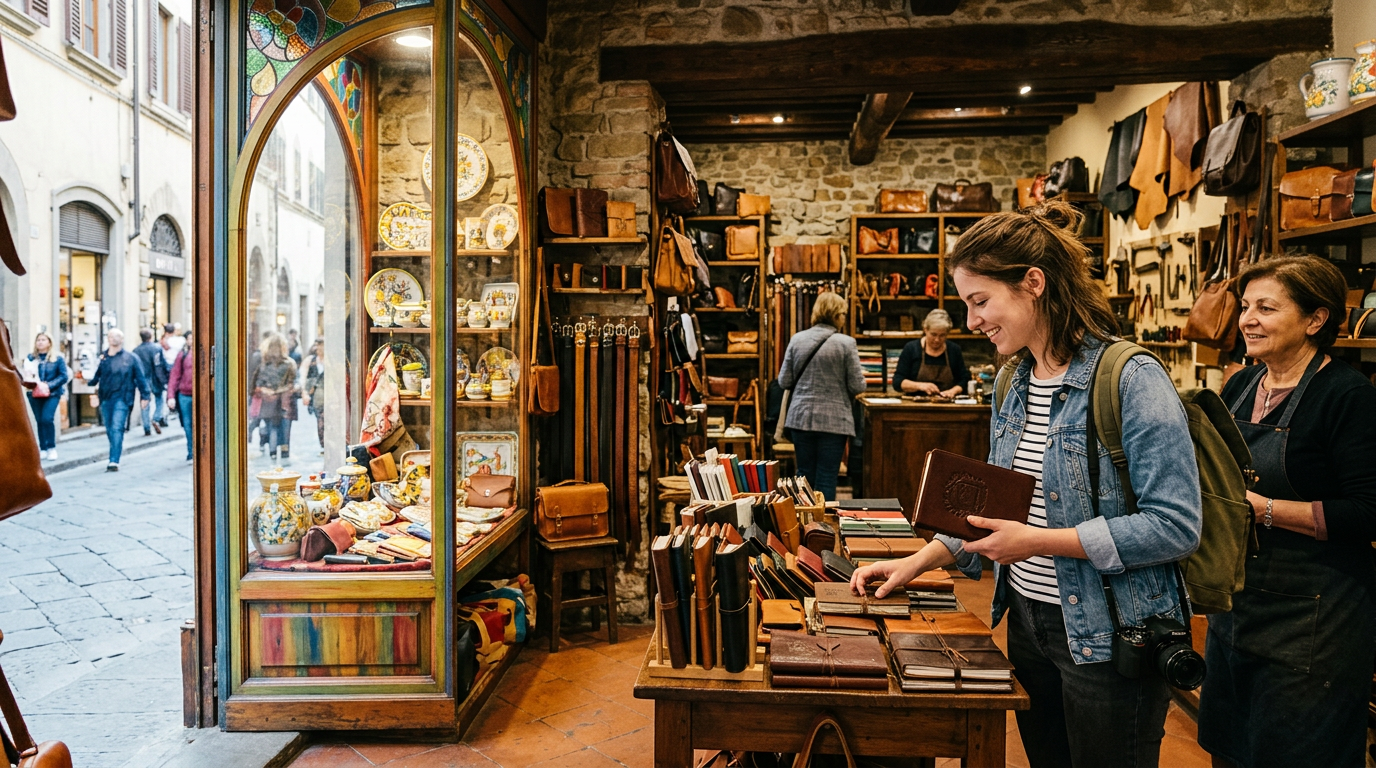
Tuscan Crafts to Buy in Florence
Florence has been a city of artisans for centuries. Leather, marble paper, ceramics, gold jewellery, and hand-carved wood are all produced by skilled craftspeople working in the city today. If you want to bring home something with genuine value rather than a mass-produced souvenir, Florence gives you options few other cities can match.
Taking children to artisan workshops is also an educational experience. Watching a craftsperson at work gives young visitors a direct connection to how things are made.
Tuscan crafts to buy in Florence
Tuscan crafts fall broadly into a few categories: leather goods (bags, wallets, belts, shoes), marble paper (used for bookbinding and stationery), ceramics and terracotta, gold and silver jewellery, woodwork and frames, and hand-woven textiles.
The quality varies enormously. The best pieces are made entirely by hand in small workshops using traditional techniques. The worst are made in factories and sold in tourist shops near the Uffizi and the Duomo. Learning to distinguish between them saves both money and disappointment.
A genuine artisan piece will show slight imperfections and signs of hand finishing. The craftsperson can typically explain exactly how the item was made. A factory piece will be perfectly uniform and the seller will have limited knowledge of its origin.
Craft markets
The Piazza dei Ciompi flea market, in the Santa Croce neighbourhood, runs every day and on the last Sunday of each month hosts a larger antiques and crafts fair. This is a good place to find Tuscan ceramic pieces, wooden objects, vintage linens, and handmade items at negotiable prices.
The Santo Spirito craft market in the Oltrarno runs on the second Sunday of each month. It focuses on contemporary artisan production rather than antiques. Jewellery makers, textile artists, and woodworkers display their work in the piazza. Prices are moderate and the atmosphere is relaxed for families.
The Mercato di Sant’Ambrogio, near Piazza Ghiberti, is primarily a food market but has a small section of local artisan stalls on selected weekends. Check the market’s schedule before visiting.
The Mercato Centrale ground floor is not a craft market but a food hall. The upper floor, Mercato Centrale Firenze, has occasional pop-up events with artisan vendors.
Historic workshops
The Oltrarno neighbourhood is the traditional artisan quarter of Florence. Streets including Via Maggio, Via dello Sprone, and Borgo San Jacopo are lined with small workshops where you can watch craftspeople at work.
Scuola del Cuoio (the Leather School), located inside the Santa Croce Basilica complex, has been teaching and selling leather goods since 1950. You can watch artisans work from a viewing gallery and buy directly from the workshop. Wallets start at around 30 euros, bags from 80 euros upward.
Il Papiro, with several branches across the city, is one of the oldest marble paper workshops in Florence. The technique involves floating coloured pigments on a liquid surface and transferring the pattern to paper. Notebooks, boxes, and cards make excellent quality gifts. Prices start at around 8 euros for small items.
Ceramiche Rampini, a short drive from Florence near Radda in Chianti, produces hand-painted terracotta ceramics in traditional Florentine patterns. The workshop ships internationally if you want to buy larger pieces.
Quality souvenirs for children
Children tend to respond to crafts they can interact with. A small wooden toy from a woodcarver near Piazza San Marco, a hand-painted ceramic tile, or a small marble paper notebook are all affordable and genuinely made in Florence.
Avoid the mass-produced Pinocchio figures sold in tourist shops near the main monuments. These are manufactured, not crafted. If you want a quality wooden Pinocchio, go directly to a woodwork shop in the Oltrarno and buy one made from Italian wood.
The Libreria dei Ragazzi on Via de’ Servi sells illustrated books published by Italian artisan publishers. A beautifully illustrated story book in Italian, even if your children cannot yet read it, makes a lasting and meaningful souvenir.
Small ceramic figurines painted with traditional Florentine or Tuscan motifs cost between 10 and 25 euros at established ceramics shops. These are durable and genuinely handmade.
Where to find authentic products
The Artigianato e Palazzo craft fair is held annually in the gardens of Palazzo Corsini, usually in mid-May and mid-September. It brings together over 60 master artisans from Tuscany and other Italian regions. This is one of the best opportunities to buy directly from the makers. Entry costs around 10 euros for adults.
The Consorzio Artigianato Fiorentino association certifies authentic Florentine artisan products. Look for their certification mark in participating workshops.
The Artex Centre on Via dei Fossi is a non-profit organisation that supports Florentine craft traditions and can direct you to certified workshops and artisan markets.
Where to stay
Charlotte is a family-friendly guesthouse in Florence, close to the Oltrarno artisan quarter and the main craft markets of the city. The team can suggest which workshops are currently open to visitors and which markets are running during your stay.